
What are the IVF Success Rates in India?
IVF (In Vitro Fertilization) is the mainstream treatment of assisted reproductive techniques. It helps in many infertility conditions to provide pregnancy results. The IVF success rates in India are much higher. It assists patients in becoming parents successfully. You must select the best centre with higher success rates for better outcomes. IVF is a complicated process that needs various assistants to be successful. Patients’ success rates depend on multiple factors that affect their chances and possibilities to conceive successful results.
GO IVF SURROGACY is a clinic with the Highest IVF Success Rates in India of IVF Doctors in India, and no one can beat it. IVF doctors currently treat between 70% to 80% of women under the age of 35 and 40 to 50% of women beyond their 40s. These success rates are at par with the rest of the world. In achieving the highest IVF Success Rates in India, the age of the women plays an important role. Women at an advanced age have lower chances of getting pregnant than younger women.
So, the best centre with the highest success rates in India is much more difficult to find. So, you can do thorough research to achieve the best destination. Research has found that the success rate is increasing in every age group as the techniques have refined and doctors become more experienced.
Key features of GO IVF SURROGACY
- The best consultation and counselling sessions
- Elevated assistances and procedures
- Highest IVF success rates in India
- Many packages and other facilities for affordable IVF cost in India
- Most skilled fertility and IVF specialist in India
- Contact us: Info@IVFSurrogacy.in
- Call us: 91-989-929-3903
How does IVF success rate increase in India?
The IVF success rates in India depend on different factors. If partners have healthy eggs and sperm so the chances will be higher. Any problem with gametes or reproductive health will affect your conception possibility. Age is the primary concept in IVF because higher age means fewer chances. Couples at a younger age have higher chances of conceiving with IVF. You can have treatment according to infertility conditions for better results. The following procedures can help in Highest IVF Success Rates in India and successful conception:
- ICSI/IMSI/PICSI: The male infertility factors can manage with advanced techniques such as Intracytoplasmic Sperm Injection (ICSI). These processes function with IVF for male infertility problems such as low sperm count, motility, and morphology. It involves collecting the semen sample from the male partner through ejaculation or surgically. The expert prepares the semen to gather the healthy sperm under high definition magnifying glass. Then, they will fill the selected sperm into injection to insert directly into each egg.
- Donor gametes: The couple must have healthy eggs and sperm because, in poor health, the conception chances will be fewer. Your expert will recommend donor assistance for healthy gametes. If partners’ eggs or sperm cannot use in IVF or have faced failures so can become successful with donors. The donor eggs will help in female infertility issues such as poor ovarian reversal or early menopause.
- Advanced procedures: LAH (Laser Assisted Hatching), SSR (Surgical Sperm Retrieval), Gynecological surgeries, PGD (Preimplantation Genetic Disorder) etc. can help in severe infertility conditions. It can increase conception chances in multiple problems.
The live birth rate for each IVF cycle is as follows:
- 70 -80% of women under the age of 35
- 60-70% of women ages 35 to 37
- 50-60% of women ages 38 to 40
- 40-50% of women ages over 40
What affects the IVF success rates in India?
Your fertility expert will transfer the embryos depending on the number of eggs collected from your ovaries and your age. Your fertility expert will try to have the maximum number of eggs to increase the chances of having multiple pregnancies. You need to make sure that you discuss with your doctor before you proceed with the treatment how many embryos need to implant so that by the end of the process, you will be able to achieve the highest IVF Success Rates in India.
BOOK A VISIT NOW!
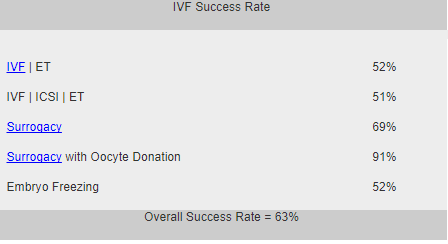
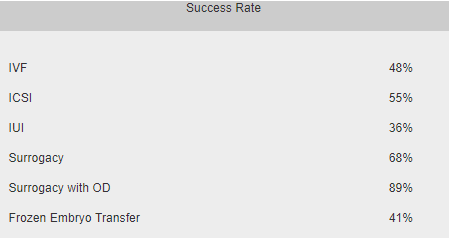
Following are some of the factors on which IVF Success rates in India depend:
- A woman’s age will provide the ovaries with health and conditions for producing healthy eggs.
- Is the status of the woman’s uterus normal or not?
- The number of embryos that have transferred to a woman’s uterus.
- The number of mature eggs and the quality of eggs which are retrieved.
- The success rates or the failures of fertilization.
- The cause of infertility is also a significant factor that determines the IVF Success Rates in India.
According to a study, the success ratio of IVF in India increases with IVF stimulation attempts, and it usually ranges from a maximum of 3 to 4 stimulation cycles.
Success rate affecting factors:
The success rate of IVF treatments in India and their failures will influence many factors. Partners must have healthy gametes and fertility health to achieve the best results. The following factors will affect your IVF success rates in India:
- Infertility: Your sterility conditions are highly responsible for treatment success. You can have different problems that have fewer chances of becoming successful. Advanced procedures can help in these conditions, and the couple will conceive. You have severe uterus issues, male factor infertility, no egg production, etc. will require other approaches than IVF can provide the outcome.
- Age: The female partner’s age is vital in affecting the IVF results. Younger women have higher chances of becoming pregnant with the process. On the other hand, women at advanced ages face multiple problems. They may be near menopause which affects their possibility of producing healthy eggs. Their uterus health will be less as the fertilized eggs face issues attaching to the uterine lining.
- Previous treatment: Your previous conception procedure’s success rate and chances can affect the current process. Many couples require multiple IVF treatment cycles for successful results. It affects their psychological health and causes a problem in their present treatment.
- Centre and expert: Partners must select the best destination and centre with a highly experienced doctor. Many IVF clinics have fake success rates, for instance, more than 80% or 100%, but, in reality, it is not genuine. The actual IVF success rates cannot be 100% because it depends on partners’ fertility and health conditions. They have younger age and not so severe infertility problems and can become successful within the first IVF cycle. The highly experienced experts can help you achieve top results.
- Environment: The couple must have healthy psychological conditions because any stress factors affect the IVF outcome. After the procedure, they should live in better surroundings that calm their mind and are far from anxiety and stress.
Where have the best IVF success rates in India?
Your IVF doctor support also plays an essential role in increasing your IVF Success Rates in India. It has found that the patients for IVF are not preselected, and there are maximum chances to achieve their dream of success which is their baby, and your IVF doctor is the one who helps you from your initial stage till the baby deliver.
According to research, IVF doctor in India is highly skilled and trained professionals who have experience of more than 25 years of in the field of fertility management. They have had more than 3000 IVF babies in the past few years and continue the same success rates of taking the baby home.
The GO IVF SURROGACY is the best location in India for the highest IVF success rates. To achieve superior treatment outcomes, we use state-of-the-art technologies and practices. Our highly qualified fertility specialists carry out procedures with maximum results.
Why GO IVF SURROGACY?
To achieve success, you can pick the top IVF clinic in India. We are aware that choosing a treatment and location can be difficult for couples. However, you no longer need to worry because we are here with the best techniques and treatments. The greatest treatment option is available for your infertility situation. What more will you receive from us?
- Treatment facilities and technology of the highest calibre
- Patients-centered approaches and methods
- Assistances for having affordable charges
- Well-built infrastructure for maximum comfort
- Every infertility treatment at one destination
- Highest success rates for IVF and other procedures
- Contact us: Info@IVFSurrogacy.in
Call us: 91-989-929-3903
IVF Success Rate Vs. Procedure- Which Steps are Crucial for Success Rate
IVF success rate is different based on the clinical performance of the hospitals and fertility experts. They are external factors impacting the success rate, but it also depends on certain internal factors. With the IVF procedure, we will define what the steps are which may be crucial for success arte and these may also result in additional costs.
Several IVF cycles are introduced only because of a decrease in the success rate of IVF. So here is the IVF procedure, followed by standard clinics for increasing the IVF success rate in India:
Screening and Selection of Donors
There are two types of IVF: one with egg donors and the other with eggs of intended parents. Both kinds of IVF are allowed in the Indian Medical Curriculum. Donors undergo a comprehensive medical and psychological screening process to ensure they are healthy and capable of providing viable eggs. Tests typically include:
- Blood tests to assess hormonal levels and general health.
- Genetic screening to rule out inherited conditions.
- Ultrasound to evaluate ovarian health.
Counselling
Both donors and recipients receive counselling to understand the emotional, ethical, and legal aspects of the procedure. In Chennai, clinics often have dedicated counsellors to provide support throughout the journey. If there is no egg donation, then only counselling of the intended parents is performed.
Ovarian Stimulation
Donors or intended mothers are prescribed hormonal medications to stimulate the ovaries to produce multiple eggs. This phase is monitored closely with blood tests and ultrasounds. After the production of eggs next step is the collection of eggs.
Collection of Eggs
After the maturation of the graffian follicle and the release of the egg from the ovary, Eggs are collected with a minimally invasive method from the reproductive tract of the female. The eggs are collected through a minor surgical procedure called follicular aspiration. This is usually performed under mild sedation and involves minimal discomfort.
Fertilisation and Embryo Transfer
The retrieved eggs are fertilised with the recipient’s partner’s sperm or donor sperm in a laboratory. The resulting embryos are cultured and transferred to the recipient’s uterus.
IVF Steps Crucial for Success Rate
In the beginning, there is no hustle, but both intended parents have to take care of their nutritional intake because it will affect the quality of gametes. Other steps depend on the technology of the clinic involved. It is necessary to freeze gametes after egg retrieval, otherwise, the chances of them dying are higher.
Embryo Culture
Embryo Culture is a critical stage in the IVF process, where fertilised eggs (embryos) are carefully nurtured in a controlled laboratory environment for several days, typically 3 to 5. During this time, embryologists monitor the embryos for proper cell division, development, and quality. Advanced labs often use time-lapse imaging or embryoscopes to observe the embryos without disturbing them.
Culturing embryos to the blastocyst stage (day 5) allows for better selection of the most viable ones, which significantly improves implantation rates. The success of this step depends heavily on lab conditions, culture media, and the expertise of the embryology team. A well-developed embryo at this stage increases the likelihood of a successful pregnancy after transfer.
Luteal Phase Support
Luteal Phase Support is an essential part of the IVF process that begins after embryo transfer and continues until pregnancy is confirmed. During a natural cycle, the body produces progesterone to prepare the uterine lining (endometrium) for implantation. However, in IVF cycles—especially those involving ovarian stimulation—natural hormone levels may be insufficient.
To support implantation and early pregnancy, patients are given progesterone supplements, either through injections, vaginal gels, or oral tablets. In some cases, estrogen may also be prescribed to enhance endometrial receptivity. Adequate luteal phase support helps maintain the uterine lining, prevents early miscarriage, and increases the chance of a successful outcome. Monitoring hormone levels and adjusting medication as needed is crucial for optimising success during this phase.
Age & AMH Level
Age and AMH (Anti-Müllerian Hormone) levels are two of the most important indicators of a woman’s fertility potential, especially in IVF treatment. As a woman ages, both the quantity and quality of her eggs decline, which reduces the chances of successful fertilisation and embryo development. Women under 35 generally have higher success rates in IVF compared to those over 40.
AMH level, produced by ovarian follicles, is a reliable marker of ovarian reserve—how many eggs a woman has left. Higher AMH levels (typically above 1.0 ng/mL) suggest a better response to ovarian stimulation, while low AMH may indicate reduced egg supply. However, even women with low AMH can sometimes achieve pregnancy with personalised treatment plans. Together, age and AMH help fertility specialists design appropriate IVF protocols and estimate the likelihood of success.
IVF Cost in India with the Mentioned Procedure
IVF cost in India is a reasonable price without compromising the quality of the treatment. Cost is defined with Inclusion and exclusions for various facilities. Consultation fees, hormone injections, egg retrieval, lab procedures, embryo transfer, and additional expenses like embryo freezing are included in the cost of IVF. Travelling fees, diagnostic test costs, and Consultation charges from doctors are excluded from the package.
There are also two types of packages based on several IVF cycles first is standard, and the advanced package. In standard IVF is given three times only, and in advanced procedures, more than three times IVF is given for assurance of pregnancy. Here are the separate cost details:
| Fertility Treatment | Cost in Delhi |
| IVF with self-eggs & Sperm | 150,000 to 200,000 |
| IVF With Donor egg/sperm | 220,000 to 250,000 |
| IVF with Embryo Donation | 250,000 to 300,000 |
| Frozen Embryo Transfer | 40,000 to 50,000 |
| ICSI | 230,000 to 260,000 |
| IUI | 8,000k to 20,000. |
| IVF injection | 60,000 to 70,000 |
Top IVF Clinics in India- Best IVF Hospital in India
There are different clinics in India, and with the development of technology, the success rate also increases. There are some specific names that provide all kinds of facilities for medical tourists. First in the list is Go IVF Surrogacy, and others are given below:
World Fertility Clinic
Infertility issues became an obstacle for many couples in their social life as well. There are associated legal and ethical considerations while going through infertility treatments. The next part of the services should also focus on the personal aspect of the involved patient. With the overall development approach, World Fertility Service comes with all infertility solutions. The common treatments provided by the clinic are ICSI, Test-tube baby, surrogacy, IMSI, artificial insemination, PGD, cryopreservation, vitrification and many more.
We Care Health Services
It is one of the best fertility clinics in India, currently offering its services in various metropolitan cities. We Care Health Services has the best team of doctors and medical caregivers. The couples are also provided with both psychological and medical counselling. The high success rate of the clinic made it a unique opportunity for couples seeking medical help in conceiving. The unique selling points of this clinic are:
- The clinic has sustained a more than 70% success rate
- Every type of gynaecological service is available.
- Cryopreservation of gametes is also possible. Gametes are frozen at lower temperatures for further use.
These two are the best clinics, and you can have an online chat from the official website of these clinics.
FAQs:
When do you need IVF?
IVF treatment is successful in many infertility problems. It functions with partners’ gametes to provide a successful pregnancy outcome. The process helps in different conditions for achieving conception. Your fertility expert will recommend IVF in the following conditions:
- The female partner has poor egg production.
- Your fallopian tubes have any blockage or damage.
- You have advanced age that affects your reproduction chances.
- The male partner has sperm production issues.
- You have faced unexplained infertility conditions.
- The couple has faced several miscarriages or previous process failures.
What happens in IVF pregnancy?
IVF is the best process for a successful pregnancy outcome. Your IVF functions with healthy eggs and sperm. The gametes fertilization helps in conception when the couple has infertility conditions. You will achieve a genetic-related pregnancy. As the fertility expert fertilizes the couple’s gametes. With it, your conception chances are high because many advanced approaches can function. You can have the best IVF process as per the conditions. Also, your expert will recommend the IVF treatment for a better outcome. After the IVF outcome, your pregnancy will follow normal conception and childbirth.
What to do when I do not have healthy eggs?
Your successful pregnancy outcome needs healthy eggs and sperm. If any gamete has a problem, the conception can become a failure. Thus, your fertility expert performs various tests to know the conditions. So if you do not have healthy eggs, the gametes assistant is the best. It means you can have healthy donor eggs. The donor oocytes help in the successful pregnancy outcome. You can have them from a healthy donor. It uses in the IVF process as fertilized by the male partner’s sperm. And for pregnancy, the fertilized eggs will implant inside the female uterus.
Is IVF treatment surgical?
IVF treatment involves a few surgical stages. And if you have other approaches to the treatment, the process can change. Female egg retrieval has a less invasive step. After egg production, the expert collects healthy eggs. They use a catheter to insert inside the female uterus. It adds from the female vagina to the cervix and the uterus. And they use a thin needle to aspirate the eggs. After it, the fertilized egg implants inside the female uterus. It also has an invasive process. As the expert use a catheter again. With it, if the male partner cannot provide healthy sperm. So, the expert can recommend surgical sperm retrieval.
Read Also:
WHAT PATIENTS SAY ABOUT US

We thank to Go IVF Surrogacy clinic which offers us the best fertility treatment which helps us in conceiving our own baby as well as it saves our lot of money, time and energy.
EMILY, UNITES STATES

Our great thanks to Go IVF Surrogacy clinic where fertility experts treat us as their own family member and help us throughout our journey of conceiving a baby.
JOHN, UNITED KINGDOM
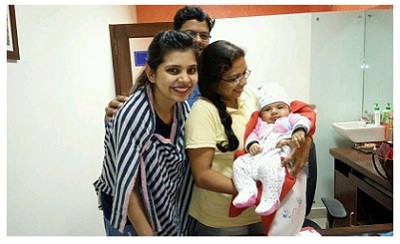
Our all credit goes to Go IVF Surrogacy clinic where the fertility experts understand our condition and accordingly they offer us the best fertility treatment which fulfils our dreams.
RAVI SINGH, INDIA
Latest Posts
September 9, 2026

September 6, 2026

September 3, 2026