

For couples who are trying to get pregnant understanding the factors related to pregnancy is very important. Understanding these factors can help them make decisions change their daily routines or recognize when medical advice is necessary. For example when a man undergoes a semen analysis and receives test results he can look for ways to improve his results further. There are many questions about fertility, and fertility is not just about one person. It is a two-way street involving both the female and the male, and both are equally important. However in this article we are going to talk a little about infertility and how to increase sperm count and motility rate because both are very closely linked to male infertility. If you search the internet you will find answers to the questions men have about how to increase sperm count whether through food, vitamins, supplements, medicines or other methods. You can find answers to any question on the internet. Although these answers may seem like the answer to all the prayers people are asking, some of this advice needs to be reconsidered because not every piece of advice available on the internet can help men. Several factors can affect sperm health and motility including smoking, poor dietary habits and many others. However the way these factors affect sperm health can vary as some have a direct effect while others may affect it indirectly. The main point is that it is important to understand that no single food or vitamin guarantees a sperm count or guarantees pregnancy. In this guide, we are going to talk about sperm count and motility. For people who are new to this topic, we are going to start with the basics by understanding what sperm are and what sperm count and motility mean before discussing how to improve them. Sperm are cells produced in the testicles. After being produced they are stored in a structure called the epididymis. During ejaculation they travel through the reproductive ducts, including the vas deferens before mixing with fluids from the reproductive glands and passing through the urethra to leave the body through the penis. The urethra also carries urine. The reproductive tract and urinary tract are not the same. The urethra is the passage used by both systems to release their respective fluids from the body. Semen is an grayish fluid that comes out of the male body during ejaculation. It contains sperm cells along with fluids produced by the glands. Semen and sperm are different although many people think they are the thing. They are not. Semen is the fluid while sperm are the cells contained within that fluid. Now what happens when sperm enter the reproductive tract? After sperm enter the reproductive tract during sexual intercourse they need to remain functional throughout the process. By functional I mean that they must be able to move through the vagina, cervix and uterus towards the fallopian tubes, where fertilization typically occurs if an egg has been released. The fallopian tubes are passages in the reproductive system through which the egg travels towards the uterus. When an egg is available for fertilization sperm must reach it. One sperm must successfully fertilize it for conception to occur. This is a process involving stages and a problem at any of these stages can make conception difficult. Another important fact is that the appearance of semen does not tell us everything about sperm health. For example when a man looks at his semen with the eye and it appears normal this does not mean that his sperm count, motility or other sperm characteristics are necessarily normal. A semen analysis is needed to evaluate these factors.
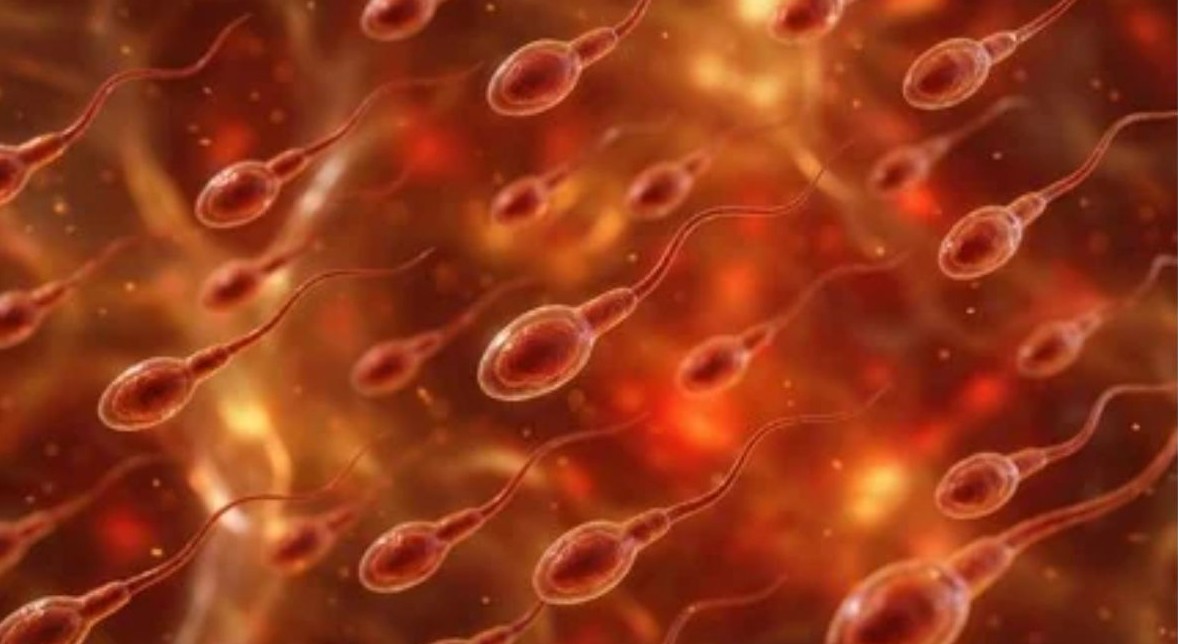
As we already know sperm are cells and sperm count refers to the number of sperm present in a semen sample. In laboratory reports two different measurements are commonly used: sperm concentration and total sperm number. Sperm concentration refers to the number of sperm in one milliliter of semen. In other words, if we take one milliliter of a man’s semen, sperm concentration tells us how many sperm cells are present in that amount of fluid. Total sperm number refers to the number of sperm present in the entire ejaculate meaning the complete amount of semen released during ejaculation. These two measurements are related,. They are not the same. Sperm concentration tells usthe number of sperm in a volume of semen while total sperm number tells us the number of sperm in the entire ejaculate. For example a man can have a sperm concentration but produce a smaller volume of semen. In this case, his total sperm number may be lower even though the concentration is within the normal range. Similarly, another man may produce a larger volume of semen but have a low sperm concentration. In this situation, the total sperm number depends on both the semen volume and the concentration.A larger semen volume does not automatically mean that the total sperm number is normal. If no sperm are found in the semen the condition is called azoospermia. This is a finding that requires medical evaluation. Therefore both sperm concentration and total sperm number matter when evaluation fertility. Other factors, including sperm motility and morphology are also important in understanding sperm health. There is one important point to understand about sperm survival. Sperm are not all dead when ejaculation happens. Although many sperm do not survive the journey through the reproductive tract or reach the egg some can remain alive inside the female reproductive system for up to five days under favorable conditions. This is important because sperm need to remain functional enough to reach and fertilize an egg.increase sperm count and motility Oligospermia, also called oligozoospermia is a condition in which a man has a than-normal sperm concentration. Doctors identify this condition through a semen analysis when the sperm concentration falls below the laboratorys reference range. There are several possible causes of this condition, including hormonal disturbances and problems affecting the testicles, which are responsible for producing sperm. Hormones play an important role in regulating sperm production, and we will discuss these hormonal factors in more detail later in this article. Now we are going to talk about sperm motility rate and how it affects pregnancy. Sperm motility refers to the ability of sperm to move. Just like we have mentioned before, sperm need to move towards the egg. So, this is also a very big factor that plays a role in pregnancy, conception, and fertility because if the sperm are not able to move forward and simply remain in one place, they may not reach the egg. What will happen then? That is not a good thing. This movement is essential. Laboratories and medical experts generally describe sperm movement in three types: motility, non-progressive motility and immotile sperm. increase sperm count and motility First is progressive motility. What is progressive motility? It is when the sperm move forward either in a straight line or along a large curved path. This is very useful and is an important type of movement because it helps sperm move forward towards the egg. This is the kind of movement that is most useful for sperm to travel through the female reproductive tract. Now, another type is non-progressive motility. It is a condition in which the sperm are moving, but they do not make any meaningful forward progress. Now, this is a very important part because sperm are not just small, tiny, circular cells. No. Sperm have different parts, including the head, the midpiece, and the tail. The tail is something like a snake’s tail, and it helps them move forward. the head is the part of the sperm thatcontains the material, from the father. So non-progressive motility is when the sperm are moving their tails. They are not moving forward. They are just moving in the same place, without making any meaningful progress. This is known as non-progressive motility. The third type is immotile sperm. These are the sperm that do not show any movement during the examination. They may seem as though they are dead. The absence of movement alone does not confirm whether the sperm are alive or dead. Now what tests are done to know how healthy the sperm are?nSemen analysis is one of the tests doctors use to examine semen and sperm health. It is a test that doctors use to measure and assess the condition of the sperm. It measures the percentage of sperm in the semen sample that are moving. Doctors also assess their shape, their concentration and other characteristics including whether they have a head, midpiece and tail or whether there is any problem with their morphology.increase sperm count and motility Morphology is a term used to describe the size, shape and structure of sperm. The normal structure of a sperm includes a head, a midpiece which’s a smooth cylindrical section behind the head and a single long tail that helps it move. So if there is any problem with the shape of the sperm it can also affect the process of reproduction. Semen analysis, therefore, gives doctors an overall picture of several important aspects of the semen sample, including sperm count, motility, morphology, and semen volume. According to the World Health Organization (WHO) reference values, the lower reference limit for total sperm motility is around 42%. This means that around 42% or more of the sperm in the sample are showing movement. However, not all moving sperm are necessarily moving forward, because total motility also includes sperm that move without making forward progress. Let’s take an example. This is not a real medical number; we are just taking it as an example to understand the calculation. Let’s say that, in one milliliter of a semen sample, there are 50,000 sperm. Now, out of those 50,000 sperm, if about 40% are moving, that would mean that approximately 20,000 sperm are showing movement. So, this is how the motility percentage works. We are looking at the percentage of sperm that are moving within the sample. However, remember that moving sperm and sperm that move forward are not exactly the same thing. Now, we are going to discuss sperm count, motility, morphology, and semen volume and how they are different. All of these are different measurements. We have already discussed sperm count and motility. Now, we are going to talk about sperm morphology.
Sperm morphology refers to the size, shape and structure of the sperm cells. Now what is a normal structure? A looking sperm has a smooth oval-shaped head, a midpiece behind the head and a single long tail that helps it move or swim.We have already discussed these parts, but they are also important when we talk about morphology.
Anything that falls outside the usual sperm structure can be considered abnormal. It could include a very large or round head, a double head, the absence of a head, a short tail, or an abnormally shaped tail. There can also be problems with the midpiece, which connects the head and the tail. The midpiece is normally a smooth, cylindrical section. If it is missing, unusually thick, or irregular in shape, this can also be considered an abnormality. Now, laboratories use strict standards to evaluate sperm morphology. According to the WHO reference values, the lower reference limit for normally shaped sperm is around 4%. For example, let’s take the same number of 50,000 sperm. If we calculate 4% of 50,000, the answer would be 2,000 sperm. This is just an example to help you understand how the percentage is calculated.
We have discussed everything related to sperm, its shape, semen, and everything related to it. Now we are going to discuss what actually causes a low sperm count and poor sperm motility, because that is the actual topic of our article.
There are various causes of low sperm concentration and a low motility rate. One of them is hormonal imbalance. Sperm production depends on various things. Now we are going to discuss how hormonal imbalance in males can actually affect sperm production, sperm count, and motility in detail. Everybody knows that hormonal balance is important. But what are the key hormones in the male body? One of them is testosterone, then there is follicle-stimulating hormone, luteinizing hormone, prolactin, estradiol, and thyroid hormones. Okay, so what is the actual role of all these hormones? First of all, there is testosterone. Everybody knows that testosterone is produced in the testicles and its production is controlled by LH or luteinizing hormone, which is released by the gland in the brain. First of all luteinizing hormone is a hormone released by the gland. It signals the Leydig cells in the testicles to produce testosterone. Now testosterone is a hormone that plays an important role in sperm production and maturation. Another hormone is follicle-stimulating hormone also known as FSH. It is also produced by the gland. It stimulates another type of cells in the testicles known as Sertoli cells. There are two types of cells in the testicles that we need to understand here. One is Leydig cells and the other is Sertoli cells. LH signals the Leydig cells in the testicles to produce testosterone. Now, FSH works on the Sertoli cells in the testicles to support sperm production. Let’s say testosterone is helping to support the process of making new sperm. FSH helps create the environment for those developing sperm cells to grow and develop properly. Now another hormone produced by the gland is prolactin. Its levels also need to remain within the range. When prolactin levels become abnormally high they can interfere with the signals between the brain and the testicles. This can reduce the release of hormones that control sperm production, including LH and FSH and can also lower testosterone levels. As a result sperm production can be affected. Now there is also another hormone known as estrogen, particularly estradiol which’s also present in the male body. It plays a role in reproductive function and normal sperm production. So its levels also need to remain balanced. There are so many hormones in the body, and they work together. If one of these hormones is not working properly, the other hormones and the processes they control can also be affected. It is like an organization, okay? Everyone depends on everyone else. That is how this process works. We are going to talk about two major conditions related to sperm count: oligospermia and azoospermia. When there is an imbalance one of the problems can be low testosterone levels or a problem with the hormones that control testosterone production. Lets say LH or luteinizing hormone and FSH or follicle-stimulating hormone are released by the brain. Their levels are very low. Another possibility is that the testicles cannot respond properly to these hormones. The brain releases these hormones into the body so that the testicles receive the signals they need to function. But if very low amounts of these hormones are released, or if the testicles cannot respond to them properly, how will the testicles carry out their functions? Because of this, the testosterone level inside the testicles can drop. This is important because the cells responsible for sperm production need adequate testosterone, along with the other necessary hormonal signals, to support the development of sperm. When these signals are not working properly, sperm production can decrease. This can lead to a sperm count, which is known as oligospermia. In cases there can be a complete absence of sperm in the semen, which is known as azoospermia. Now, another thing is that FSH levels can also tell doctors something about how the testicles are functioning. Let’s say the follicle-stimulating hormone level is very high. This can indicate that the testicles are having problems with sperm production. It is like the brain is shouting at the testicles to produce sperm, but the testicles are not responding properly because of an underlying problem. So, unusually high FSH levels can be a sign of impaired sperm production, rather than simply meaning that the body is producing too much of a hormone. Doctors use these hormone levels, along with other findings, to understand what is actually happening in the testicles. Now we have discussed hormonal changes. Now it is time to discuss other factors that also affect sperm count and sperm motility, which include varicocele and other testicular conditions. Now, testicles, also known as testes, are where sperm are produced. Sperm then mature and are stored in a structure called the epididymis, which is located behind each testicle. So, everything related to sperm production starts in the testicles, and if anything goes wrong with them, it can become a very important concern. There is one condition known as varicocele, which is the enlargement of the veins surrounding the testicles. When these veins become enlarged, they can affect the local environment. By local environment, I mean the environment in which the sperm are developing. This is why varicocele can be associated with reduced sperm concentration, a lower motility rate, and other sperm abnormalities in men. Now, not every person who has varicocele requires treatment. But why does every varicocele condition not need treatment? This is because some varicoceles are small and do not cause any problems. They may not affect the persons health or ability to have children all. In these cases doctors might just. Wait. There is no need for surgery or other medical help if it is not needed. When is help needed? Help might be considered if the varicocele is linked to not being able to have children or if the sperm analysis results are not normal. It might also be considered if there is pain or if there is a clear difference in how the testicles are growing like if one testicle gets smaller than the other. So when a man is having trouble having children and has varicocele along with sperm analysis results a doctor will check if help is needed. Not every person with varicocele needs surgery. When the condition is connected to problems with having children it is important to get it checked Now, the third reason for a low sperm count and poor sperm motility is smoking, alcohol, and drug use. We often do not pay enough attention to our daily habits, including what we eat, whether we smoke, how much alcohol we consume, and whether we use any drugs. hese daily habits affect our health and different parts of our body. We do not always think that even small habits when done every day can eventually cause problems. For example people talk about how drinking a lot of soft drinks like Coca-Cola or Fanta can affect the risk of kidney stones. The main point here is that the concern is not about what you do on one day. It is also about what you do over a time. Similarly smoking once drinking once or using drugs once does not mean someone will become infertile. Using these things often or in large amounts can affect reproductive health over time. There is a lot of research on how smoking’s linked to poor sperm quality. Studies have found that smoking can be linked to sperm count, less movement in the sperm and other changes in the quality of the sperm. Drinking much alcohol can also affect testosterone levels. We have already talked about how important testosterone’s for making sperm. So when testosterone levels are affected it can be a problem for health. When we talk about drugs one important example is anabolic steroids. If you go to the gym and take steroids to build your body or become a bodybuilder you need to know how these substances can affect your health. Anabolic steroids are used to build muscles. They should not be taken without proper help from a doctor. Why? Because anabolic steroids can stop the signals that tell the body to make sperm. As a result making sperm can go down which can lead to sperm count or in some cases no sperm in the ejaculate. We also have types of drugs like marijuana and other drugs, which are important to think about when talking about male reproductive health. Their effects can be different. Their impact on sperm count, movement and other parts of sperm quality needs to be understood. Now another thing that can cause sperm count and bad movement in the sperm is too much body weight, not enough exercise and bad eating habits. Move a little every day. Everyone knows that not moving your body enough can cause problems, not just for reproductive health but for overall health as well. But it is not that if you do not exercise, you will become infertile. There is no such thing. However, physical inactivity can affect your health in several ways, and it can also affect male reproductive health. So, maintain a healthy body weight. Another factor is heat exposure and workplace chemicals. Now, why is heat exposure important? The testicles are outside the body because they need a temperature lower than the bodys main temperature to help make sperm. For example if we compare the female reproductive systems many parts of the female system are inside the body. In males the testicles are in the scrotum outside the body because temperature is very important for them to work properly. So if you regularly do things that expose you to a lot of heat like taking baths or going to saunas this can affect sperm production and the quality of the sperm. It is not that if you take a bath once or go to a sauna one day your sperm count will drop or you will become infertile. The worry is repeated or long exposure to too much heat, which can affect sperm production. This is also important for workers in high-heat areas. Men who work around pesticides, solvents or heavy metals can also face problems with their reproductive health because some chemicals at work can affect sperm production and quality. But there is one good thing: workplaces have safety procedures to help protect workers from these exposures. So, make sure you follow the appropriate workplace safety procedures and wear protective equipment before going to work, especially when you are working around harmful chemicals or in environments with excessive heat. Now, the next topic is how to actually increase sperm count and improve fertility naturally. We are going to talk about that.
So, we are talking about natural approaches for increasing sperm count and improving the motility rate. These approaches are useful because they address factors that generally affect reproductive health and overall health. But they are not replacements for medical treatments. Why? Because if infertility is caused by a hormonal disorder, you may need medical treatment, which can include hormonal therapy, depending on the cause. And if there is, let’s say, a blockage in the epididymis, then medical treatment may be needed. So, all the things we are going to talk about right now are natural approaches. We are not going to discuss treatments here. First make a balanced diet with whole foods. Whole foods give your body energy, vitamins, minerals and other nutrients. Eat foods and do not skip important groups of food. Everybody knows that diet is a very big factor, so we do not need to talk too much about this. Another factor is exercise without overtraining. Why is this important? Because exercise is great, and strength training is also beneficial. It is recommended by doctors and many health specialists as part of a healthy lifestyle. Exercise helps with cardiovascular health, weight management, metabolic function, and brain function as well. It is very good for your overall health. Now, all these factors we have talked about are relevant to general well-being. So, if someone is leading a sedentary lifestyle, meaning the person is sitting all day, a brisk walk is fine to start with. Get up and walk a little bit. Then over time add activity. For example your routine can include a 20-minute walk. Do not just walk slowly. There are worries that much training, especially intense high-volume training without enough food or rest can affect male reproductive health in some cases. This can include changes in how hormones work and the quality of the sperm. However not every hard workout causes problems, with having children.
It happens over a period of time, and the body actually takes roughly 65 to 75 days to produce sperm. So, we are talking about two to three months. Why are cooked tomatoes a choice? When tomatoes are cooked, with a little oil the lycopene becomes easier for your body to take in. That is why you can add tomatoes to dishes like pasta, curry and Indian vegetable meals. You can also eat pomegranate, berries, citrus fruits and bananas. Citrus fruits have vitamin C, which’s an antioxidant that helps protect cells from damage. As you are looking at what to eat you should also know what to avoid or cut back on. One example is processed meats like sausages, bacon, salami and hot dogs. In India, you can also look out for processed meat products that are commonly available in packaged form. Another thing to limit is food containing trans fats, along with frequent consumption of fast food, sugary drinks, and heavy amounts of soft drinks such as Coca-Cola. Which vitamins should you take to improve sperm count and movement? We are going to talk about the vitamins that are important for sperm health. So we should not skip any vitamins. Yes it can help fill in some nutrients if your diet is not getting enough of certain things.. That does not mean taking a multivitamin will fix everything. It does not work that way. Is there any medicine to increase sperm count and motility quickly? Yes there are some medicines that can help improve sperm count and movement depending on what’s causing the problem. Talk to your doctor or a fertility expert to understand your situation and get the care. If you and your partner have been trying to get pregnant for, than a year and have not been successful you may want to think about seeing a fertility specialist.
How to increase sperm count and motility?
Understanding what is sperm count and motility thing before making changes
What Is Sperm?
Now what is semen?
What Is Sperm Count. Why Does It Matter?
What is sperm concentration ? increase sperm count and motility
What is total sperm number? increase sperm count and motility
What Is Oligospermia?
We are going to discuss all three of them.
Now, how do we know what a good sperm motility rate is?
What causes low sperm count and poor sperm motility?
Hormonal imbalances
Now, how does hormonal imbalance affect sperm count?
Varicocele and other testicular conditions
Varicocele and Testicular Conditions
Smoking, Alcohol, and Drug Use
Excess body weight, poor diet and no exercise
Heat exposure and workplace chemicals
How to actually increase sperm count and motility naturally
1. Make a diet with whole foods
2. Exercise regularly without overtraining
GET FREE CONSULTATION
Foods to eat to increase sperm count: what should you eat every day?
Now, what foods should you eat?
5.. Habits that you should limit or avoid
Vitamins to help with sperm count and movement
Is it an idea to take a multivitamin for fertility?
FAQ (Frequently Asked Questions)
When should you go to a fertility specialist?