
IVF stimulation a day by day guide
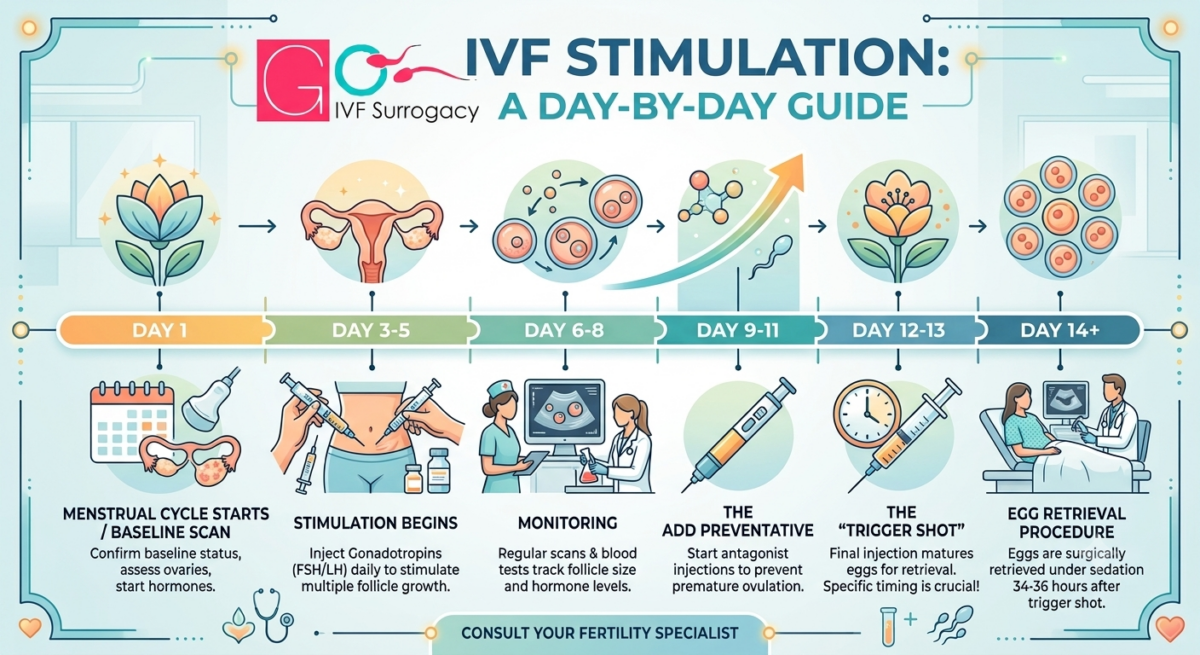
IVF stimulation a day by day guide
IVF is like a miracle to all of the people who are desiring or have a desire to have a child. It is an essential and very important procedure people need.
Fertility can be stopped because of many reasons, like fallopian tubes are blocked.
For some it is low sperm counts.
Whereas for others it is like PCOS. It is a very common reason for infertility by the way.
But there is one thing which people do not understand even after having so much awareness about IVF. It is not just a one time process. It is not like you go and have a heart transplant in like 30 to 40 hours of surgery. It is a procedure which can go up to around months.
That is why it is a very emotional journey. This IVF stimulation a day by day guide will help you understand the very crucial part of this journey.
IVF process step by step timeline
Patients Need to have the first counseling session with an IVF expert. They will make sure to find out the exact reason for your infertility. This is done through several tests like AMH.
Ovarian stimulation is the process in which the eggs of the female partner are stimulated through a series of injections so that her ovaries can produce multiple eggs at once.
In the egg retrieval process, doctors perform a small surgery known as transvaginal oocyte retrieval (TVOR). Doctors use the ultrasound device so that they can see the actual image inside your body.
- At first, they insert a thin, hollow needle, which is attached to the ultrasound device.
- This needle is gently passed through your vaginal wall and enters directly into your ovaries.
- Then the doctors gently vacuum the follicle fluid containing the eggs.
- This process takes about 45 minutes.
Whereas if the men’s sperm is needed, they are extracted through masturbation.
However, if there is a problem with male fertility, doctors could perform surgery to retrieve the sperm directly. The names of the surgeries are PESA, MESA, and many more.
Fertilisation and Embryo Culture: The next process is actually fertilizing the collected egg and the collected sperm.
There are two methods.
- The first is the conventional method, where thousands of sperm are placed in the same spot with or without only one egg.
- The second method is Intracytoplasmic Sperm Injection (ICSI). After fertilization has occurred, the embryo phone so the doctors will now transfer it into the incubator. An incubator is a device that behaves as an artificial woMB or uterus.
Till the embryo has reached a state where it is healthy and strong enough to be transferred to the actual uterus of the intended mother. Some people actually freeze their fertilized, healthy embryos for future use.
In some cases, when the timing is not right and when individuals want to focus on their careers or due to any medical conditions, they could actually use this frozen embryo for further embryo transfer when they want to have children in the near future.
The last stage in this process is embryo transfer, in which the embryo is healthy enough. The doctors actually transferred this embryo to the uterus.
There are two types of embryo transfer:
The first is Fresh embryo transfer, and the second is frozen embryo transfer, which we have talked about earlier.
In the fresh embryo transfer process,
- First of all, doctors prepare the bladder so they can actually see the full display, so the doctors can actually see the uterus in full display through the ultrasound device.
- Then, a very thin, flexible plastic tube known as a transfer catheter is used. This catheter has embryo liquid.
- This tube is inserted into the vaginal wall and passes directly through the cervix till they reach the uterine cavity.
- The uterine cavity is the place where the embryo attaches itself to the mother’s uterus.
- The uterine cavity actually provides nutrients and essential oxygen levels to the baby. Through the blood of the mother.
- When doctors actually reach the uterine cavity, they gently release the embryo’s liquid inside the uterine cavity.
- This surgery is a very low-impact surgery. After the surgery is done, the patients typically rest for about 10 to 15 minutes before heading home.
IVF stimulation a day by day guide
Normally an IVF stimulation also known as ovarian stimulation is of about 10 to 12 days. It is a very reasonable length of days however it is not a fixed schedule for every woman.
The whole meaning of the ovarian stimulation process is to actually stimulate the ovaries. Meaning kind of light encouraging your ovaries to produce as much eggs as it can. Now you would also wonder how many total eggs a woman would produce naturally in a natural cycle? Well a woman actually produces one single egg during one month.
And if that one egg is met with the sperm the fertilization occurs however let say it is an issue of infertility, naturally the chances of that one natural egg being released and being met with the sperm are very likely low..
So the IVF experts want to release as many eggs so that increases the chance of actual conception of the baby.
Understanding this goal is one of the main reasons patients search for an IVF stimulation a day by day guide.
So how does the doctor actually stimulate the ovaries?
- Doctors use injections to give drugs. They are exactly the synthetic hormonal drugs to make your body more eligible and more welcoming for the more of the eggs.
- Another thing is what type of treatment you are getting during this ovarian stimulation process is also based on what kind of condition you have.
- In most cases the various stimulation is the most likely phase which does not even occur.
- It totally depends on the causes of infertility
How do doctors make the ovarian stimulation medications for each patients?
- Age: Age is considered when planning IVF because it is an important predictor of overall reproductive potential. Like women who are not in her childbearing age will problem and more biological window disadvantages for having a child
- AMH (Anti-Müllerian Hormone): It is a blood test to actually ensure how much ovarian reserves you have. Ovarian reserve is basically the reserve like how many ovaries you have and how many eggs do you have left? because when a female fetus is created it has something like 10 million eggs and when the girl reaches puberty she loses about one of half of her exit and by the time ease of the childbearing age she has only left one million eggs in her basket.
Why AMH? It is a common test to find out the actual egg reserves in the ovaries. By this, your doctor determines how much FSH should be given to you. Between the range of 1.0 – 3.0 ng/mL is normal. Anything below 1.0 ng/ml is low, and above 3.0 ng/ml is too much.
- AFC (Antral Follicle Count): AFC is the number of small antral follicles seen on an ultrasound, usually at the beginning of the cycle. The eggs are inside central follicles.
- Previous IVF response: This is in association with your previous medical history. Doctor wants to know if the woman has undergone IVF previously and what was the actual response from that cycle so it could be very useful.
- Previous medication dose and response: Doctors consider which stimulation medicines and doses were used previously and how the ovaries responded. Why? Because some people have some kind of allergies and their response of the ovaries to the drug could be different There is a rare condition known as Ovarian Stimulation syndrome The meaning of this is that when the ovaries react negatively against drugs.
- Risk of poor ovarian response: A low ovarian reserve or a previous poor response can influence the stimulation strategy.
- The number of follicles seen at baseline:The initial ultrasound gives the fertility team information about the ovaries before stimulation begins. Additionally, the information is used to anticipate and to actually understand how strongly the ovaries may respond.
- Baseline hormone profile: The baseline hormonal profile is clearly based on the clinical situation doctors might want to assess the hormonal status. There are two main common types of hormones known as FSH and estradiol which are most used during pregnancy and reproduction overall.
- Body weight/BMI: BMI is also important.
- Diminished ovarian reserve
- PCOS or a tendency toward high ovarian response: Someone with the pcos or PCOD also known as PMOS Have different kind of ovarian response to the medications. So the doctor might also want to consider this into the account as well.
- The specific IVF/ICSI protocol
- How the ovaries respond during the current cycle
- Follicle growth pattern
- Previous ovarian surgery or conditions affecting the ovaries
- Other medical and fertility factors: The overall infertility diagnosis, medical history, previous fertility treatments, medications, and individual clinical circumstances can all influence the treatment plan.
ivf medication schedule day by day
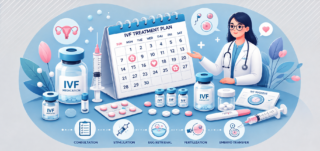
Usually, a female’s body only releases one egg per month, but because of these drugs, such as FSH, also known as follicle-stimulating hormone, and LH, luteinizing hormone, all of which are encouraged to produce and release more than one egg, preferably 8 or 10.
As by now you have already known that medication during the ovarian stimulation varies by all these factors. Okay.
The IVF stimulation a day by day guide below provides an example of how these medications may be used during the stimulation phase.
like for example for the patients for PCOS there is a very different kind of Pre-treatment preparation.
Like they have a very small amount of dosages compared to the standard IVF dose of FSH. It is the hormone. Below is the common example of the average ovarian stimulation phase schedule with medications.
IVF ovarian stimulation medication schedule example
| Day | What may happen | Typical medication role |
| Day 1 | Baseline assessment and stimulation begins | FSH or FSH + LH/hMG begins |
| Day 2 | Follicles start developing | Continue FSH ± LH/hMG |
| Day 3 | Early follicular growth | Continue stimulation |
| Day 4 | Ovarian response begins to become clearer | Continue stimulation; dose may be adjusted |
| Day 5 | Monitoring may begin/intensify | FSH ± LH/hMG; ultrasound ± estradiol |
| Day 6 | Follicles continue growing | Continue stimulation; dose adjustment if needed |
| Day 7 | Prevention of premature ovulation may become necessary | GnRH antagonist may be started |
| Day 8 | Continued follicular growth | FSH ± LH/hMG + antagonist |
| Day 9 | Follicles approach maturity | Continue medications; closer monitoring |
| Day 10 | Final maturation is approaching | Stimulation/antagonist adjusted according to ultrasound |
| Day 11 | Follicles may be ready | Final assessment; trigger timing determined |
| Day 12 | Trigger if follicles are sufficiently mature | Trigger injection replaces stimulation medications |
| 34 to 36 hours later | Egg retrieval | Eggs are collected before ovulation |
This IVF stimulation a day by day guide can help readers understand the relationship between stimulation medicines, follicle growth, monitoring, and the eventual trigger.
What are the actual medications doing?
There are different kinds of medications. Stimulating, preventing premature ovulation, trigger medicines, and different sometimes used alongside these main ones. We will go through them all of them one by one.
The medication section of this IVF stimulation a day by day guide explains the main categories used during stimulation.
- Follicle-stimulating medicines
- Recombinant FSH
Common names : follitropin alfa, follitropin beta
agenda : stimulates the ovaries to develop multiple follicles.
- hMG (human menopausal gonadotropin)
Contains FSH (Follicle stimulation hormone, it is natural hormone released every month is out body) + LH (luteinizing hormone, to support maturation of the eggs) activity and Examples include menotropins
Why is it used? stimulates follicular development and provides LH activity.
- Recombinant LH, goes by name of lutropin alfa
Purpose: provides LH activity when the specialist considers it appropriate.
It is not routinely required for every IVF patient
- Medicines that prevent premature ovulation
- GnRH antagonists: Ganirelix, Cetroreli to suppress the LH surge and prevent premature ovulation.
- GnRH agonists: Leuprolide, Nafarelin and Goserelin are also used in certain IVF protocols, although the timing and purpose differ from antagonist protocols.
- Trigger medicines for the maturation of the eggs
When the follicles are ready, a trigger injection is given to induce final oocyte (egg) maturation before retrieval.
Possible trigger approaches include: hCg to recombinant hCG such as choriogonadotropin alfa. And GnRH agonists like leuprolide act as a dual trigger.
A combization of a GnRH agonist and low-dose hCG in selected situations.
The choice depends heavily on the patient’s response and risk of OHSS. A GnRH-agonist trigger is particularly useful for reducing OHSS risk in appropriate antagonist cycles.
- Medicines used alongside stimulation
These aren’t automatically given to every IVF patient.
- Letrozole: sometimes incorporated into particular stimulation strategies.
- Clomiphene citrate: used in modified/low-medication stimulation approaches.
- Cabergoline:may be used around the trigger in patients considered at increased risk of OHSS.
- Metformin:may have a role in selected patients, particularly some patients with PCOS, but it is not a routine IVF stimulation medication for everyone.
when to start ivf injections
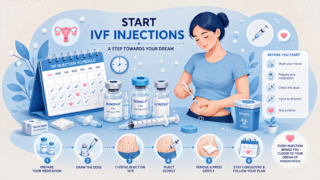
For any typical IVF Ovarian stimulation cycle the injectable medic such as FSH or FSH plus LH are started in the menstrual cycle, normally, around the day two or three of the cycle. However this exact date is dependent on the patients demographic and ivf protocol.
Knowing when injections begin is another important part of an IVF stimulation a day by day guide.
ivf injection timing morning or night
Most daily IVF stimulation injections can be taken in the morning or evening, depending on the clinic’s protocol. The important thing is to take them consistently and follow the prescribed schedule.
However, some medications, particularly the trigger injection, must be injected at a precisely specified time because the timing is coordinated with egg retrieval.
how to inject gonal f for ivf
- Wash your hands. Take the pen out of the refrigerator,as Instructions said. And let it rest on a very clean surface for about 30 minutes so that it can reach room temperature.
- Before actually using it, check if it is expired, damaged or discolored or contains any kind of particles or not.
- Then attach a very single new needle to the pen. Then set the exact I you dose which is prescribed by your fertility specialist.
- This is injected directly under the skin of the abdomen. Another kind of variation for this same kind of injection could be allowed to inject the for the upper arm or the upper leg.
- Injected according to the technique or any kind of way your clinic told you. Then remove the needle immediately after injecting all of the liquid inside it. And immediately put it into a very sharp container. Why? you don’t have to use it by mistake or anything OK.
- Take it consistently like how much time between each injection has been instructed by a specialist.
How painful is ovarian stimulation?
Well, it depends on the injections. Many women who have been through ovarian stimulation in IVF share to have felt the sharp stinging pain because of their injections. Injections are the top choice for receiving the shots and the needed doses for the ovarian stimulation process,
As injection is administered either into fatty tissues or deep into the muscles.
The fat tissue method is most common, as the needle is very thin and short, and it will cause minimal discomfort. The most common places are the abdomen or the outer thigh.
Next is the deep muscle section. In this method, the upper outer buttocks or outer arm is the best alternative.
ganirelix ivf injection schedule
Come to the GO IVF Surrogacy clinic. Here you have every kind of detail to know what has actually been given. We cannot just give you any kind of details regarding, ganirelix ivf injection schedule
As it is a medical issue. And it is completely based on the person’s demographic.
This is an important point to keep in mind when reading an IVF stimulation a day by day guide because the exact medication schedule is different for each patient.
Key features of choosing GO IVF SURROGACY
- The best consultation and counselling sessions
- Elevated assistances and procedures
- Highest IVF success rates in India
- Many packages and other facilities for affordable IVF cost in India
- The most skilled fertility and IVF specialist in India
- Contact us: Info@IVFSurrogacy.in
- Call us: 91-989–929–3903
follistim and menopur schedule
Follistim is commonly given daily during stimulation, with the dose individualized and adjusted according to ovarian response. Whereas menopur is to Provide FSH + LH activity to support follicular development.
The Follistim and Menopur schedule is therefore an important component to understand when following an IVF stimulation a day by day guide.
Frequently asked questions:
IVF stims day 4 symptoms
Around stimulation Day 4, many women still feel relatively normal. Possible symptoms include:
- Mild bloating
- Mild pelvic heaviness or pressure
- Slight breast tenderness
- Mild headache
- Fatigue
- Injection-site redness, itching, or soreness
- Mild mood changes
At this point, the follicles are developing, but significant ovarian enlargement may not yet be noticeable.
Day 7 IVF stimulation symptoms
- More noticeable abdominal bloating
- Pelvic heaviness or pressure
- Mild cramping
- Increased abdominal fullness
- Breast tenderness
- Fatigue
- Headache
- Mood changes
- Mild nausea
For some patients, a GnRH antagonist such as ganirelix may also have been introduced by this stage to prevent premature ovulation.
IVF stims day 8- 10 IVF stimulation symptoms
- Abdominal bloating
- Pelvic heaviness
- Feeling of enlarged or “full” ovaries
- Mild abdominal cramping
- Breast tenderness
- Fatigue
- Headache
- Mild nausea
- Feeling uncomfortable when bending or moving
Symptoms that shouldn’t simply be considered “normal IVF symptoms”
- Severe abdominal/pelvic pain
- Rapid abdominal swelling
- Significant or sudden weight gain
- Persistent nausea or vomiting
- Difficulty breathing
- Reduced urination
- Difficulty keeping fluids down
For anyone following an IVF stimulation a day by day guide, severe or rapidly worsening symptoms should be discussed with the fertility team rather than assumed to be a normal part of stimulation.