
Blog

Best IVF and Surrogacy Blogs

male-infertility-1-e1533275015421.png

September 1, 2026 ivfsurrogacyinblog0

Male Infertility treatment in Mumbai

Male Infertility treatment in Mumbai will now becoming a common issue where almost 33% of the males in our country are facing these kinds of issues regarding the same and can be cured accordingly by the team of experts at our clinic Go IVF Surrogacy where there are many experts treatment must be followed in that respect which can be procured by having the expert’s treatment to be followed in this respect so that in such a small amount of costing to be spent in that there must be huge returns in the form of best and excellent treatments at our Mumbai center for male infertility treatments.

Now you have to understand better that what must be the meaning of male infertility so we can say that male infertility means the inability in the male which restricts female to be conceived even after one year of continuous unprotected inter course.

If the female is not able to conceive so the female should check the cause of the same and try to find out the causes for the same and if it is to be finding in males so male should be treated for his inability or infertility to be entered into a stage for fertility.

What Is Male Infertility?

male infertility treatment in mumbai

Male infertility is a condition that makes it hard for a man to cause a pregnancy even when he has unprotected sex. Male infertility can arise from problems, with how sperm’re made how well sperm can move, hormone levels or other health issues. In some situations male infertility is caused by factors that exist in the man. In cases both partners may have issues that make it difficult to achieve pregnancy and male infertility is still part of the problem. Male infertility is a challenge that couples must address together.

Sperm issues are one of the things checked when looking into why a couple can’t get pregnant. These issues can include:

Low number of sperm

Sperm that don’t move well

Sperm that have shapes

No sperm at all which is called azoospermia

Problems making sperm

Hormone issues

Blockages in the tubes that carry sperm

A varicocele

Genetic problems

Trouble with getting or keeping an erection

Problems with ejaculating

Since many different things can cause infertility getting the right diagnosis is an important first step, before choosing any treatment.

How male Infertility can be caused? – The point to be discussed

The reasons why there must be male infertility:-

  • Less sperm count in the male’s body
  • Not producing qualitative sperms
  • Due to gestational disorders
  • Due to some hormonal changes
  • Facing testicular pains
  • Swelling is also an issue in this respect

Male infertility in Mumbai can be resolved through our center of Mumbai Go IVF Surrogacy can be same treated but can be differentiated on the basis of fees, locality, team of experts etc. which is the point of difference in that respect comparing with our centers and other centers.

Types of Infertility in Males

Male infertility can happen for reasons.

Male infertility depends on where the problem’s how male infertility changes a mans ability to father a child.

The main types include:

  1. Hormonal Infertility
  2. Testicular Infertility
  3. Abnormal Sperms
  4. Coital Disorder
  5. Low sperm count
  6. Abnormal Quality of sperms
  7. Epididymis, seminal, vesticles, prostate

Can male infertility treatment be cured?

Male infertility treatment in Mumbai can be cured well with proper medications and precautions to be followed which is being guided by the doctors and experts at our clinic Go IVF Surrogacy. Male infertility can be cured well with proper treatments in the center. Also proper advice of the experts and doctors should be followed so as to remove this kind of disease from root to tip.

male infertility treatment in mumbai

When Should You Consult a Male Infertility Specialist in Mumbai?

Couples should talk to an infertility specialist in Mumbai when a pregnancy has not happened, even after regular unprotected sex. A visit might also be needed earlier if a man has had an injury, surgery on the reproductive organs, chemotherapy or radiation treatment, hormonal problems, sexual or ejaculation issues or known reproductive defects.

Men who have had a semen analysis before should think about getting a professional checkup instead of using supplements or treating themselves.

A male infertility specialist, in Mumbai may suggest taking a medical and reproductive history performing a physical exam doing a semen analysis, testing hormones conducting an ultrasound carrying out genetic testing or other studies, based on the specific case.

How Is Male Infertility Treated?

Many patients ask: how is male infertility treated? There is no treatment that works for every man. Male infertility treatment depends on what’s causing the fertility problem.

Common approaches may include:

1. Lifestyle and Medical Optimization

For some men improving health may be part of male infertility treatment. Depending on circumstances a doctor may discuss:

I keep body weight within a range.

I avoid tobacco products. Avoid recreational drugs.

I. Avoid heavy alcohol intake.

I get sleep and find healthy ways to manage stress.

Controlling medical conditions such as diabetes

Reviewing medications that may affect fertility

Avoiding unnecessary exposure to excessive heat around the testicles

Lifestyle changes should generally complement, not replace, medical evaluation when male infertility has been diagnosed.

Surgery

Certain structural conditions may benefit from surgery.

For example a varicocele, which is an enlargement of veins, around the testicle can sometimes be associated with sperm production. In patients surgical male infertility treatment may be considered.

Surgery can also be used in some cases where a physical blockage prevents sperm from entering the semen.

How to Choose the Best Male Infertility Doctor in Mumbai

When you search online for the Best Male Infertility Doctor in Mumbai you will see a lot of results. The Best Male Infertility Doctor in Mumbai that you choose should not be decided by bright ads or big promises. Look at experience check patient reviews and see how the Best Male Infertility Doctor, in Mumbai has helped others before making a decision.

Doctor Designation / Location Specialization / Profile
Dr. Neelam Bhise IVF Specialist, Mumbai, India Qualified fertility expert who has reportedly helped deliver more than 2,500 IVF babies and is sought after by couples seeking fertility treatment.
Dr. Neha Gupta Senior Consultant & IVF Specialist, Delhi Acclaimed infertility expert and laparoscopic surgeon who has helped many couples experiencing infertility pursue parenthood.
Dr. Gunjan Kacker IVF Specialist, New Delhi MD (Physician) – Moscow Medical Academy (MMAs) and D.G.O – Indian College of Maternal and Child Health (ICMCH).
Dr. Phani Madhuri V. Infertility Specialist Chief Consultant Reproductive Medicine and Medical Director at KIC Bengaluru. Experienced in infertility treatment, with a focus on surrogacy, repeated miscarriages, and implantation failures.
Dr. J. Kavya Infertility Consultant Specialist, Chennai Infertility consultant and fellow in reproductive medicine with 10 years of experience. She underwent training in Obstetrics and related reproductive medicine.
Dr. Shrutika Thakkar Senior Consultant & IVF Specialist, Mumbai Completed MBBS from Seth GSMC & KEMH, Mumbai, followed by postgraduate training in Obstetrics and Gynecology at JJ Hospital, Mumbai.
Dr. Snehal Dhobale Kohale Consultant Fertility Specialist, Mumbai Practicing in OBGY and Reproductive Medicine (Infertility) for around 10 years, with clinical and academic experience.
Dr. Pratima Grover Female Fertility Specialist & Consultant Gynaecologist, Hyderabad Female fertility specialist and consultant gynaecologist at Sai Kiran Hospital, Hyderabad, and visiting consultant at hospitals across India.
Dr. Yashodhara IVF Specialist, Powai, Mumbai Medical Director and Chief Fertility Specialist. Her personal experience with fertility challenges informs her empathetic approach to patients undergoing fertility treatment.
male infertility treatment in mumbai

Take the Next Step Toward Male Infertility Treatment in Mumbai

Male infertility can be stressful, but an abnormal semen analysis does not necessarily mean that parenthood is impossible. Modern fertility medicine offers several diagnostic and treatment options, ranging from medical management and surgery to IUI, IVF, ICSI, and selected sperm-retrieval procedures.

If you are searching for male infertility treatment in Mumbai, the most important step is to obtain an accurate diagnosis and understand the treatment options available for your specific condition.

GO IVF SURROGACY can be considered as a fertility-care option for couples seeking guidance regarding male-factor infertility and assisted reproductive treatment. A consultation can help determine which investigations are appropriate and whether medical treatment, surgical management, or assisted reproduction may be suitable.

The right treatment is not necessarily the most advanced treatment—it is the treatment that best matches the underlying cause, medical findings, and reproductive goals of the couple.

Related Article :- Egg Donation India 

    Your Name (required)

    Your Email (required)

    Subject

    Your Message


    male-infertility-treatment-1200x900.png

    Male Infertility Treatment: Causes, Diagnosis and Treatment Options

    Male infertility is a common reproductive health concern that can make it difficult for a couple to achieve pregnancy. Fertility is influenced by several factors, including sperm production, sperm count, sperm movement, sperm shape, hormone levels and the health of the reproductive system. In some cases, male infertility can be related to lifestyle factors, medical conditions, infections, hormonal problems, genetic factors or problems affecting sperm production or delivery.

    Infertility should not automatically be considered a female health problem. Both partners may contribute to infertility, and evaluating the male partner is an important part of a couple’s fertility assessment. Early diagnosis can help identify the underlying cause and determine an appropriate treatment plan.

    GO IVF SURROGACY provides fertility-related guidance and treatment coordination for individuals and couples seeking solutions for infertility. The appropriate treatment depends on the medical evaluation of both partners and should be recommended by a qualified fertility specialist.

    What Is Male Infertility?

    Male infertility refers to difficulty achieving a pregnancy because of factors affecting the male reproductive system. One of the most important factors is sperm health.

    A man’s fertility may be affected when:

    • The sperm count is low.
    • Sperm have reduced motility.
    • Sperm morphology is abnormal.
    • Sperm production is significantly reduced or absent.
    • There is a blockage in the reproductive tract.
    • Hormonal or genetic conditions affect sperm production.
    • Sexual or ejaculation problems interfere with sperm delivery.

    Male infertility does not always produce obvious symptoms. Many men discover a fertility problem only after a couple has been trying to conceive without success. For this reason, a fertility evaluation can be useful when pregnancy is not occurring as expected.

    What Are the Causes of Male Infertility?

    There are many possible causes of male infertility. A proper diagnosis is important because treatment depends on the underlying problem.

    Low Sperm Count

    Low sperm count, also called oligospermia, means that the concentration of sperm in semen is lower than the reference range used by the laboratory. A lower sperm count can reduce the probability of natural conception, although pregnancy may still be possible depending on other fertility factors.

    Poor Sperm Motility

    Sperm motility refers to the ability of sperm to move effectively. If a significant proportion of sperm have poor movement, reaching and fertilizing the egg may become more difficult.

    Abnormal Sperm Morphology

    Morphology describes the size and shape of sperm. Abnormally shaped sperm may have reduced ability to move properly or fertilize an egg.

    Azoospermia

    Azoospermia means that no sperm are detected in the ejaculate. It can occur because the body is not producing sperm adequately or because sperm are unable to reach the semen due to a blockage. Treatment depends on identifying the type and cause of azoospermia.

    Hormonal Problems

    Hormones play an important role in sperm production. Problems involving testosterone or other reproductive hormones can sometimes affect fertility.

    Varicocele

    A varicocele is an enlargement of veins in the scrotum. In some men, it may be associated with impaired sperm production or semen quality.

    Lifestyle and Environmental Factors

    Lifestyle may also influence reproductive health. Smoking, excessive alcohol consumption, obesity, poor nutrition, inadequate sleep, certain drugs, chronic stress and exposure to some environmental or occupational substances may negatively affect fertility.

    How to Find Out If a Male Is Infertile?

    There is no single symptom that confirms male infertility. A fertility specialist normally evaluates the individual’s medical history, reproductive history and physical health before recommending appropriate tests.

    Semen Analysis

    Semen analysis is one of the most important initial investigations for male infertility. The laboratory evaluates characteristics such as:

    • Sperm concentration
    • Total sperm number
    • Sperm motility
    • Sperm morphology
    • Semen volume
    • Other semen characteristics

    If an abnormal result is found, the doctor may recommend repeat testing or additional investigations because semen parameters can vary between samples.

    Hormone Testing

    Blood tests may be recommended to evaluate reproductive hormones and identify possible hormonal causes of impaired sperm production.

    Physical Examination

    A physical examination can help a doctor identify conditions such as varicocele or other abnormalities affecting the reproductive system.

    Ultrasound and Other Tests

    Depending on the individual’s history and test results, the specialist may recommend ultrasound, genetic testing, infection testing or other investigations. Some men with severe sperm abnormalities may require more specialized evaluation.

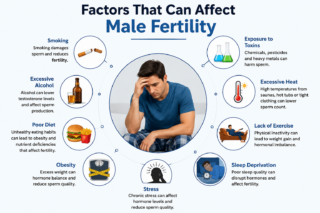
    Factors That Can Affect Male Fertility

    Factors That Can Affect Male Fertility
    Factors That Can Affect Male Fertility

    Modern lifestyle can influence overall reproductive health. Some factors that may be associated with reduced fertility include:

    • Smoking
    • Excessive alcohol consumption
    • Recreational drug use
    • Obesity
    • Poor diet
    • Lack of physical activity
    • Chronic stress
    • Inadequate sleep
    • Exposure to certain chemicals
    • Excessive heat exposure
    • Some medications or medical treatments

    These factors do not explain every case of infertility. A man should not assume that lifestyle is the only cause of a fertility problem. Medical assessment remains important.

    Smoking and Male Fertility

    Smoking can negatively affect sperm production and semen quality. Tobacco exposure has been associated with changes in sperm count, motility and morphology.

    Men who are trying to conceive may benefit from stopping smoking and discussing their overall reproductive health with a healthcare professional.

    Diet and Nutrition

    A balanced diet provides nutrients needed for general health and normal reproductive function. Fruits, vegetables, whole grains, healthy sources of protein and other nutrient-rich foods can form part of a healthy lifestyle.

    However, diet alone cannot correct every cause of male infertility. Men with abnormal semen results should undergo appropriate medical evaluation.

    Male Infertility Treatment Options

    The best male infertility treatment depends on the underlying cause, severity of the problem, age and fertility status of both partners.

    Treatment may include lifestyle changes, medication, surgery or assisted reproductive techniques.

    Male Infertility Treatment Medicine

    Medication may be recommended when a specific medical or hormonal condition is identified. Hormonal treatment, for example, may be appropriate for selected men with certain endocrine disorders.

    Men should not take fertility medicines or supplements without medical advice. Treatment should be based on the underlying diagnosis.

    Surgical Treatment

    Some structural problems may be treated surgically. For example, surgery may sometimes be considered for selected men with varicocele or reproductive tract obstruction.

    Surgical sperm retrieval may also be considered in specific cases where sperm are not present in the ejaculate but may be available within the testicular or epididymal tissue.

    IUI for Male Infertility

    Intrauterine insemination, or IUI, may be considered for selected couples when the male partner has certain semen abnormalities and the overall fertility situation is suitable.

    During IUI, prepared sperm are placed directly into the uterus around the time of ovulation.

    IVF Treatment for Male Infertility

    IVF, or in vitro fertilization, may be recommended when male-factor infertility is more significant or when other fertility factors are also present.

    In IVF, eggs are collected and fertilized with sperm in a laboratory. The resulting embryo may then be transferred to the uterus.

    Couples considering IVF treatment in India should discuss the expected treatment plan, investigations, medications, laboratory procedures and overall treatment cost with a qualified fertility specialist.

    ICSI for Male Infertility

    Intracytoplasmic sperm injection, commonly called ICSI, is a specialized form of IVF in which a single sperm is injected directly into an egg.

    ICSI may be considered in certain cases of severe male-factor infertility, including very low sperm numbers, poor sperm motility, previous fertilization failure or situations where surgically retrieved sperm are used.

    Male Infertility Treatment for Low Sperm Count

    Male infertility treatment for low sperm count depends on why sperm production is reduced.

    The doctor may investigate:

    • Hormonal problems
    • Varicocele
    • Infections
    • Genetic factors
    • Medications
    • Lifestyle factors
    • Testicular conditions
    • Previous surgery or medical treatment

    Depending on the diagnosis, treatment may include lifestyle modification, medical treatment, surgery, IUI, IVF or IVF with ICSI.

    A low sperm count does not automatically mean that natural pregnancy is impossible. The severity of the problem and the fertility status of the female partner also need to be considered.

    When Should You See a Male Infertility Treatment Doctor?

    A couple should consider a fertility evaluation when pregnancy has not occurred despite regular unprotected intercourse or when there is a known reproductive problem.

    A male infertility treatment doctor or fertility specialist can assess the male partner alongside the female partner rather than assuming that infertility is caused by only one person.

    Men may also benefit from an earlier evaluation if they have a history of testicular problems, reproductive surgery, chemotherapy, certain hormonal conditions, erectile or ejaculation difficulties, or previously abnormal semen results.

    How to Choose a Male Infertility Specialist?

    When choosing a specialist, consider the doctor’s qualifications, experience with male-factor infertility, diagnostic facilities, treatment options and the ability to coordinate care with a fertility clinic.

    For complex cases, patients may need access to semen analysis, hormonal testing, reproductive urology, IVF, ICSI and sperm retrieval services.

    Patients searching online for a male infertility doctor near me should also verify the clinic’s qualifications and treatment facilities rather than relying only on rankings or advertisements.

    Male Infertility Treatment Cost

    The male infertility treatment cost varies significantly depending on the cause of infertility and the treatment required.

    A basic evaluation may involve consultation and semen analysis, while more complex cases may require hormone tests, imaging, surgery, sperm retrieval, IVF or ICSI.

    The final cost may therefore depend on:

    • Diagnostic tests
    • Consultation
    • Medicines
    • Surgical procedures
    • IVF treatment
    • ICSI
    • Sperm retrieval
    • Laboratory procedures
    • Number of treatment cycles

    Patients should request a detailed treatment estimate from their fertility clinic before starting treatment.

    IVF Treatment in India

    IVF Treatment in India
    IVF Treatment in India

    India is considered by many international patients for fertility treatment because of the availability of fertility clinics, assisted reproductive technologies and specialists in major cities.

    Patients researching IVF treatment in India may compare clinics based on:

    • Fertility specialist qualifications
    • Embryology laboratory facilities
    • Available treatment options
    • Experience with international patients
    • Diagnostic services
    • Treatment transparency
    • Overall treatment cost

    People searching for the best IVF clinic in India should focus on medical suitability and transparent information rather than relying only on the word “best.”

    IVF treatment options in India can include conventional IVF, ICSI, donor-related treatments and other assisted reproductive procedures when medically appropriate.

    Frequently Asked Questions About Male Infertility

    What are the four common causes of male infertility?

    Common causes include problems with sperm production, impaired sperm movement or quality, reproductive tract obstruction and hormonal or medical conditions. Lifestyle and environmental factors can also contribute.

    Can male infertility be treated?

    Yes. Treatment depends on the underlying cause and may include lifestyle changes, medicines, surgery, IUI, IVF or ICSI.

    What is the treatment for low sperm count?

    Treatment depends on the cause and severity. A doctor may recommend lifestyle changes, medical treatment, surgery or assisted reproductive techniques such as IUI, IVF or ICSI.

    Can a man with azoospermia have a biological child?

    In some cases, biological fatherhood may be possible. Depending on the cause, sperm may sometimes be retrieved directly from the reproductive tissues and used for IVF with ICSI.

    Is male infertility treatment possible without IVF?

    Yes. Not every male infertility case requires IVF. Depending on the cause, treatment may involve lifestyle changes, medicines, surgery or other fertility treatments.

    Is male infertility treatment available in India?

    Yes. Fertility centres in India offer diagnostic services and several treatment options for male-factor infertility, including IVF and ICSI where medically appropriate.

    What is the first test for male infertility?

    Semen analysis is commonly used as an initial investigation. Additional tests may be recommended depending on the semen results, medical history and physical examination.

    Does age affect male fertility?

    Male fertility can change with age. Sperm parameters and reproductive health may be affected by advancing age, although the degree varies between individuals.

    Conclusion

    Male infertility is a medical condition that can have several causes, and it should not be considered only a problem related to sperm count. Sperm quality, motility, morphology, hormone levels, reproductive anatomy, lifestyle and other medical factors can all influence male fertility.

    The first step toward effective male infertility treatment is an appropriate diagnosis. Semen analysis and other investigations can help identify potential problems and guide treatment.

    Depending on the cause, treatment may involve lifestyle changes, medicines, surgery, IUI, IVF or ICSI. Men with very low or absent sperm may also be evaluated for specialized sperm-retrieval procedures.

    If you are experiencing difficulty conceiving, consult a qualified fertility specialist for an individualized evaluation rather than self-treating based on online information. GO IVF SURROGACY can provide information about available fertility treatment options and help patients understand the next steps in their fertility journey.

      Leave a Reply


      How-Common-a-Problem-is-Male-Factor-Infertility-min-1.jpg

      Infertility is defined as one of the hormonal disorders that occur in men and women, who in turn unable to conceive in the natural way. If a couple is trying hard to achieve pregnancy for more than 12 consecutive months and unable to give birth to a newborn, then the concerned couple is required to seek the best medical advice without any delay.

      If a couple is unable to conceive, it’s always not the matter of female’s egg quality; it can also be the issue of the male fertility as well. It’s old thinking that a woman is supposed to be infertile when struggling to have a baby. Grow up! We are living in the modern era of the 21st century, here males and females are given equal rights.

      Infertility, although it was supposed to be the women’s issue a few decades back. If talking about today’s era, 55-57% of the couple’s pregnancy, male factor infertility is involved. Usually, 40% – 45% of all males have infertility issues impregnating their partners. Therefore, when a couple is facing trouble achieving pregnancy, then the evaluation of both- man and women should be done.

      Different medical conditions and other external factors also contribute to fertility issues, and some of the cause of infertility case is unexplained. Unexplained or unknown infertility issue occurs when the male has everything normal (in the evaluation test) still unable to impregnate his partner.  Approximate, one-third of the infertility cases are set off due to the male reproductive issues, whereas, one third is associated with the female reproductive issue and one-third by both- men and women or by unexplained infertility issue. All in all, male factor infertility is nowadays prevalent and a common problem these days.

      When to seek Medical Guidance

      You need to seek medical guidance when you have been trying to impregnate your partner after a year of regular and unprotected intercourse. You can find the doctor’s help when –

      • You do have ejaculation issues
      • Very low sex drive
      • Problems with the sexual function
      • Swelling in the testicle area
      • Pain or discomfort in the testicular area
      • Prostate issues
      • You have undergone a major surgery
      • Penis, testicle or scrotum surgery

      How is Male Infertility diagnosed?

      A male, if facing infertility issues, need to know what exactly fertility problem he has. To see the cause of infertility, there is some diagnostic process in which a man undergoes a thorough physical examination, medical history, etc. The very next step is sperm evaluation, also referred to as a semen analysis test.  This is the test, which is performed inside the lab under the guidance of the fertility team.

      For the semen analysis test, a male provides his semen sample to the centre for the evaluation. The lab will monitor the sperm count in the seminal fluid, check the morphology of the sperm, and also the movement of the sperm (are the sperms moving in a motile way or not). These tests are done to determine sperm quality and health.

      Fertility Treatments that help with male factor Infertility?

      There are several ways of treating male infertility issues. The exact method depends on the source of the male fertility problem. Let’s look into some of the male infertility treatments

      • IUI Technique –

      This is one of the male fertility treatments, where washed sperm is directly placed into the uterus. During IUI treatment, a semen sample is submitted by the male partner to the centre for the next procedure. IUI is the primary male fertility treatment, where minor fertility issues are solved.

      In the process of IUI, the semen sample received by the male partner is washed by a unique technique. After washing the sperm, the sperms are out of any impurity and dirt substances; it thus helps the couple to conceive. IUI can be done with or without stimulation medication. If medication is not used then the washed sperm is transferred into the female’s uterus at the time of her ovulation. Ovulation is either determined by the ovulation predictor kit or estimated by the cycles (if the female has a regular menstruation cycle). IUI is recommended when a male has underlying fertility issues.

      • IVF treatment with ICSI –

      IVF is one of the advanced therapies of the Assisted Reproductive Technique (ART) and is used to eliminate the tag of childlessness from one’s life. During the IVF technique, eggs are retrieved from the female partner and mixed with the sperms. If the male has an issue in his semen or sperm quality, then the expert will apply the ICSI technique with IVF.

      During ICSI, a single sperm is injected into each egg (retrieved through the procedure of IVF) directly. ICSI is the process where the expert chooses the most motile and active sperm for direct insertion. ICSI is the best technique for men who have low sperm count or less mobility.

      • IVF-ICSI with Surgical Sperm Retrieval way –

      SSR or Sperm Surgical Retrieval procedure is a process, in which sperms are surgically collected from the male’s reproductive part (such as testes, epididymis). This process is accomplished with the technique of IVF-ICSI.

      SSR is performed when a male is supposed to have no sperm in his semen ejaculation.

      Who We Are –

      Go IVF Surrogacy is one of the fastest and growing healthcare sites that serve the best medication in the fertility domain. We are specialized in providing a decent success rate of IVF treatment. Also, we provide all the exceptional amenities all through the way of the couple’s infertility. The team of Go IVF Surrogacy will first analyze the couple’s (whether male or female) infertility case, and then the specialist will evaluate which treatment supposed to be applied.

        Leave a Reply


        Disclaimer

        Under the pre-Conception and Prenatal Diagnostic Techniques (PCPNDT) Act, 1994, prenatal sex determination is banned in India. No test or treatment for sex selection, sex determination, gender selection, gender determination is done in India.

        Ask to Expert

        Ms. Priyanka (Coordinator) India: ‪+91 9899293903‬ India - New Delhi, Mumbai, Chennai Kolkata, Bangalore, Hyderabad Nepal, Georgia, Kazakhstan, Dubai, Ghana, Kenya, Thailand Mail Us: possible@ivfsurrogacy.in

        Home

        About Go IVF Surrogacy

        With over 19 years experience and over 10,000+ successful live births through IVF, we are dedicated to hand out best fertility treatment and personalized nursing to accomplish couple’s parenthood soon.

        Our Rating

        Our Patients Rated us on Google 4.7 out of 5 Based on 395 Vot