Blog

Best IVF and Surrogacy Blogs

Donor-egg-IVF-india-1200x583.png

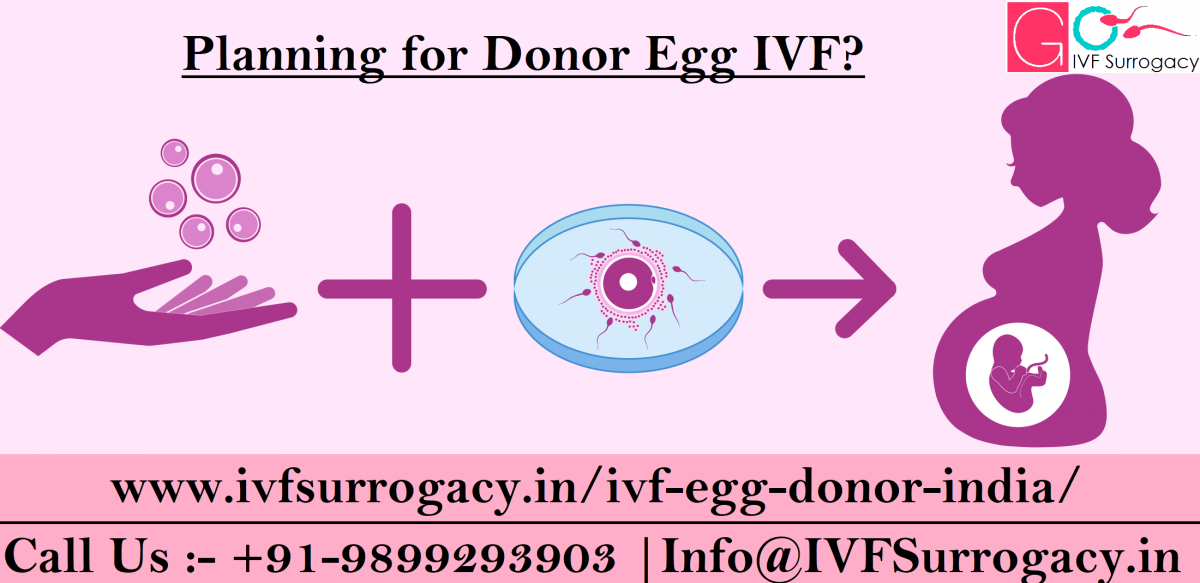
Deciding to settle on donor eggs with IVF treatment is often not easy. If a couple has had an unsuccessful IVF attempt with their own eggs or been told to the woman that her ovarian reserve is insufficient for the treatment (IVF), then a couple should prepare their mind to go for Donor Egg IVF. Once the couple plans for their IVF with the help of a donor egg, then it will be soon going to hit for them.

Donor egg is a kind of miracle to attain parenthood, yes! This is one of the best procedures especially when a female is unable to produce healthy and fine quality of eggs during their IVF treatment. Eggs from healthy and fit donors make IVF possible for those women who are in their advanced maternal age and want to conceive. And if a woman is under 35 or 35-40, then donor egg IVF will be going to a boon for these women age group.

The success rate of a donor egg with IVF is higher than the younger woman (25-37) comparing with the advanced age of women (38 or above). Go IVF Surrogacy is one of the leading fertility centres that come up with the best result and world-class treatment of IVF and other ART techniques.

Many women have conceived successfully with donor egg after age 40 from Go IVF Surrogacy, several celebrities too have undergone by this method to attain parenthood. When a couple makes their mind to go for Donor egg, there are several aspects, which they need to consider before choosing an egg donor; there are some crucial facts mentioned below that will surely help you to choose an appropriate and right egg donor for your IVF.

Known Donor vs. Anonymous Egg Donor

You can select Egg Donor in two ways-

  1. Known Donor
  2. Anonymous Egg Donor

A couple can go for their IVF treatment with the known donor; you can directly ask your relative, such as sister, close friend, next of kin, to donate the eggs for your IVF treatment. This donor egg IVF will also be cost-friendly because here the donor is known and there is not any kind of extra charges which have to be paid by the couple (except clinic’s test of the donor and charges of IVF). Known donor initial test is performed in the clinic to know the egg quality and AMH level of her eggs.

The other way to go for donor egg is to choose an egg donor through the fertility centre (where the couple is undergoing for their IVF), they also can go for donor agency or frozen egg bank. Most of the donors chosen by donor agencies prefer to keep the donor anonymous but some of the centers allow the donor to have contact from the baby conceived with their own eggs (generally it is not).

The donor egg agency, fertility centre and frozen egg bank are the best way to go for donor egg because they provide the eggs from the donor, who is all fit and healthy (after passing all the requirements of Egg donor). The anonymous donor has to sign a contract, where the donor waives all the parental rights and any baby born from her eggs are the legitimate newborns of the intended couple or prospective parents.

Medical History and Mental Health

This is another important aspect before you select an egg donor for your IVF treatment, you should go through a donor’s medical profile and her mental health. An egg donor from the fertility centre, frozen egg bank, donor agency, egg donor database, already provide screened and wholesome donor for the procedure. The first screen donor’s STI (sexually transmitted infections if any), HIV test, genetic and chromosomal defects; she has to submit a medical history of her and family’s too and once the donor qualifies the entire screening test and eligibility criteria, she gets selected as Egg Donor. So, if a couple thinks to hand-pick an egg donor from the fertility centre then there is no need to worry!

Apart from it, a donor also has to undergo psychological evaluation and tests. And, if the couple has chosen their own donor, she will be required to undergo few tests before the step of egg retrieval (such as HIV, STIs, and genetic errors, etc) to ensure whether she is the perfect candidate for donating the eggs.

Ethnicity, Eye or Hair Color –

True! A couple if fishing around for donor egg has to consider this factor too. A donor bank or fertility centre is of the wider mixture of ethnicities of the donor, resultant a plus point to choose the donor by the couple. Several couples choose an egg donor on the basis of characteristics that means what they want to have features on their newborn which will appear as the genetic trait of both Mother and Father.

A couple can easily get which kind of donor egg, they want on the basis of their priorities. A couple can select the donor with the same ethnicity, eye color, hair color to have the baby that looks like them.  Go IVF Surrogacy puts forward best and healthy donor (multiple databases of the donor) egg to the couple’s IVF process and has the best hand on IVF treatment with donor egg.

Did she donate her eggs before –?

Many couples have a preference to go for that donor, who has experience in donating eggs; this is because experienced donors know the procedure and must have a fine response to fertility medications.

In general, there is not any limit for a donor to donate her eggs throughout her life but there are certain rules applied by some fertility centre or agencies for how many times a donor can donate her eggs.  But it’s not any harm if a couple goes for the donor who is providing eggs for the first or second time because the donors provided by the fertility centre or agency are all capable of the procedure.

Is it Right Time For Fertility Treatment –

If you have planned for the IVF treatment, Go IVF Surrogacy is the best platform to come over for IVF. At this centre, you will meet up with a professional and skilled fertility team with a senior specialist, who has more than 30 years of experience in the domain of infertility treatments and has decent live birth counts via ART techniques. We provide each and every treatment at affordable cost, providing all the comfort and amenities to the patient during the course of medication.  We do have financing options as well. For those couples who think they may require an additional IVF cycle to attain pregnancy, Go IVF Surrogacy imparts with a second chance of IVF Refund Program that helps a couple to overspend on their fertility treatment, it also maximizes couple’s chance of getting pregnant and minimizes their risk of overpaying.
    Leave a Reply


    role-of-surrogate-gestational-surrogacy-min.jpg

    July 12, 2019 ivfsurrogacyinblog0

    Surrogacy is the best procedure to get your own child; did you know what surrogacy actually means? The actual meaning of Surrogacy is Rental Womb. True! Surrogacy is the process, where a woman keeps the fetus of another couple for 9 months in her womb carefully. Surrogacy is a boon for those couples who are due to their medical reasons, unable to carry a pregnancy. Gestational Surrogacy is the ultimate procedure to attain parenting and enjoy the most unforgettable days of your parenthood days.

    Who doesn’t want to hold tiny little fingers and hands of a baby in pink? Guess No-One, at a certain phase of a couple’s life, there is a requirement to welcome a new member and to get promoted from husband and wife to Mom and Dad.  At Go IVF Surrogacy, we fulfill this requirement and try to make the impossible task a possible one by elimination a tag of infertility in an individual’s days.

    What is Infertility and at which case, Gestational Surrogacy should be chosen?

    Infertility is all about misbalancing of the hormones due to the number of reasons that may arise from environmental factors, lifestyle factors (such as smoking, consumption of heavy alcohol, unhealthy diet plan, etc.), chemical hazardous in work area and many more variables affect individual’s fertility. Some medical reasons in female could be – damaged or blocked the fallopian tube, uterine issue, etc.

    Infertility disorder is of several types and so their treatments are. Since each individual is unique in his or her own way and that’s why a patient’s case fluctuates from one person to another.

    Now the question comes here that when Gestational Surrogacy should be considered? Okay, so before going into this chapter, let’s gather some basic info about Gestational Surrogacy.

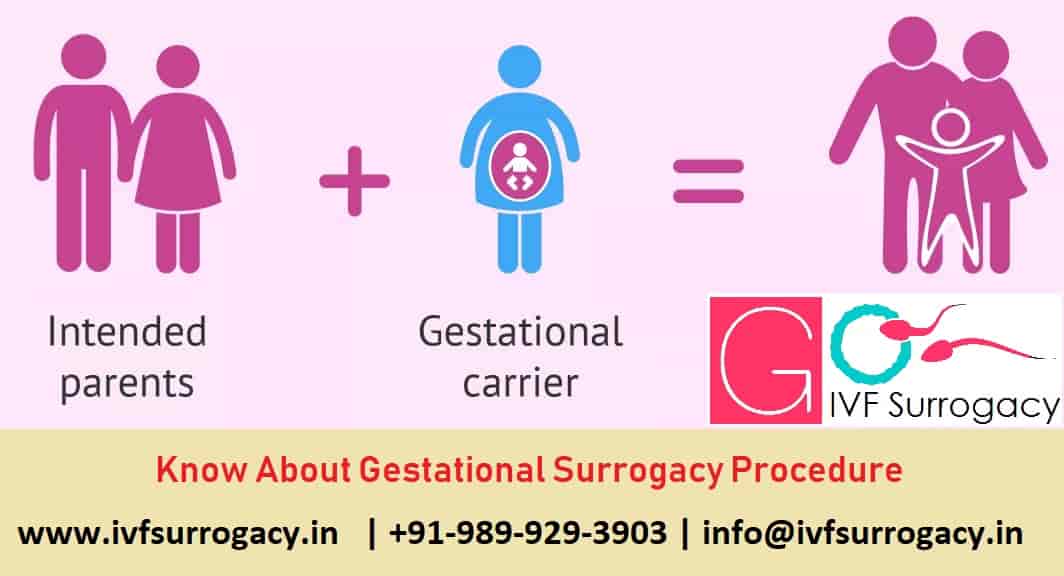
    Gestational Surrogacy – During this surrogacy, a surrogate carries an embryo after the intended couple’s IVF performed. Surrogacy is a complete-time taking procedure because here, a couple has to wait for more than 9 months to have their own baby but let the reader be aware of Gestational Surrogacy’s success rate is higher than any other ART techniques or we can say that it gives almost 100% success result to attain parenthood.

    Majorly in gestational surrogacy, the main responsibility is of a Gestational Surrogate, who begins her role from the step of embryo transfer and completes the task once she delivers a baby to the intended couple. Later on, post-care of a surrogate is taken care of by the fertility centre, which has provided the agreement of surrogacy and surrogate.

    The intended couple can choose surrogate mother by own as well, methods to go for a surrogate–

    1. She can be couple’s close relative, friend or family member
    2. A couple can choose the surrogate from the surrogacy agency
    3. the surrogate mother is best available at ART specialist centre too

    Go IVF Surrogacy is one of the leading ART fertility centers that provide fit and healthy surrogate during the surrogacy procedure. Surrogacy and other ART treatments are performed under the guidance of the best fertility team and veteran fertility specialist, who have more than 30 years of experience for eradicating infertility issue.

    Gestational Surrogacy should be considered by the couple when –

    Gestational surrogacy is the second to none advance Art technique that comes up with the highest success rate and a decent delivery count. This surrogacy should be planned when –

    • A couple has been experiencing repeated miscarriages
    • Female has been undergone surgery of uterus removal (hysterectomy)
    • Female has some severe uterine issue
    • Has an anxiety disorder or acute disease
    • A woman, who produces healthy eggs but due to her uterine issue, she can’t carry the pregnancy
    • Recurring IVF treatment failure

    Gestational surrogacy is chosen by gay couples as well, where one of the partners provides own sperm sample and with the help of donor egg, fertilization is accomplished. Once an embryo is created, the embryo is placed into the uterus of the surrogate.

    Surrogacy has been a blessing for not only infertile couples but also a single parent and a gay couple. There are different surrogacy agreements in various countries and on the basis of the country’s rules and guidelines, Gestational Surrogacy is performed.

    The procedure of Gestational Surrogacy –

    Gestational Surrogacy as earlier said is the best ART technique and always accomplished by IVF treatment. Surrogacy without IVF method is not possible, although there is one surrogacy that not requires IVF and that surrogacy method is referred to as Traditional Surrogacy. During this surrogacy, a surrogate uses her own eggs and by the technique of Artificial Insemination or IUI, sperms are washed carefully and placed into the uterus of the female (by knowing the exact ovulation date of the surrogate). This method takes a risk of emotional bonding because here the baby is related to the surrogate mother by genetic bond, hence traditional surrogacy is not preferred by the couple, and even this surrogacy is banned in many of the countries too.

    During Gestational Surrogacy, the initial steps are the same as IVF treatment. Ovary stimulation is done, where a female has to undergo with fertility drugs and regular hormonal injection, this course is of 10 to 13 days until the female reaches the level of a matured egg.

    Via Transvaginal ultrasounds, experts evaluate the maturity level of eggs and once they get confirmed about full-grown eggs in the female’s ovary, they start preparing for the next step that is – Collection of the eggs or Follicular Aspiration. This is a minor surgical procedure, where a female is given local anesthesia before collecting the eggs. It might happen that a female experiences cramp after this process but no worries, as this cramp and discomfort will go by 5- 6 days. The experts of Go IVF Surrogacy carry out this step in a calm and careful manner by cutting down any discomfort and pain throughout the entire procedure.

    These eggs are collected with the help of a hollow needle from each ovary. Keeping all the eggs on a culture dish, the fertilization process is initiated.

    On the very same day of the egg collection process, collecting the semen sample is done; by mixing the sperms and retrieved eggs in the same culture dish, the process of fertilization is carried out. Fertility experts of Go IVF Surrogacy hand-pick one or two (by the consent of the couple) fine embryo (s) for the last step of IVF- embryo transfer.

    But here, the story turns left, instead of placing the embryo into the recipient’s uterus, this embryo is transferred into the surrogate’s uterus. And from here, Gestational Surrogate takes the role over.

    Since now, the vital role plays by surrogate mother or gestational surrogate. Once the surrogate mother completes 9-month pregnancy duration, Gestational Surrogacy is about to end. So, the last step of this surrogacy is done by submitting the new-born to the intended couple.

    Here we are, providing each and every minute detail of Gestational Surrogacy and its procedure.

    Take-Home a Message –

    Gestational surrogacy is the preferred method to have your own biological child. Another plus point of this surrogacy procedure is that the toddler has a direct relation with the intended couple or actual couples. There is neither any risk nor any emotional attachment that could happen all through the journey of Gestational surrogacy method. So, if a couple is experiencing recurrent miscarriages or a female partner has uterine issues, maybe the absence of uterus, then the couple must consider for gestational surrogacy to enjoy their parenthood days soon.

      Leave a Reply


      How-men-low-sperm-count-can-be-treated-min.jpg

      The following are some common treatments to treat the men low sperm count and these are:

      a) Surgery: Your fertility expert will perform surgery through which he/she will correct a varicocele or an obstructed vas deferens can be repaired. The prior vasectomies can also be reversed. In cases, the sperms are not available in men’s ejaculate that can be retrieved directly from the testicles or epididymis using sperm retrieval techniques.

      b) Treatments for intercourse issues: This can be treated by taking medication or counseling which can help in improving the fertility in conditions such as erectile dysfunction or premature ejaculation.

      c) Hormone treatments and medications: Your fertility expert at Go IVF Surrogacy will recommend hormone replacement or medication treatment and this will be recommended when the infertility is caused by high or low levels of certain hormones with the way the body uses hormones.

      d) Treating infections: Your fertility expert will recommend some antibiotics which can cure an infection of the reproductive tract, but this treatment does not always restore fertility.

      e) Assisted reproductive technology (ART): ART is a procedure in which your fertility experts will obtain sperm through normal ejaculation, surgical extraction or from donor individuals, and this will depend on your specific situation. The sperm is then inserted into the women uterus, or that will be used for IVF or Intracytoplasmic sperm injection.

      What are the symptoms of low sperm count?

      The main symptom of low sperm count is the inability to conceive a child. There are cases where are some underlying problem such as an inherited hormonal imbalance, dilated testicular veins or a condition which blocks the sperm passage which may cause signs and symptoms. The following are the low sperm count symptoms:

      • Male member dealing with the problems of sexual function, for example, he may face difficulty while maintaining an erection or low sex drive.
      • Male member dealing with pain, swelling or a lump in his testicle area.
      • There is a decreased facial or body hair or other signs of a chromosome or hormone abnormality.

      What are the reasons for low sperm count?

      The following can be the reasons for low sperm count and these are:

      a) Medical Problems: A condition which is known as varicocele that causes swelling of the veins that drain the testicles and is the most common and reversible cause of low sperm count. There are certain infections which can interfere with sperm production. Medications which can cause ejaculatory problems, cancers, and tumors, etc. are all other medical reasons for oligospermia which results in low sperm count.

      b) Environmental factors: An environmental factor includes the exposure to industrial chemicals and radiation and overheating of the testicles. The production of sperm mainly depends on the temperature of the testicles. The scrotum regulates the temperature of the testes. However, if there is an extreme heat situation, the natural cooling of scrotums could be insufficient to prevent the rise in testicular temperature. It has been found that the increase in temperature affects both the quality and quantity of the production of the sperm.

      c) Lifestyle and health issues: The excessive use of drugs, consumption of alcohol and smoking, unhealthy eating habits, sedentary lifestyle, wearing tight clothes, excess body weight, emotional stress, etc. are factors which affect the quality of the sperm production.

      How to prevent low sperm count?

      To prevent the low sperm count you need to avoid some factors which are affecting the sperm count and these are as follows:

      • Avoid smoking
      • Try to limit the consumption of alcohol.
      • Before taking any medicine to speak to your fertility expert whether the medication is affecting the quality and quantity of your sperm production.
      • Maintain ideal body weight according to your body mass index (BMI).
      • Avoid heat
      • Avoid pesticides, heavy metals, and other toxins.
      • Avoid stress

      What tests your fertility experts recommend to identify the low sperm count?

      The following are some common tests which your fertility expert will recommend so that they can identify the low sperm count and these are:

      a) Scrotal ultrasound: The fertility expert will conduct this test so that with the help of high-frequency sound waves they are able to look at the testicles and supporting structures.

      b) Hormonal testing: Your fertility expert will recommend a blood test which helps in determining the level of hormones produced by the pituitary gland and testicles and this play a key role in sexual development and sperm production.

      c) Testicular biopsy: Your fertility expert will perform this test in which he/she will remove the samples from the testicle with a needle. After the testicular biopsy, your fertility expert is able to confirm whether the sperm production is normal. If it is then your problem is likely caused by a blockage or another problem with sperm transport. However, this test is not commonly used to diagnose the cause of infertility.

      d) Genetic tests: When the concentration of the sperm is extremely low the reason could be a genetic disorder. Your fertility expert will recommend a blood test which can reveal whether there are subtle changes in the Y chromosome which is a sign of a genetic abnormality. Genetic testing is also recommended to diagnose various congenital or inherited syndromes.

      e) Post-ejaculation urinalysis: This test is conducted to indicate that sperm in your urine is traveling backward into the bladder instead of out your penis during ejaculation.

      f) Transrectal ultrasound: During Transrectal ultrasound your fertility expert will insert a small lubricated wand into your rectum to check your prostate and check for blockages of the tubes which carry semen.

      g) Anti-sperm antibody tests: These tests are conducted to check for immune cells which attack sperm and affect their ability to function properly.

      h) Test for sperm function: Your fertility expert will perform the number of tests to check how well your sperm survive after ejaculation, are they able to penetrate an egg and whether there’s any problem while attaching to the women egg. These are the tests which are rarely performed and do not have any significant change treatment recommendations.

        Leave a Reply


        laser-assisted-hatching.jpg

        June 25, 2019 ivfsurrogacyinblog0

        Are you facing an issue during the implantation procedure (under your IVF treatment)? If yes, then LAH technique with IVF will be beneficial for you. LAH or Laser Assisted Hatching procedure is nowadays has become the most acceptable process in ART technique and is performed when a female has the issue with her implantation step in IVF.

        Assisted Hatching is usually referred to as LAH, is a procedure where zona pellucida – the outer shell of the embryo is carefully opened with the help of micromanipulation.  It is an advanced method to hatch an embryo to get favorable outcome during implantation of the embryo into the uterus lining. Pregnancy is all dependent on successful implantation and once implantation has occurred, pregnancy soon takes place. The rate of pregnancy turns high with laser assisted hatching method with IVF. Several women before their embryo transfer choose LAH to ensure a positive result of implantation.

        What is Zona Pellucida?

        Zona pellucida plays a crucial role during the entire procedure of LAH method. Retrieved eggs (after completing the dose of fertility medication and injections) not yet fertilized with a sperm, has an outer shell- which is referred as Zona Pellucida, this shell only allow a single sperm that can perforate with it and enter into the cytoplasm of the egg for further cell division. When fertilization happens, that means, a sperm directly enters through zona pellucida reaching into the cytoplasm of the egg, the zona shell keeps the cells of the embryo together.

        Once the sperm bind with the receptor of zona pellucida, one of the zona glycol-protein is liberated, which in turn, causes father sperm to let go more enzymes, now the zona pellucida dissolves in that area and the sperm finally gets all the way through the wall to the actual egg cell.

        The zona pellucid has different functions achieving pregnancy that include in oocyte growth, protection throughout its development, fertilization, spermatozoa binding, not allowing polyspermy, blastocyst growth and prevention of premature implantation.

        What if the embryo’s zona pellucida wall is hard? Obviously, in this case, there will be difficulty in achieving implantation. An embryo may not be able to hatch from its zona to attach to the womb of the recipient.  During LAH procedure, a small hole is created in the zona pellucid of the embryo and with the help of a laser beam and micromanipulation method, the outer side of the embryo is drawn out and this, in turn, smooths the path of embryo hatching and result in easy implantation.  Laser-assisted hatching technique is more rewarding for those women who are above 35.

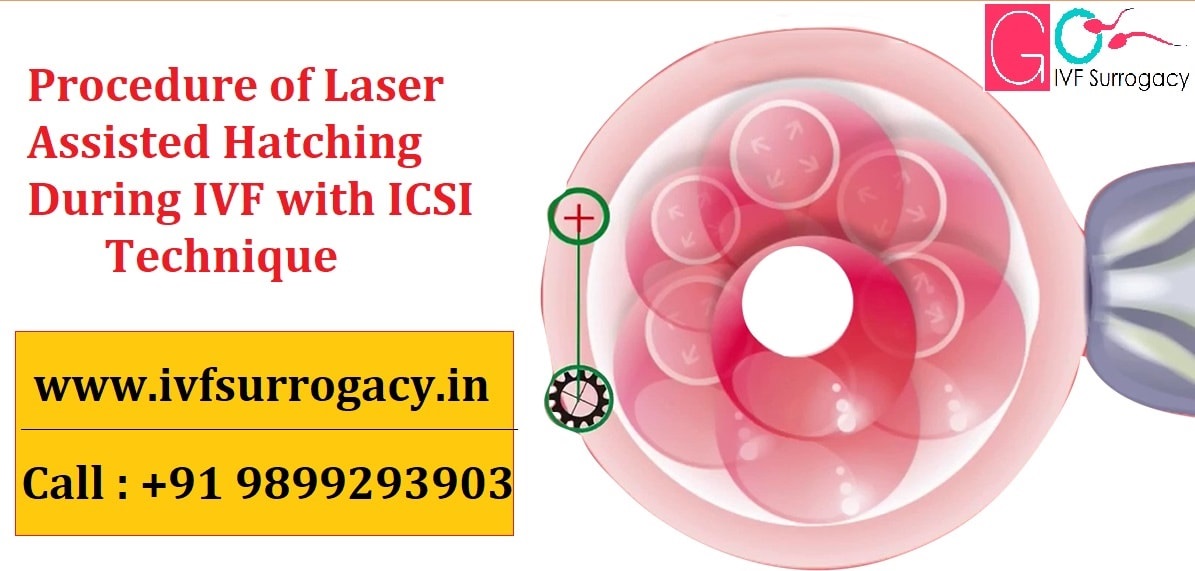
        The procedure of laser Assisted hatching during IVF with ICSI

        IVF with ICSI treatment is all based on the insertion of single motile and active sperm into each egg (after the collection of the unfertilized egg from each ovary). By using the advance micromanipulation technique, fertility experts select the sperm individually and microinjected into each egg. Once the insertion is done, fertility specialists wait and check the sign of fertilization in each oocyte or egg. ICSI is best suitable for male infertility factor; where the male partner sperm is unfit to self penetrate with the egg.

        LAH or Laser-assisted hatching is a technique, is always used during the process of IVF. This method is performed after the third or fourth day of the fertilization step. LAH is not at all a time-taking technique. During LAH technique with IVF in ICSI, a laser beam is employed on the outside shell of an embryo; many of the people think that during this technique, the embryo is in danger from this laser but it’s not like this. Here the embryo does not come directly in contact with the laser, so the embryo is out of any harm.

        The beam is performed by using an infrared 1.48-μm diode laser. Zona pellucida gets softened by this laser beam and hence the opening of an embryo is enhanced after this laser technique.

        Laser Assisted Hatching with IVF in ICSI treatment is not a delayed method; this hardly takes few milliseconds. Laser beam thins the wall of zona pellucida shell to around 10 microns. And once this shell is softened, embryo hatching easily happens.

        If the embryo doesn’t hatch properly, implantation and pregnancy will not take place and hence it is mandatory for the implantation- hatching is a must.

        Who can undergo IVF with LAH?

        • Women, who are above their fertility age (usually at the stage of 35-40) – can opt for IVF with LAH. As the woman’s age increases, the shell becomes harder and occurring trouble in implantation. So, basically, zona pellucida softness and hardness is based on the age of the woman. This is the main reason, why younger women do not opt LAH with their IVF treatment because their shell is gentle than elder women.
        • Women whose shell of an embryo is thick and unable to hatch naturally.
        • Women, who have high follicle stimulating hormone (FSH) level, can go for this method.
        • Couples, who have chosen frozen embryo transfer in their IVF (the process of thawing or freezing the embryos make zona pellucida hard)
        • Poor quality of the embryo and be short of energy and nutrients to outright the hatching process.

        Success Rate and the Cost of LAH with IVF/ICSI 

        If we talk about the success rate of LAH with IVF/ICSI, then must say it results in good live birth through ART technique. Somehow, the success depends upon the embryologist’s experience and fertility team too.

        LAH is the delicate process that must be carried out in a sophisticated manner and thus it needs skillful hands for accomplishment. The success rate of LAH is basically depended on –

        • Age of the woman
        • Embryo quality
        • Clinic’s success rate
        • Embryologist experience and qualification

        Go IVF Surrogacy is the golden platform, which unravels any case of infertility in a calm way and results best in success rate. Providing all the latest techniques with ultra-modern equipment during the medication, it is famed for its high success rate and delivery counts.  The cost of LAH in India ranges from INR 20,000 to INR 30,000 (excluding the charges of IVF/ICSI). LAH has been proven as the best method to increase the chance of attaining pregnancy.

          Leave a Reply


          Some-of-the-best-ways-to-uphold-male-fertility.jpeg.jpg

          It takes two to create a baby. Although a woman carries the baby and delivers the child after the completion of 9 months of pregnancy duration, a male partner to contributes an imperative position to put forward the result (i.e. baby).

          If you are trying to conceive then you need to know that fertility potential plays the most vital role in achieving the pregnancy. Male and female fertility- both serve an important function to get conceived. Several people think that female fertility is all we need to get a baby but here’s a Big NO, because female fertility is not the only one that plays a significant role, male fertility potential imparts an equal role in it. During this page, we will be gathering some essential details about male fertility, factors like –

          • How a male can maintain his fertility? Or
          • How to boost up man’s fertility?
          • What are the ways to enhance the capacity of male’s fertility?

          What are the requirements for successful fertilization?

          When a motile and active sperm self penetrates with the wall of the egg and goes into the cytoplasm of the egg, then here’s the positive indication of successful fertilization. To make fertilization happen, the male partner must be able to make a healthy and enough sperm. Not only healthy sperm is enough, normal shape and a perfect movement are also important to penetrate the egg’s wall. An issue with any of this step can create a hurdle to achieve pregnancy.

          Several factors from genetics and lifestyle to the environmental exposures and also hormones affect a male’s fertility and therefore it is hard to find the exact cause for infertility issue in male. Work environment and chemical exposures also cause an adverse effect on male fertility.

          There are some effective steps, which men can opt to enhance or to improve their fertility. Let’s read some of the points in details. Go IVF Surrogacy is one of the leading fertility centres that come up with the most amazing success rate in male or female fertility treatments. The specialists of Go IVF Surrogacy provide unsurpassed consultation to the couple (regarding any issue related to fertility and pregnancy) in a very satisfied manner.

          How to maintain fertility in males?

          1. Get your health condition under control –

          Controlling BP (blood pressure), diabetes may improve a man’s chances of making his partner pregnant. If a male is facing a hard time with his high Blood Pressure then there are some medications which are prescribed by the specialist to control high blood pressure (beta blockers), depression, and anxiety. But sometimes this medication could also give a negative result on fertility so you need to consult with a specialist first before starting the medications.

          1. Regular exercise –

          Health and Body are totally interconnected with each other. If you will have a sound body then you need not face any issue in your life.

          And what makes the body healthy? There are several methods to make your figure up to the mark by doing proper exercise, being physically active, walking, jogging, etc. Researchers have researched that regular exercise helps in reducing stress level and makes a man feel better.

          1. Say No to Smoking –

          As we already know that smoke causes an adverse effect on fertility then why male or female takes this toxic product- Cigarettes. A cigarette is a hazardous product that harms greatly our body system, especially fertility potential in male.

          Smoking is directly linked with the breakdown of sperm quality and quantity. Researchers have shown that the men who smoke daily are likely to have less sperm than the men who least smoke. Male smokers have decreased sperm count, less sperm movement and have a higher number of abnormally shaped sperm.

          Drinking habit or heavy alcohol also causes male sperm decreased and result in poor quality. Marijuana and other anabolic steroids for bodybuilding should also be avoided as some of the studies depicted that intake of such drugs impacts negative sperm production.

          1. Lose extra pounds if you are in the group of extra-weight –

          A 2012 study has shown that obese and over-weight men take longer to make their female partner conceived than those men who haven’t any weight issue. Males who have weight problem are more likely to have low sperm counts, decreased sperm motility, and may have damage to genetic material in sperm. It has been said that too much body fat is directly linked with the changes in testosterone.

          NOTE – Healthy diet and a proper day to day activity influences male fertility potential. Diet chart may include fresh fruits, plenty of vegetables (a rich source of antioxidants helps to make healthy sperms). Avoid heat exposures, long hot tubs, steam rooms; these are some factors that increase the scrotal temperature and this, in turn, reduces the sperm count and the quality of the sperm.

            Leave a Reply


            Average-Cost-of-IVF-treatment-in-Delhi-min.jpg

            June 5, 2019 ivfsurrogacyinblog0

            Okay! So, if you have planned for IVF treatment then you have selected a perfect fertility treatment for yourself to get rid of that ‘Childlessness’ tag from your life. Though it would be very hard to digest about that you are unable to give birth on your own but Chill, you are not alone in this battle, which is referred to as Infertility. There are several couples, who face a hard time to achieve their pregnancy and thence they go for fertility treatment to get conceived.

            Infertility and its Treatment- a brief knowledge –

            What is Infertility and why age plays an important role in IVF treatment?

            Infertility is outlined as a couple’s inability to get pregnant after one year of doing unprotected intercourse. Infertility is perceived as a social downside in many of the countries, with numerous medical manifestations.

            Infertility is rising day by day, there are several external factors that initiate its upright, some of the important factors are- environmental pollution, hectic schedule, hazardous toxins, improper lifestyle (that includes inappropriate food habit, addiction of alcohol, smoke, etc.), these are some major points that cause an adverse effect on fertility potential. In average, 12-15% of couples worldwide or one in six couples globally struggling for their pregnancy. Right now, the amount of impotent or infertile couples stands at 60-80 million, and also the range is increasing each year.

            In our country, infertility disorder is determined in 35-40% of men, And an equal share of ladies, while, each partner faces the matter in 20-30% of cases.

            However, development and advanced technology in life science have created a possibility for the infertile couples to experience and enjoy the days of their parenthood. More than 300 million test tube babies are born by the procedure of IVF treatment. IVF not only has given a ray of happiness to the couples but also it has been fulfilling the most wanted desire of the infertile couples’.

            One in six couple is affected by the infertility disorder. There are approximate 60-80 million impotent couples globally and also the rate of the infertile couples is increasing day by day. There are several couples, who without any hurdle, get conceived however others at some stage struggle or face issue in achieving their pregnancy and these couples want some other solution of achieving their baby.

            Infertility treatment majorly depends upon the factor of age or we can say any of the treatment’ success rate somehow dependent on the couple’s age. IVF Treatment in Delhi is one of the most effective fertility treatments that can be used as male or female infertility cases.

            Women, who have crossed their age of 35, ought to consult a professional if they want to get pregnant. The egg quality of the woman declines as the age increase. That’s the reason, why experts recommend the couples to get pregnant at the age of their best fertility potential phase. In many of the couples, the fertility is impaired to some extent however not utterly, these patients could conceive in the third year or afterward with none help as there’s a delay these couples (or the case of infertility) are known as subfertile.

            Cost of IVF Treatment in Delhi –

            Far reasonable cost of IVF in Delhi –

            Let’s come to the main point of IVF treatment cost in Delhi, there are many facts that you need to be gathered before undergoing IVF treatment. If you are still thinking that there is a single package of IVF, so you are here wrong because IVF charges vary on the basis of a couple’s infertility case. There are many techniques in ART methodology that once combined with IVF treatment; the IVF fee in Delhi gets modified.

            Why IVF treatment is combined? IVF is the best fertility treatment for all the infertility cases; this can be applied with several other techniques like ICSI, PICSI, IMSI and Sperm Surgical Retrieval procedure (TESA, MESA, PESA, etc). According to the particular issue of female or male infertility condition, IVF is combined with other techniques to get a favorable result.

            The average IVF cost in Delhi is straightforward and easy payable by the infertile couples, the infertile couples can easily think for this treatment without taking any stress or tension, this is because Go IVF Surrogacy puts forward the best IVF treatment and the lowest cost of IVF to the couples.  Go IVF Surrogacy is one of the leading and foremost centres that bring forward world-class treatment to the couple.

            The average cost of IVF in Delhi is INR 1,50,000; this package of IVF in Delhi comprises of  all the procedures such as hormonal level tests, physical screening before undergoing IVF treatment, fertility medications & medicine, transvaginal ultrasounds, each visit to the clinic, consultation charges, egg retrieval, semen assortment, fertilization, and embryo transfer.

            Let’s gain some more information relating to the IVF cost in Delhi

            • Consultation charge – INR 1,000
            • Fertility medicine or secretion injections – INR 50,000 – 60,000
            • IVF Cycle – INR 90,000
            • Post ET price – INR 15,000 (for fifteen days)

            In a clear view, IVF cost in Delhi is @1, 50,000 INR, by just paying this amount you will have your own baby soon. The package, which has been mentioned above is exclusive from Post Embryo Transfer procedure, if the couple wants to go for post embryo transfer then he or she needs to talk with the fertility consultants from the clinic, there will be some extra bugs, which a couple supposed to pay. However, in the package of IVF Cost in Delhi, these steps include –

            • Complete assessment of the female
            • Hormonal injections and fertility drugs
            • Monitoring of the follicles
            • Ultrasounds / Vaginal ultrasounds
            • Cost of IVF laboratory
            • Egg Retrieval step
            • IVF cycle
            • Embryo transfer

            Advance Cost of IVF in Delhi–

            IVF treatment is said to advance when the other fertility treatment is combined with it to induce effective result. The advance IVF cost in Delhi differs completely with the different treatments (if combined by the recommendation of fertility experts), for example, if IVF treatment is combined with ICSI treatment, the final package of the treatment will be an additional amount of ICSI with IVF. If IVF is applied with PICSI then the treatment price is changed.

            IVF Charges in Delhi using own eggs –

            IVF treatment is accomplished using several techniques as mentioned above. IVF with own eggs and own sperm means that both- male and female is healthy enough to unleash or produce healthy and motile eggs and sperms for fertilization. When this case of infertility happens, IVF is done using female’s eggs and male partner’s sperms. IVF Fee in Delhi using own eggs and own sperms is INR 1,50,000 (with all the expenses).

            IVF Cost in Delhi using a donor egg or donor sperm–

            When the female partner is unable to supply healthy and good quality of eggs for fertilization, donor egg IVF is used. Egg donor IVF is usually preferred by those females, who have crossed their age of 35 and producing low or poor quality of the egg.

            During this procedure of egg donor IVF, instead of female’s egg donor egg is used for fertilization. Initially, the donor has to undergo with all the steps until her eggs are not retrieved. Once the eggs are obtained by the donor, her role gets over. IVF cost in Delhi using donor egg is INR 2, 75, 000, where egg donor cost in Delhi is INR 1, 25,000 and traditional IVF cost in Delhi is INR 1, 50,000.

            On average, the Average Cost of IVF in Delhi ranges from Rs. 1,50,000 to Rs 1,75,000 (adding all the medication and procedure).

              Leave a Reply


              ezgif.com-webp-to-jpg-9-min.jpg

              May 31, 2019 ivfsurrogacyinblog0

              This page opens with a BIG CONGRATULATION for those couples, who have successfully accomplished the vital steps of IVF, i.e. embryo transfer and now they must have their fingers crossed to know the favorable results of pregnancy and sending best to the couples, who are on their way to undergo embryo transfer. Right, so not delaying more, let’s come to the main topic of this page, i.e. What to do before and after embryo transfer.

              What is embryo transfer and when embryo implantation occurs?

              Embryo transfer is one of the crucial steps of IVF treatment, during this a fertilized egg or says, an embryo is transferred into the uterus of the female. Once the embryo has been placed successfully in the female’s uterus, one last and essential thing that must happen before a patient is officially pregnant – IMPLANTATION.

              Embryo implantation occurs when the embryo gets attached to the endometrial lining of the uterus.  Implantation of an embryo usually takes after 1-5 days of the embryo transfer. The success rate of embryo implantation depends on two factors –

              1. The quality of the embryo
              2. The receptiveness of the uterus

              If a woman suffers from poor egg quality then it is possible, the embryo which then forms will be deficient in its healthy nature to accomplish the task of implantation. Those women, who have a poor quality of eggs, can go for the option of donor egg IVF. True, donor egg IVF increases the chances of both – implantation rate and healthy pregnancy.

              BEFORE EMBRYO TRANSFER –

              To follow correct and timely medication –

              A female has to follow all the direction of fertility medications. Whether a female is using her fresh embryo or a frozen embryo transfer, she will be likely to take progesterone and some other supportive medications. Make sure a female follows the proper direction from the clinic and the time of how the medicines supposed to take.

              A couple can go for PGD before their embryo transfer –

              A couple also can settle on the procedure of PGD before their embryo transfer. PGD technique, true, PGD is one of the latest techniques of ART methodology and is used to eliminate those embryos, which has either chromosomal abnormalities or carries a genetic disorder. PGD is used by those couples or preferred for those couples, who have a past history of any kind of genetic issue or chromosomal defects.

              Ask your doctor about estrogens and progesterone supplementation. A well-planned hormone supplementation both before the embryo transfer and after transfer help to prepare and support the endometrial lining so that the embryo gets an ideal environment for implantation and healthy growth.

              You can ask for Assisted Hatching Procedure before embryo transfer –

              A couple can also go Assisted Hatching. Embryo, at its early stage, is enclosed by a thin membrane, referred as zona pellucida. During assisted hatching, embryologist creates a tiny hole in the zona pellucida and this in turns increases the rate of implantation of an embryo into the uterine wall.

              AFTER EMBRYO TRANSFER –

              Be active but say No to excessive work-out –

              Many of the females after their embryo transfer think that rest is mandatory in order to make the embryo attaches to the uterine wall; it’s not true actually. This thing is obviously appropriate that a woman must have to avoid vigorous exercise and heavy workout but she should not run off from her day to day activity after embryo transfer.

              So, basically, a woman need not restrict all her basic activities, she can go for a pleasant walk in the evening with her partner, meditate and calm her mind, meet with those persons who motivates you and makes you positive.

              It is strictly recommended for a female not to do tough exercise, this is because difficult exercise stimulates a female’s uterine contraction and if it occurs then there is the risk of negative response of embryo implantation.

              Not to do Sexual Intercourse –

              True! Sexual intercourse should also be avoided during these days. Some fertility clinic might have a different opinion regarding this statement but it is sure, while you do intercourse, uterine contraction occurs and this, in turn, causes an adverse effect on woman’s implantation rate. So, it is better to walk on the safe side and avoid sexual intercourse for some time.

              Ease your mind and Calm your thoughts –

              Some women, after their embryo transfers unconsciously over-think of their future outcome and this over-thinking soon converts into STRESS and TENSION. Women, who already have been undergone so much in the weeks of her IVF up to the embryo transfer, such as regular medications, hormonal injections, collection of the eggs and then the step comes embryo transfer, you need to cheer up yourself despite being stressed or so. This is an important time to make you at ease and nurture.

              Sleep enough and do that work that makes you happy. It’s okay and good to watch movies, serials. Enjoy your time and be positive. It happens at rare cases, some females feel anxious and stressed so for them, the best option is to go for a walk with your partner and have a sweet talk together, this all the things adds happiness in life.

              No to say hot Shower –

              Yes! This is one of the important points, which has to be taken care of by the women who have completed her embryo transfer. Things you have to avoid are- taking hot tubs, hot yoga- by doing these activities, the female may raise her internal temperature and this should be totally avoidable.

              Correct, women after embryo transfer need to take care of her bathing style. Things, which a woman can do is to avoid taking hot tubs, hot yoga. These are some activities doing which female raises her internal temperature and this is, in turn, affects the embryo implantation.

              A woman can have a soothing lukewarm shower (as per the recommendation by your fertility expert).

              Eat the way as if you are Pregnant –

              YES! One of the important questions that come in the mind of the female at this time is – what to eat and what not to.

              So, for them, who are puzzled about their dietary plan chart, let them be aware- No need to feel conscious about your chart plan. Just eat as if you are pregnant. Have lots of implantation diet, drink fresh water and healthy foods. Be on green vegetables, fresh fruits, protein, fiber-containing products, etc.

              You have to quit oily foods, outside packet closed things and stale products, which contain high-mercury fish, soft cheese. You should seek a perfect consultation or diet schedule from your fertility expert. She will give the best guidance looking at your case.

              One important factor after or even before embryo transfer is to avoid Alcohol, nicotine, usage of drugs and caffeine- these are some harmful substances that cause a negative result of embryo implantation.

              The Bottom line –

              These are some vital factors, which a woman should do after or before her embryo transfer to get a favorable result in her implantation results and of course the test of pregnancy. You can directly communicate the expert about the dosage of the supplement. Supplements of vitamin or mineral have a beneficial impact on these days. A woman can add a supplement of folic acid, vitamin D and also vitamin B.


                Leave a Reply


                IVF-Cost-in-Bangalore-2019-min.jpeg

                May 20, 2019 ivfsurrogacyinblog0

                The basic cost of IVF varies from the advance cost of IVF. IVF Cost in Bangalore 2019 is a bit low compared with the previous year of IVF package. IVF treatment success rate and its cost depends upon several factors such as IVF when combined with ICSI, two things get affected, first its success rate and the other its cost. However, if we analyze its actual cost then you are on the right click, in this page, we will be gathering all the basic to advance details of IVF cost in Bangalore 2019. Let’s come up with all the necessary information about IVF by Go IVF Surrogacy centre.

                Go IVF Surrogacy is a reputed IVF and Surrogacy centre where fertility veterans perform the treatment in a superb manner giving all the advanced comfort and amenities to the patient. The specialty of this IVF centre is its easy payable IVF cost in Bangalore.

                IVF – An Advance Technique to eradicate Infertility Disorder –

                True! IVF is. IVF is a productive treatment that turns out with far better results in infertility case of the couple. IVF or In Vitro Fertilization is an Assisted Reproductive Technique that gives favorable outcome in the matter of infertility condition.

                IVF Bangalore is the treatment, which sometimes combines with other ART techniques such as ICSI, IMSI, PICSI, Donor eggs or donor sperms. Combining this technique with IVF needs authentication by the senior specialist of a doctor before the treatment. If the case (infertility) of the couple really needs this blend of IVF with other ART technique then the couple has to pay additional charges apart of IVF cost.

                During IVF treatment, sperms and eggs are mixed all together to perform fertilization. Eggs are pulled out with the help of a special tube (with a suction attached to it) from each ovary carefully. Before the procedure of egg retrieval, fertility medication is given to the female for 12-14 days. The doctors prescribe these medications in order to get multiple eggs (instead of a single egg) at the time of egg collection.

                Why multiple eggs? Experts stimulate ovaries so that multiple eggs can be taken out. Multiple eggs reduce the chances of unsuccessful fertilization and thus it gives the possibility of successful fertilization. What does fertilization mean?  This means when the sperm self penetrates with the egg’s wall and goes into the cytoplasm for further process (i.e. Cell division). Sperm goes inside the cytoplasm of the egg if only egg’s quality is up to the mark or possess a healthy nature. That’s the reason why experts avoid the risk of failed fertilization and need multiple eggs to get a favorable outcome.

                Mentioned above was a brief sum-up of IVF steps, let’s get into the detail of IVF Cost in Bangalore 2019 by Go IVF Surrogacy.

                Average IVF Cost in Bangalore 2019 –

                IVF in Bangalore is the best fertility treatment to say Goodbye of your Infertility disorder. The cost of IVF treatment in Bangalore is affordable and reasonable too. Couples who are planning or searching for them best IVF treatment and easy payable scheme of IVF cost Bangalore can directly opt IVF centre Bangalore. IVF charges Bangalore is based on a marked down package and this is the reason why the package of IVF Bangalore is popular for its logical and fair-minded cost amongst infertile couples.

                ivf cost in Bangalore

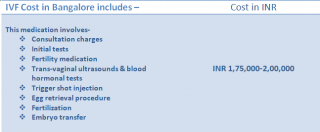
                The average IVF Cost in Bangalore ranges from INR 1,50,000 and ends up with INR 3,00,000 depending on the expertise of IVF specialists in Bangalore and previous IVF success rate of the IVF centre. Cost varies on the basis of infertility case too. Each of the IVF specialists in Bangalore practice at the best IVF centres in Bangalore.

                Factors which Influence IVF Cost in Bangalore –

                There are some major points that affect IVF Cost in Bangalore; they are –

                • Age of the woman
                • Number of IVF cycles
                • Previous Pregnancy of the couple
                • Use of donor eggs or donor sperms
                • IVF using other ART techniques
                • Lifestyle habits

                Such as, Smokers require higher dosages of fertility medication to stimulate their ovaries

                Women who smoke twice in a day, require at least 2-3 (or even more attempts) of IVF Cycles.

                These are some factors that influence IVF cost in Bangalore.

                IVF Success Rate in Bangalore –

                • 57-65% for women under the age of 35
                • 52-55% for women ages 35-37
                • 40-45% for those women who are in the age group of 38 to 40
                • 20-30% for women who are in the age group over 40


                  Leave a Reply


                  Can-I-get-Pregnant-at-my-40’s-min-1.jpg

                  May 16, 2019 ivfsurrogacyinblog0

                  A complete YES! You have heard right, if you are planning to get pregnant at your 40’s then there is yet time remaining with you but for it, you need to go a little hard. Experts say ‘It’s never too late to get pregnant’, same case is there with those women, who have delayed their pregnancy or may be due to some other reason they have shifted their plan to get conceived, there are some women who have gotten married late or the one who wants to have baby in second marriages. Women who are damn busy in pursuing their career also delayed their pregnancy. This is the reason, why a certain number of women phases a hard time to achieve their baby at an increased age.

                  Why it is hard to get pregnant at your increased age?

                  Age, Age, and Age!!!! True, age is a vital factor that contributes to success in pregnancy. Fertility is all about the matter of age.  The older the woman, the lesser is her possibility of conception, the fertility window is best before the age of 35. A woman is born with all the eggs at her birth time; the older a woman get her healthy eggs to decline, thereby dropping off the chances of her being conceived. This is the significant reason, why fertility specialist recommends the couple to have a baby by the age of 30 or max 35 because at this age woman’s egg quality is strong enough to be fertilized with the sperm, resultant a healthy embryo.

                  How to get Pregnant at the ’40s?

                  Even if you are planning for your pregnancy at your 40, what you need to take care of one thing and that is your Healthy Lifestyle. Living a healthy and happy life even before pregnancy or at the time of pregnancy is very important to get a fine and fettle baby. A healthy diet involves whole grains, fresh fruits and a higher amount of protein. Regular exercise, meditation, and a healthy habit maintain fertility potential too.

                  With the help of advanced technology and medical science, the options of motherhood at a late age are possible. There are three means to have own baby after the age of 40, they are –

                  1. The natural way of conception
                  2. IVF with the help of own eggs
                  3. IVF using donor eggs

                  The first option is quite hard to achieve. Once in a rare case, is found, where the egg quality in women who have reached their 40, is fine and up to the requirements for natural fertilization. Once a woman gets the age of their 35 and so, her egg becomes unable to fertilize easily or we can say, it loses the capacity of being fertilized with the sperm.

                  Natural conception depends upon how far you are into your 40’s. Based on the average annual rate of pregnancy per cycle of women at 40’s it is 20-25% and this value falls down at an increasing age of 40. Once a woman reaches 45, she is far less likely to get pregnant naturally. Women, who conceive at their 40’s, have chances of miscarriage and birth defects. Usually, women experience these two complications at an older age while trying to get pregnant.

                  Now you must be wondering about some effectual methods to get pregnant at the ’40s. There is never late when you will consider fertility treatments to get conceived. True! Treatments such as IVF, ICSI are considered as a boon for several infertile couples to eradicate infertility issue in men and women. Go IVF Surrogacy is one of the leading fertility clinics that encompasses all ART techniques starting from basic to super advanced, the success rate of this clinic ranges from 55-65% (depends upon the case of infertility too).

                  During IVF treatment with own eggs at the ’40s, you might hardly get positive outcome as your eggs at that age lose the capacity of being fertilized with the sperm. For IVF with own eggs, your experts will monitor the quality of your egg level first then according to their say, you can go further.

                  IVF Treatment with Donor egg is beneficial and it is the most productive one to achieve pregnancy at your 40’s. Speak to your expert of you are Ok with the idea of egg donor IVF treatment. Egg Donor IVF is a far effective method and is used when the recipient female is unable to unleash the productive and fine quality of the egg.

                  According to the latest study, it has been proved that in the early ’40s, about 30-40% of women are able to conceive through the procedure of IVF donor eggs method. Overall IVF using donor egg results in a successful outcome. On average, the success rate of pregnancy with the help of a donor’s egg in women under the age of 45 is higher than those above that age. That is why, it is recommended for women, who are planning to delay pregnancy beyond 45, need to think about other methods such as eggs/embryo frozen technique (earlier).

                    Leave a Reply


                    How-many-IVF-cycles-one-should-go-before-giving-up-min.jpg

                    IVF is an advanced fertility treatment that has been widely accepted as the best ART technique to get rid of infertility issue. Infertility, on the other hand, is a hormonal disorder caused by several factors like lifestyle routine, environmental effects, stress, depression, addiction of smoke or alcohol, poor and unhealthy diet, etc.

                    IVF has been a miracle ART treatment for numerous couples yet and it is doing its best in the area of infertility matter. However, if you didn’t get success at first attempt of your IVF cycle then what to do? How many IVF cycles should I try before giving up and moving on to other option to accomplish my family? Generally, this question comes in the mind of the couple once they had their IVF unsuccessful. Let’s get into an elaborate description of this answer.

                    IVF never comes up with the promise –

                    IVF, although a productive treatment to eradicate infertility, never gives assurance to the couple about its 100% result. Several people think that once they get into their IVF treatment, it’s only a matter of time until they will be holding their baby soon after treatment. However, this is not true!

                    IVF is no doubt most acceptable treatment to get own baby but IVF does not give you 100 percent success result for pregnancy. Age of the woman also decide the chances of pregnancy.

                    Woman’s age is one of the crucial factors that result in IVF as a big hit for the infertile couple. As the age of the woman increases, her egg quality declines. That’s the reason, why menopause occurs in women. Once the woman comes in the age group of 45-50, her menstruation becomes over due to the natural depletion of ovarian oocytes from aging. It marks a permanent end to the women’s fertility and the average of menopause is approximate 51-53.

                    So, if a woman outlines their pregnancy after her forties or late 40’s then even IVF won’t work properly because, at this age, women’s egg quality goes down.  At this time, IVF with donor egg may be an option to get conceived.

                    At the conclusive statement, we can say that the chances of success decrease with the age of the couple.

                    IVF success rate also differs from one clinic to other, so it is very important to seek out best fertility specialist or the fertility clinic to undergo with IVF cycle. Ask the clinic’s success rate and live birth rates of the clinic rather than getting the information on pregnancy rates.  The average success rate of IVF for a woman under 35 years of age is 65-67% by Go IVF Surrogacy. Go IVF Surrogacy is one of the leading fertility clinics that put forward best IVF fertility treatment to the patient.

                    IVF Cycle Limitation for the couple –

                    A couple can have their IVF cycle as much as they can; the decision is totally up to them and of course couple’s fertility specialists. Many of the couples have has their tenth IVF cycle and achieved success, while some couple just has given up trying for the first time IVF by getting a negative result. It’s all up to the patience level and trust on IVF, which attract numerous couples to go for their 3rd or 4th IVF cycle.

                    A couple can go ahead for as many IVF cycles as they want but what they really need to be aware of is their budget. Undergoing IVF cycles twice thrice or even ninth time requires a couple’s time, patience and most important.

                    Fertility specialist usually recommends the couple to undergo at least 3-4 IVF cycles because, during 2nd or 3rd IVF cycle, the majority of the couples experience success from this technique.

                    Couples especially women who undergo with their IVF treatment are filled with so much hope and a belief that IVF will soon turn a boon for their life, so for them, keep the faith and trust during your IVF cycle but don’t rely on IVF as devastation can be strong if a cycle is unsuccessful. So, be prepared for both- positive or negative result.

                    Is there any Age limitation on IVF?

                    IVF-is a technique and a far advance treatment to resolve the issue of the couple’s infertility disorder. IVF treatment can be applied or combined with other ART techniques as well, dependent on infertility case of the patient. As per now, there is not as such age limit for women undergoing IVF treatment. Women can go for their own egg IVF procedure until they reach their menopause stage. If a woman has entered their menopause stage then IVF is somehow possible only with donor egg.

                    Till now, it has been found in the data that several women in their 40 are to have achieved progress in their IVF treatment, although positive results at this age (after 40) are not very high.

                    Anyways, if talking about approximate IVF cycle a woman can try is at least three IVF cycle and the rest of the choice is on you and your infertility case.

                      Leave a Reply


                      Disclaimer

                      Under the pre-Conception and Prenatal Diagnostic Techniques (PCPNDT) Act, 1994, prenatal sex determination is banned in India. No test or treatment for sex selection, sex determination, gender selection, gender determination is done in India.

                      Ask to Expert

                      Ms. Priyanka (Coordinator) India: ‪+91 9899293903‬ India - New Delhi, Mumbai, Chennai Kolkata, Bangalore, Hyderabad Nepal, Georgia, Kazakhstan, Dubai, Ghana, Kenya, Thailand Mail Us: possible@ivfsurrogacy.in

                      Home

                      About Go IVF Surrogacy

                      With over 19 years experience and over 10,000+ successful live births through IVF, we are dedicated to hand out best fertility treatment and personalized nursing to accomplish couple’s parenthood soon.

                      Our Rating

                      Our Patients Rated us on Google 4.7 out of 5 Based on 395 Vot