Endometriosis Treatment: Medicines, Non-Surgical Options, Fertility Care and Cost
It’s not at all Okay to avoid severe pain that occurs during the menstrual cycle. If you are missing, your work or any other activities just because of that pain then it’s the time to meet your general practitioner who can refer you to a veteran Gynaecologist for further medication.
Some of the techniques such as a healthy lifestyle, hormonal therapy, pain-relief medication, surgeries like laparoscopy, hysterectomy etc help to manage and treat endometriosis condition. The exact treatment will depend on the female’s case of her endometriosis symptom.
The way to treat endometriosis depends on a woman’s symptoms, her age, how bad the disease is, her goals for having children and whether endometriosis has affected the ovaries the fallopian tubes, the bowel, the bladder or other parts of the pelvis. Endometriosisis a condition where tissue that looks like the lining of the uterus grows outside the uterus. This can lead to periods ongoing pain in the pelvis, pain during sex, heavy bleeding, problems with the bowel or bladder and trouble getting pregnant.
Treating endometriosis does not always mean having surgery. Many women can handle their symptoms with medicine treatments that use hormones ways to manage pain changes, in lifestyle or treatments that focus on helping with fertility. In some situations surgery might be needed, especially if the symptoms are very bad or if endometriosis is affecting fertility or the organs.
What Is Endometriosis
Endometriosis happens when tissue that is like the inside of the uterus grows in places such as the ovaries, the tubes that carry eggs from the ovaries the lining of the pelvis the intestines or the bladder. These areas of tissue can react to the changes in hormones during the cycle causing swelling, pain, scarring and parts of the body sticking together.
The amount of pain a woman feels does not always match how bad the disease is. Some women who have a lot of endometriosis may have a little pain while others who have only a small amount of the disease may feel a lot of pain.
Diagnosis and treatment must be tailored to the individual by a trained gynecologist or a specialist, in getting pregnant.
Endometriosis and its Symptoms –
Endometriosis is a disorder that often causes pain during the female’s menstrual cycle. This is the case when the inner lining of the uterus (endometrium) grows outside of the uterus. This disorder generally involves in female’s ovaries, fallopian tubes, may spread beyond the pelvic organ too, the tissue lining the pelvis etc. One of the primary symptoms of endometriosis disorder is women’s pelvic pain, severe pain during menstruation.
Symptoms of Endometriosis disorder –
Pain during sexual intercourse
Female factor Infertility also occurs due to Endometriosis
Pain during urination
Pain with bowel movement
Female may experience heavy bleeding in her endometriosis disorder (during her periods)
Female starts to suffer with pelvic pain and cramping before her periods begin and it goes after few days of your menstruation.
The woman may also have some other symptoms like constipation, nausea, fatigue etc. especially during her menses duration.
To diagnose the Endometriosis there are some tests, which are generally performed by the Gynaecologist. Go IVF Surrogacy is an expert in diagnosing the endometriosis symptoms and also knows how to treat this disorder in the best way.
Some of the tests to diagnose that the female is experiencing with endometriosis disorder are –
Ultrasound
Pelvic exam
Through Magnetic Resonance Imaging (MRI)
By the surgical technique referred as Laparoscopy, Hysterectomy etc.
Endometriosis treatment without surgery is a concern among many women. In some cases symptoms can be managed without intervention.
Non-surgical options may include:
Pain-relieving medicines
Hormonal therapy
Heat therapy for cramps
Individualized physical activity
Pelvic-floor physiotherapy when needed
Sleep and stress-management strategies
Dietary changes based on individual tolerance
Regular follow-up with a gynecologist
These methods can help control symptoms but they do not remove endometriosis lesions.
If symptoms do not improve with treatment or if there are concerns, about infertility ovarian endometriomas or organ involvement a specialist may recommend further evaluation.
Endometriosis treatment –
Medication of Endometriosis usually involves surgery or treatment like pain medication, hormonal therapy etc. The exact treatment of this disorder depends upon the case of your symptom. Some natural managing techniques are also there that is said to be effective during this case, which includes- a healthy lifestyle.
Sleep- is one of the important factors that help the immune system function at its best level, so it is recommendable to have enough quality sleep. Try to reduce the intake of caffeine and alcohol, not to take heavy meals late at night, schedule a proper plan for going to bed and waking.
Let’s read some treatments that are use to solve endometriosis issue –
Pain relief Medication –
Pain relievers such as NSAIDs (no steroidal anti-inflammatory drugs), naproxen sodium (Aleve, etc.)- These are some of the pain relief medication that helps to ease painful menstrual cramps.
Hormone Therapy –
This therapy’s main aim is to make reduce the pain and also the severity of endometriosis disorder by
To stop the heavy bleeding during female’s menstruation cycle
And to suppress the growth of the endometrium cells
These are some therapies, which included in this treatment –
Progestin therapy –
This hormonal therapy provides pain relief of almost 70-80% of women with endometriosis issue. It also suppresses the development of endometrial tissue.
Gn-RH ( Gonadotropin releasing hormone agonists and antagonists ) –
These are that drugs, which causes the uterine inner lining (i.e. endometrial tissue) to shrink. These drugs, when taken by the female patient create artificial menopause. The female’s ability to become pregnant and conceive will come back one she stops taking this hormonal therapy.
Hormonal contraceptive or oral contraceptive pills –
Birth control pills and vaginal rings control the growth of endometrial tissue. OCP (oral contraceptive pills) reduces the female’s menstrual cycle; it is fruitful in suppressing the endometriosis issue. The female should completely avoid OCP or any birth contraceptive pills when she is above 35 and is in the risk factor for heart disease, or she is facing with high blood pressure, is suffering from liver disease, have recent breast cancer etc.
By Laparoscopy Surgery –
Laparoscopy surgery is the keyhole surgery that involves a thin telescope with a light attached. This is a surgical method that operates to reduce symptoms and improve female fertility (by eliminating cysts, endometriotic patches, adhesions by cutting them out etc. It also surgically repairs the damaged organ of the female. Laparoscopy put an end to large cysts and endometriomas.
These are some of the widely accepted medications to treat endometriosis to get rid of this disorder. So, any female, who are suffering from the endometriosis symptoms must consult with the best and veteran gynecologist to look into this matter as soon as possible.
Male infertility is a common reproductive health concern, but it is still surrounded by myths, embarrassment, and misinformation. Many couples assume that difficulty conceiving is mainly related to the woman, but male factors can contribute significantly to infertility. Understanding the myths and facts about male infertility can help couples seek appropriate medical advice without unnecessary delay.
Infertility is generally considered when a couple has regular unprotected intercourse for around 12 months without achieving pregnancy. However, evaluation may be recommended sooner when there are known reproductive concerns, previous testicular problems, sexual difficulties, or other risk factors.
If you are wondering how is male infertility diagnosed, what tests check male fertility, or what may be causing a low sperm count, this guide explains the basics in simple language.
From male member’s low sperm counts to smoking makes a man impotent, the topic of male infertility is rife with myths and half-truths.
There are treatments available to treat male infertility, however, first it is important to break the certain myths related to male infertility and these are as follows:
Myth: The biggest myth about infertility is that infertility is a problem of females only.
Fact: This is not true. According to the modern study, it has been found that 40% of cases of infertility are lie with the male member. We do see so many cases where thousands of tests to identify infertility in females are done but not a single semen analysis is done for the male partner.
Myth: Usually, people think that stress is one of the major causes of infertility.
Fact: False. Actually, stress only affects one’s sex drive but it will not affect the quality and the quantity of the semen and thus it will not lead to infertility. So, if the sexual relations between a man and a woman are ok and a woman still is not able to conceive, then both the partners need to meet the doctor.
Myth: If a man keeps his testicles cold that will enhance semen quality.
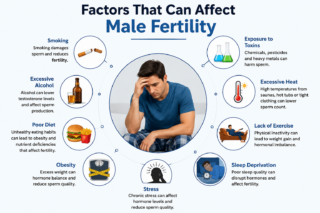
Fact: Again this statement is not true. Cooling testicles by ice is not only dangerous but ineffective too. However, men also need to avoid wearing tight undergarments, and prolonged driving because it raises the scrotal temperature and will affect the quality of sperm. Also, the men need to avoid the heat and radiation from the prolonged use of a laptop on their lap and frequent use of hot tubs is not good for sperms and it has been found that it will decrease the sperm counts.
Myth: Men of old age have infertility problems.
Fact: No, even young men can also have severe infertility problems such as the absence of sperms or very low sperm counts, poor quality of sperms etc. can be encountered to men at the age 20 years as well.
Myth: Does smoking and drinking alcohol can cause infertility in men?
Fact: Yes, this statement is true. Quitting smoking and drinking alcohol in moderation is beneficial as both affect the quality of men sperms.
Myth: Weight does not affect male fertility.
Fact: This statement is not true. Men with an optimal body mass index (BMI) which is of 20 to 25 tend to have better and normal sperm production. Men who are overweight or underweight need to manage their body weight according to their body mass index (BMI) to avoid male infertility issues.
Myth: Excessive cycling affects male fertility or sperm count
Fact: Not true as cycling does not affect men’s sperm count. However, there may be other problems occur due to cycling which could be related to erections.
Myth: Having regular intercourse may enhance fertility.
Fact: Not true as it may decrease the chances of conception because the life of women eggs are only 24 hours long, having regular intercourse will only help during the woman’s fertile period.
What to do About Male Infertility?
You need not to worry as the Go IVF Surrogacy has various male infertility treatment options. Depending on your case, you may decide to take medication, explore fertilization options, or consider an egg donor. The following are some common procedures and these are:
a) IVF with ICSI: ICSI is considered to be one of the best male infertility treatments for a person who is undergoing for an IVF. ICSI is a procedure which will boost the IVF success rates and the study says that 75% of the women under age of 35 years who had undergone for the IVF with ICSI procedure have achieved the successful pregnancies. This treatment has bypassed many male infertility problems such as low sperm count, poor quality of sperms, blockage or irreversible vasectomy.
b) Hormone treatment: Your fertility expert will prescribe some fertility drug treatment which helps to correct your hormonal imbalances and also improve the health of your sperm. Clomid is one of the most common drugs which men need to take a pill per day for about three to six months.
Clomid is a powerful drug which helps men pituitary gland to produce luteinizing hormone (LH) and follicle-stimulating hormone (FSH), which communicate with their testicles to produce good quality of sperm.
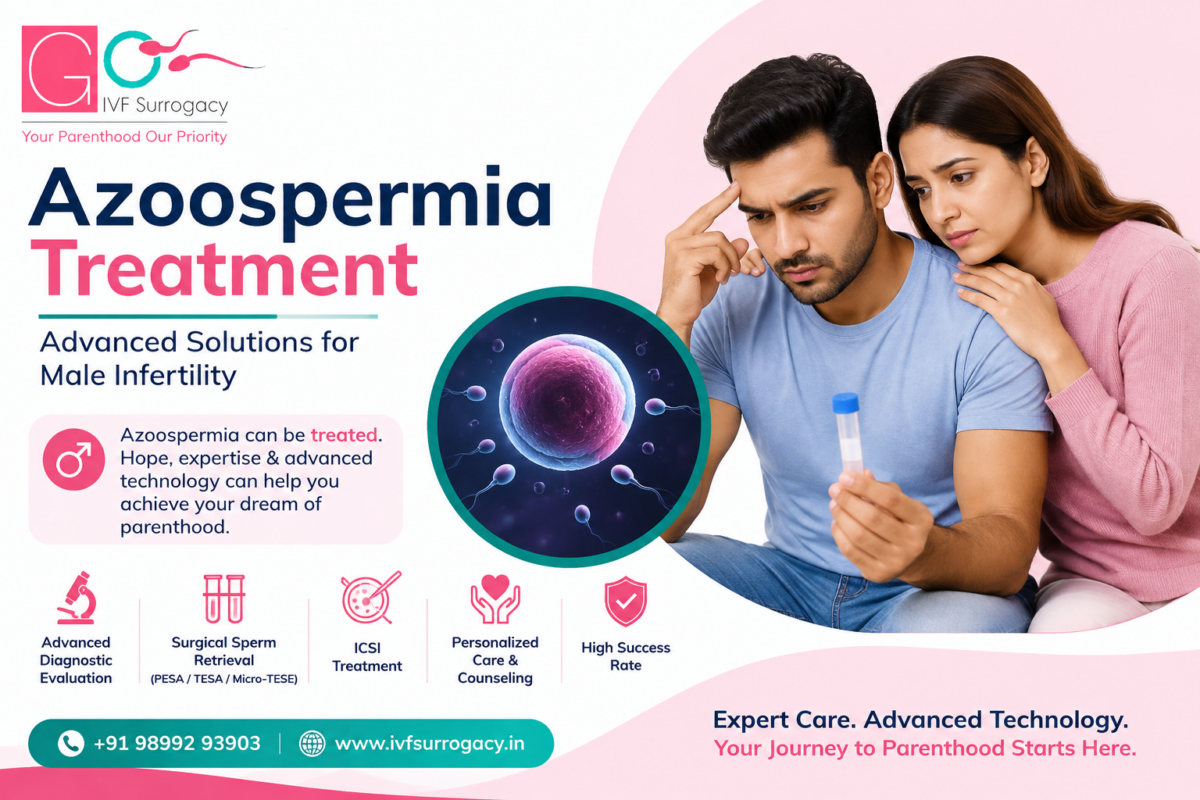
c) Testicular biopsy, TESA, MESA: With the advancement in medical science men who have few or no sperm in his ejaculate can create genetically-related children. During the IVF with ICSI procedure, your fertility expert will inject a single sperm directly into the women egg to make conception successful; however, if the fertility expert is unable to obtain the sperm from men ejaculate, then they can be surgically withdrawn from the testicle (TESA) or extracted directly from the epididymis (MESA) to make the conception happened.
d) Surgery: When all the other non-surgical procedures are failed to provide a successful outcome then surgery is the only option left to treat the male infertility condition. Surgery can remove the barriers to pregnancy. Following are some examples:
Your fertility expert will remove a varicocele which can reduce sperm count and can decrease sperm quantity.
By performing surgery blocked fallopian tubes will be clear which affecting the pregnancy.
Surgery can remove uterine abnormalities such as polyps and fibroids.
With the help of surgery, the scar tissues will be removed due to which pelvic inflammatory disease (PID) and other inflammatory conditions occur.
male infertility treatment in india
Why Choose Go IVF Surrogacy for male Infertility Treatments?
The people from across the globe choose Go IVF Surrogacy because here they get the best male infertility treatment with reasonable cost and also achieve the highest rates of successful conceptions. This is a center where you will get the highly skilled and trained professionals who support you 24*7 and will inform you about your treatment on each stage so that you can take good care of yours and also follow the healthy diet which allows you to fulfill your dream of having an own baby.
What Causes Infertility in Men?
There are many possible causes of male infertility, and sometimes more than one factor is involved.
Common causes include:
Low sperm production
Poor sperm motility
Abnormal sperm morphology
Varicocele
Hormonal disorders
Testicular injury or infection
Certain genetic conditions
Problems with sperm transport
Ejaculation disorders
Erectile dysfunction
Previous reproductive surgery
Certain medications or medical treatments
Smoking and excessive alcohol consumption
Obesity and poor metabolic health
Excessive heat exposure to the testicles
Some environmental or occupational exposures
In some cases, doctors may not identify one specific cause even after evaluation. This is sometimes referred to as unexplained or idiopathic male infertility.
Male Infertility Symptoms: What Should You Look For?
One of the most important things to understand about male infertility symptoms is that there may be no noticeable symptoms at all.
Possible signs can include:
Difficulty achieving pregnancy with a partner
Problems with erection
Difficulty ejaculating
Reduced sexual desire
Pain or swelling around the testicles
A lump or enlarged veins in the scrotum
Smaller-than-usual testicles
Recurrent reproductive or genital infections
Changes associated with hormonal disorders
Having one of these symptoms does not automatically mean infertility. A medical evaluation is necessary to identify the actual cause.
How Is Male Infertility Diagnosed?
IVF single woman in India
A common question is, how is male infertility diagnosed?
Diagnosis usually starts with a detailed medical and reproductive history followed by a physical examination. A fertility specialist may ask about previous illnesses, surgeries, medications, lifestyle habits, sexual function, previous pregnancies, and reproductive history.
The doctor may then recommend semen analysis and other tests depending on the findings.
What Tests Check Male Fertility?
The answer to what tests check male fertility depends on the individual. Not every man requires every available test.
Common investigations may include:
Semen analysis
Hormonal blood tests
Physical examination
Scrotal ultrasound
Genetic testing in selected cases
Urine or other tests when clinically indicated
Specialized sperm testing in selected situations
The purpose of testing is not simply to obtain one number. Doctors assess several factors together to understand sperm production and reproductive function.
Male Infertility Blood Test and Semen Analysis
A male infertility blood test and semen analysis can provide complementary information.
Semen Analysis
Semen analysis is one of the most important initial tests for evaluating male fertility. It examines semen and provides information about sperm concentration, movement, and morphology, among other characteristics.
Frequently Asked Questions About Male Infertility
How is male infertility diagnosed?
Male infertility is generally evaluated through medical history, physical examination, semen analysis, and additional tests such as hormone blood tests or imaging when required.
What tests check male fertility?
Semen analysis is usually an important initial test. Depending on the findings, doctors may recommend hormonal blood tests, ultrasound, genetic testing, or other investigations.
Can low sperm count be treated?
The treatment depends on the underlying cause. Some causes can be treated medically or surgically, while assisted reproductive techniques may be considered when appropriate.
Factors Affecting Fertility and Causes of Infertility
There are basically many factors that are most prominently affecting the fertility and lead the fertility towards infertility. The numerous factors that accelerate the treatment in accomplishing the infertility factors as mere about 15% to 20% couples are facing the issues of infertility and in order to remove them infertility relative factors one should have to consult the fertility experts for getting the treatment to be done for those infertile couples who are having the need to complete their own family with the fertility treatment in the form of IVF and having the child belongs to the couple that is only a possibility as created by the treatment of IVF.
Infertility is a common reproductive health concern that can affect both men and women. It may occur because of problems with ovulation, egg or sperm quality, reproductive organs, hormones, infections, age, lifestyle, or other medical conditions. In some couples, routine fertility tests may not identify a specific cause, which is known as unexplained infertility.
Understanding the factors that can affect fertility is an important first step toward timely evaluation and appropriate treatment.
What Is Infertility?
Infertility generally refers to the inability to achieve pregnancy after 12 months or more of regular, unprotected sexual intercourse. Fertility can be affected by factors involving either partner, both partners, or sometimes by causes that cannot be identified through standard testing.
According to the World Health Organization (WHO), infertility affects approximately 1 in 6 people of reproductive age worldwide. It can have physical, emotional and social effects, but many causes of infertility can be evaluated and treated.
Factors that are favorable in increasing the infertility are:-
Age of both the partners of the couple whether (the female partner and the male partner of the couple).
Tobacco intake by the infertile couples (whether the male partner or the female partner) or may be the case where both are indulged in such acts of taking the tobacco on regular basis.
Alcohol consumption is also playing an important role in increasing the factors relative to infertility.
Street drugs consumption like cocaine and marijuana.
Low sperm count or the motility of the sperms in the male partner of the couple that affects one’s fertility and leads infertility in the body of males.
Quality and quantity of the eggs in the female partner of the couple that affects one’s fertility and leads infertility in the human body.
Favorable symptoms present in the human body that defines infertility
The most identified symptoms that define the infertility issues within the couple’s in arousing the fertility in the human body. The one most diagnosed symptom is an unprotected intercourse of more then a year if the couple is facing such kind of issues then the matter should be consulted by the couple to the fertility experts in order to resolve the issues relative to infertility.
Symptoms that are common in both male and female are:-
Hormonal changes that are rapid with the age of the couple (whether the male or the female).
Hair loss in case the couple is treating with the chemotherapy in case of the cancer treatment.
Differential forms of infertility in the female are:-
Damage found inside the fallopian tubes.
Blocked fallopian tubes.
Blocked fallopian tubes.
Eggs are not of fine quality.
Feeling of restlessness.
Menstruation cycle are not timely may be before or after the described date of the menstrual cycle.
In case the female is facing the issues of regular miscarriages.
Cancer treatments in case the female partner is having the treatments with chemotherapy and having the medicines with the cancerous diseases.
Unexplained Infertility
Sometimes fertility testing does not identify a clear reason why pregnancy has not occurred. This is often referred to as unexplained infertility.
A standard fertility evaluation may include assessment of ovulation, ovarian function, fallopian tubes and semen parameters. When these assessments do not identify an obvious problem, a fertility specialist may discuss treatment options based on the couple’s age, medical history and duration of infertility.
Forms of infertility in the male partner:-
Male partner who is indulged in the treatment of cancer and having the treatment with chemotherapy and other relative treatments including the medicines and other treatments.
Semen analysis of the male partner in order to diagnose infertility related issues.
Quality of the sperms in case the sperms are not of the fine quality which is required to make the female pregnant.
Quantity of the sperms is not up to the mark as required in the female pregnancy.
Low sperm count and the feeling of swelling in the lower part of the testicles and also the redness found in the testicular part of the male reproductive organs.
In case the male partner is having the treatment because of sexual problems which are not disclosed by the male partner.
How incessant trying turns infertility into fertility with best success rate?
Success rate should be in upward direction that may increase the chances of the fertility and the treatment may become successful for bending the infertility towards fertility and with having the fertility treatment with Go IVF Surrogacy that is having more and more successful ratios to be determined with the fertility. The success should be determined with the effective infertility to be removed in an effective form that accuses the treatment to be predetermined by most of the infertile couples that are facing the issues with the same and wants to get the success over the infertility through the IVF treatment with the guarantee to owe the child soon.
The fertility success rate should be determined according to the different states within the country India, where Delhi is the leader among fertility relative issues and having the highest success rate all over the metropolitan state of the country India having the success rate of about 88% as fairly known by many infertile couples.
Mumbai is the second leading state that provides the best success rate of the country India where the the success rate is merely about 84% which is really a good success rate for infertility removal in the whole country and also the state of Ahmadabad is the least among all the states of the country India with having the success rate of merely about 70% on an average.
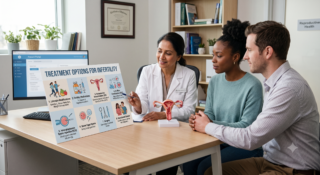
Treatment Options for Infertility
Infertility treatment depends on its underlying cause, age, medical history and individual circumstances.
Possible treatment approaches include:
Lifestyle and medical management
Ovulation-inducing medicines
Treatment for underlying hormonal conditions
Surgery for selected conditions
Intrauterine insemination (IUI)
In vitro fertilization (IVF)
Intracytoplasmic sperm injection (ICSI)
Donor egg or sperm treatment when appropriate
Fertility preservation in selected situations
Not every couple needs IVF or advanced fertility treatment. A fertility specialist can recommend the most appropriate option after evaluation.
How to avoid the issues of Infertility?
The issues of infertility can be removed according to the factors that are playing the vital role for the removal of the issues of infertility from the life of the infertile couples who are facing the bare issues of infertility.
How does male partner prevent causes of infertility?
Consuming the drugs should be avoided by the male in case the male partner is getting rid of the infertility issues.
Avoiding the high temperatures in the environment as recommended by the experts because it is highly impacting the motility of the sperms.
Avoiding the medicines that may cause infertility in the male’s body.
Regular exercise is also the cause for infertility to be seen by the experts as mere about 15% males are facing the issues of infertility because of the same.
How does female partner prevent causes of infertility?
In case the female partner is habitual of smoking than in such a case, the female should quit the smoking habit so as to raise the level of fertility and decrease infertility from the female’s body.
Not to intake excess of street drugs like the drugs of cocaine and marijuana.
Quit the consumption of alcohol in case the female is alcoholic.
In case the female is overweight or underweight so in that case, also the female is not able to conceive or may face regular miscarriages whenever she is thinking to conceive.
Exercise on a regular basis should lead the female partner not to conceive soon as required or as in the case of the fertile female partner of another couple.
IVF is like a miracle to all of the people who are desiring or have a desire to have a child. It is an essential and very important procedure people need.
Fertility can be stopped because of many reasons, like fallopian tubes are blocked.
For some it is low sperm counts.
Whereas for others it is like PCOS. It is a very common reason for infertility by the way.
But there is one thing which people do not understand even after having so much awareness about IVF. It is not just a one time process. It is not like you go and have a heart transplant in like 30 to 40 hours of surgery. It is a procedure which can go up to around months.
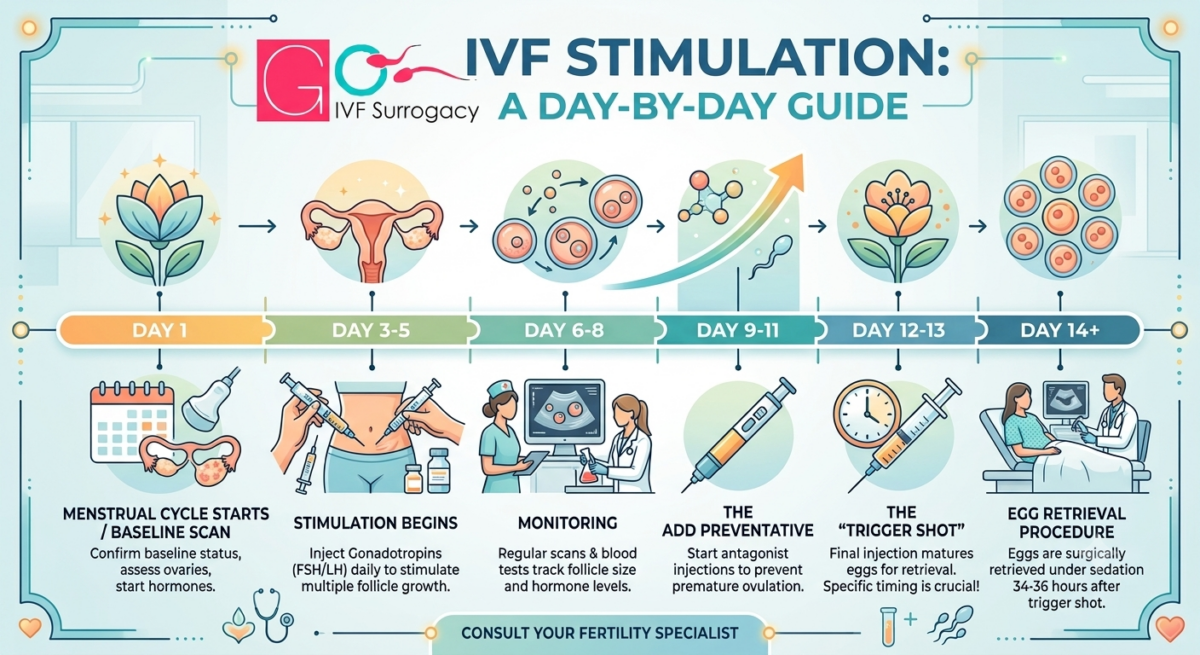
That is why it is a very emotional journey. This IVF stimulation a day by day guide will help you understand the very crucial part of this journey.
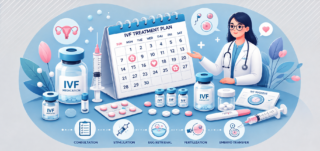
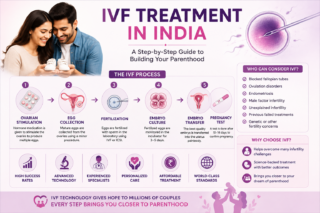
IVF process step by step timeline
Patients Need to have the first counseling session with an IVF expert. They will make sure to find out the exact reason for your infertility. This is done through several tests like AMH.
Ovarian stimulation is the process in which the eggs of the female partner are stimulated through a series of injections so that her ovaries can produce multiple eggs at once.
In the egg retrieval process, doctors perform a small surgery known as transvaginal oocyte retrieval (TVOR). Doctors use the ultrasound device so that they can see the actual image inside your body.
At first, they insert a thin, hollow needle, which is attached to the ultrasound device.
This needle is gently passed through your vaginal wall and enters directly into your ovaries.
Then the doctors gently vacuum the follicle fluid containing the eggs.
This process takes about 45 minutes.
Whereas if the men’s sperm is needed, they are extracted through masturbation.
However, if there is a problem with male fertility, doctors could perform surgery to retrieve the sperm directly. The names of the surgeries are PESA, MESA, and many more.
Fertilisation and Embryo Culture: The next process is actually fertilizing the collected egg and the collected sperm.
There are two methods.
The first is the conventional method, where thousands of sperm are placed in the same spot with or without only one egg.
The second method is Intracytoplasmic Sperm Injection (ICSI). After fertilization has occurred, the embryo phone so the doctors will now transfer it into the incubator. An incubator is a device that behaves as an artificial woMB or uterus.
Till the embryo has reached a state where it is healthy and strong enough to be transferred to the actual uterus of the intended mother. Some people actually freeze their fertilized, healthy embryos for future use.
In some cases, when the timing is not right and when individuals want to focus on their careers or due to any medical conditions, they could actually use this frozen embryo for further embryo transfer when they want to have children in the near future.
The last stage in this process is embryo transfer, in which the embryo is healthy enough. The doctors actually transferred this embryo to the uterus.
There are two types of embryo transfer:
The first is Fresh embryo transfer, and the second is frozen embryo transfer, which we have talked about earlier.
In the fresh embryo transfer process,
First of all, doctors prepare the bladder so they can actually see the full display, so the doctors can actually see the uterus in full display through the ultrasound device.
Then, a very thin, flexible plastic tube known as a transfer catheter is used. This catheter has embryo liquid.
This tube is inserted into the vaginal wall and passes directly through the cervix till they reach the uterine cavity.
The uterine cavity is the place where the embryo attaches itself to the mother’s uterus.
The uterine cavity actually provides nutrients and essential oxygen levels to the baby. Through the blood of the mother.
When doctors actually reach the uterine cavity, they gently release the embryo’s liquid inside the uterine cavity.
This surgery is a very low-impact surgery. After the surgery is done, the patients typically rest for about 10 to 15 minutes before heading home.
IVF stimulation a day by day guide
Normally an IVF stimulation also known as ovarian stimulation is of about 10 to 12 days. It is a very reasonable length of days however it is not a fixed schedule for every woman.
The whole meaning of the ovarian stimulation process is to actually stimulate the ovaries. Meaning kind of light encouraging your ovaries to produce as much eggs as it can. Now you would also wonder how many total eggs a woman would produce naturally in a natural cycle? Well a woman actually produces one single egg during one month.
And if that one egg is met with the sperm the fertilization occurs however let say it is an issue of infertility, naturally the chances of that one natural egg being released and being met with the sperm are very likely low..
So the IVF experts want to release as many eggs so that increases the chance of actual conception of the baby.
Understanding this goal is one of the main reasons patients search for an IVF stimulation a day by day guide.
So how does the doctor actually stimulate the ovaries?
Doctors use injections to give drugs. They are exactly the synthetic hormonal drugs to make your body more eligible and more welcoming for the more of the eggs.
Another thing is what type of treatment you are getting during this ovarian stimulation process is also based on what kind of condition you have.
In most cases the various stimulation is the most likely phase which does not even occur.
It totally depends on the causes of infertility
How do doctors make the ovarian stimulation medications for each patients?
Age: Age is considered when planning IVF because it is an important predictor of overall reproductive potential. Like women who are not in her childbearing age will problem and more biological window disadvantages for having a child
AMH (Anti-Müllerian Hormone): It is a blood test to actually ensure how much ovarian reserves you have. Ovarian reserve is basically the reserve like how many ovaries you have and how many eggs do you have left? because when a female fetus is created it has something like 10 million eggs and when the girl reaches puberty she loses about one of half of her exit and by the time ease of the childbearing age she has only left one million eggs in her basket.
Why AMH? It is a common test to find out the actual egg reserves in the ovaries. By this, your doctor determines how much FSH should be given to you. Between the range of 1.0 – 3.0 ng/mL is normal. Anything below 1.0 ng/ml is low, and above 3.0 ng/ml is too much.
AFC (Antral Follicle Count): AFC is the number of small antral follicles seen on an ultrasound, usually at the beginning of the cycle. The eggs are inside central follicles.
Previous IVF response: This is in association with your previous medical history. Doctor wants to know if the woman has undergone IVF previously and what was the actual response from that cycle so it could be very useful.
Previous medication dose and response: Doctors consider which stimulation medicines and doses were used previously and how the ovaries responded. Why? Because some people have some kind of allergies and their response of the ovaries to the drug could be different There is a rare condition known as Ovarian Stimulation syndrome The meaning of this is that when the ovaries react negatively against drugs.
Risk of poor ovarian response: A low ovarian reserve or a previous poor response can influence the stimulation strategy.
The number of follicles seen at baseline:The initial ultrasound gives the fertility team information about the ovaries before stimulation begins. Additionally, the information is used to anticipate and to actually understand how strongly the ovaries may respond.
Baseline hormone profile: The baseline hormonal profile is clearly based on the clinical situation doctors might want to assess the hormonal status. There are two main common types of hormones known as FSH and estradiol which are most used during pregnancy and reproduction overall.
Body weight/BMI: BMI is also important.
Diminished ovarian reserve
PCOS or a tendency toward high ovarian response: Someone with the pcos or PCOD also known as PMOS Have different kind of ovarian response to the medications. So the doctor might also want to consider this into the account as well.
The specific IVF/ICSI protocol
How the ovaries respond during the current cycle
Follicle growth pattern
Previous ovarian surgery or conditions affecting the ovaries
Other medical and fertility factors: The overall infertility diagnosis, medical history, previous fertility treatments, medications, and individual clinical circumstances can all influence the treatment plan.
ivf medication schedule day by day
ivf medication schedule day by day
Usually, a female’s body only releases one egg per month, but because of these drugs, such as FSH, also known as follicle-stimulating hormone, and LH, luteinizing hormone, all of which are encouraged to produce and release more than one egg, preferably 8 or 10.
As by now you have already known that medication during the ovarian stimulation varies by all these factors. Okay.
The IVF stimulation a day by day guide below provides an example of how these medications may be used during the stimulation phase.
like for example for the patients for PCOS there is a very different kind of Pre-treatment preparation.
Like they have a very small amount of dosages compared to the standard IVF dose of FSH. It is the hormone. Below is the common example of the average ovarian stimulation phase schedule with medications.
IVF ovarian stimulation medication schedule example
Day
What may happen
Typical medication role
Day 1
Baseline assessment and stimulation begins
FSH or FSH + LH/hMG begins
Day 2
Follicles start developing
Continue FSH ± LH/hMG
Day 3
Early follicular growth
Continue stimulation
Day 4
Ovarian response begins to become clearer
Continue stimulation; dose may be adjusted
Day 5
Monitoring may begin/intensify
FSH ± LH/hMG; ultrasound ± estradiol
Day 6
Follicles continue growing
Continue stimulation; dose adjustment if needed
Day 7
Prevention of premature ovulation may become necessary
GnRH antagonist may be started
Day 8
Continued follicular growth
FSH ± LH/hMG + antagonist
Day 9
Follicles approach maturity
Continue medications; closer monitoring
Day 10
Final maturation is approaching
Stimulation/antagonist adjusted according to ultrasound
This IVF stimulation a day by day guide can help readers understand the relationship between stimulation medicines, follicle growth, monitoring, and the eventual trigger.
What are the actual medications doing?
There are different kinds of medications. Stimulating, preventing premature ovulation, trigger medicines, and different sometimes used alongside these main ones. We will go through them all of them one by one.
The medication section of this IVF stimulation a day by day guide explains the main categories used during stimulation.
Follicle-stimulating medicines
Recombinant FSH
Common names : follitropin alfa, follitropin beta
agenda : stimulates the ovaries to develop multiple follicles.
hMG (human menopausal gonadotropin)
Contains FSH (Follicle stimulation hormone, it is natural hormone released every month is out body) + LH (luteinizing hormone, to support maturation of the eggs) activity and Examples include menotropins
Why is it used? stimulates follicular development and provides LH activity.
Recombinant LH, goes by name of lutropin alfa
Purpose: provides LH activity when the specialist considers it appropriate.
It is not routinely required for every IVF patient
Medicines that prevent premature ovulation
GnRH antagonists: Ganirelix, Cetroreli to suppress the LH surge and prevent premature ovulation.
GnRH agonists: Leuprolide, Nafarelin and Goserelin are also used in certain IVF protocols, although the timing and purpose differ from antagonist protocols.
Trigger medicines for the maturation of the eggs
When the follicles are ready, a trigger injection is given to induce final oocyte (egg) maturation before retrieval.
Possible trigger approaches include: hCg to recombinant hCG such as choriogonadotropin alfa. And GnRH agonists like leuprolide act as a dual trigger.
A combization of a GnRH agonist and low-dose hCG in selected situations.
The choice depends heavily on the patient’s response and risk of OHSS. A GnRH-agonist trigger is particularly useful for reducing OHSS risk in appropriate antagonist cycles.
Medicines used alongside stimulation
These aren’t automatically given to every IVF patient.
Letrozole: sometimes incorporated into particular stimulation strategies.
Clomiphene citrate: used in modified/low-medication stimulation approaches.
Cabergoline:may be used around the trigger in patients considered at increased risk of OHSS.
Metformin:may have a role in selected patients, particularly some patients with PCOS, but it is not a routine IVF stimulation medication for everyone.
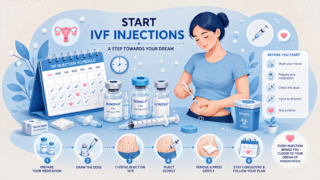
when to start ivf injections
when to start ivf injections
For any typical IVF Ovarian stimulation cycle the injectable medic such as FSH or FSH plus LH are started in the menstrual cycle, normally, around the day two or three of the cycle. However this exact date is dependent on the patients demographic and ivf protocol.
Knowing when injections begin is another important part of an IVF stimulation a day by day guide.
ivf injection timing morning or night
Most daily IVF stimulation injections can be taken in the morning or evening, depending on the clinic’s protocol. The important thing is to take them consistently and follow the prescribed schedule.
However, some medications, particularly the trigger injection, must be injected at a precisely specified time because the timing is coordinated with egg retrieval.
how to inject gonal f for ivf
Wash your hands. Take the pen out of the refrigerator,as Instructions said. And let it rest on a very clean surface for about 30 minutes so that it can reach room temperature.
Before actually using it, check if it is expired, damaged or discolored or contains any kind of particles or not.
Then attach a very single new needle to the pen. Then set the exact I you dose which is prescribed by your fertility specialist.
This is injected directly under the skin of the abdomen. Another kind of variation for this same kind of injection could be allowed to inject the for the upper arm or the upper leg.
Injected according to the technique or any kind of way your clinic told you. Then remove the needle immediately after injecting all of the liquid inside it. And immediately put it into a very sharp container. Why? you don’t have to use it by mistake or anything OK.
Take it consistently like how much time between each injection has been instructed by a specialist.
How painful is ovarian stimulation?
Well, it depends on the injections. Many women who have been through ovarian stimulation in IVF share to have felt the sharp stinging pain because of their injections. Injections are the top choice for receiving the shots and the needed doses for the ovarian stimulation process,
As injection is administered either into fatty tissues or deep into the muscles.
The fat tissue method is most common, as the needle is very thin and short, and it will cause minimal discomfort. The most common places are the abdomen or the outer thigh.
Next is the deep muscle section. In this method, the upper outer buttocks or outer arm is the best alternative.
ganirelix ivf injection schedule
Come to the GO IVF Surrogacy clinic. Here you have every kind of detail to know what has actually been given. We cannot just give you any kind of details regarding, ganirelix ivf injection schedule
As it is a medical issue. And it is completely based on the person’s demographic.
This is an important point to keep in mind when reading an IVF stimulation a day by day guide because the exact medication schedule is different for each patient.
The most skilled fertility and IVF specialist in India
Contact us: Info@IVFSurrogacy.in
Call us: 91-989–929–3903
follistim and menopur schedule
Follistim is commonly given daily during stimulation, with the dose individualized and adjusted according to ovarian response. Whereas menopur is to Provide FSH + LH activity to support follicular development.
The Follistim and Menopur schedule is therefore an important component to understand when following an IVF stimulation a day by day guide.
Frequently asked questions:
IVF stims day 4 symptoms
Around stimulation Day 4, many women still feel relatively normal. Possible symptoms include:
Mild bloating
Mild pelvic heaviness or pressure
Slight breast tenderness
Mild headache
Fatigue
Injection-site redness, itching, or soreness
Mild mood changes
At this point, the follicles are developing, but significant ovarian enlargement may not yet be noticeable.
Day 7 IVF stimulation symptoms
More noticeable abdominal bloating
Pelvic heaviness or pressure
Mild cramping
Increased abdominal fullness
Breast tenderness
Fatigue
Headache
Mood changes
Mild nausea
For some patients, a GnRH antagonist such as ganirelix may also have been introduced by this stage to prevent premature ovulation.
IVF stims day 8- 10 IVF stimulation symptoms
Abdominal bloating
Pelvic heaviness
Feeling of enlarged or “full” ovaries
Mild abdominal cramping
Breast tenderness
Fatigue
Headache
Mild nausea
Feeling uncomfortable when bending or moving
Symptoms that shouldn’t simply be considered “normal IVF symptoms”
Severe abdominal/pelvic pain
Rapid abdominal swelling
Significant or sudden weight gain
Persistent nausea or vomiting
Difficulty breathing
Reduced urination
Difficulty keeping fluids down
For anyone following an IVF stimulation a day by day guide, severe or rapidly worsening symptoms should be discussed with the fertility team rather than assumed to be a normal part of stimulation.
What is the fertility rate? Before actually learning about the total fertility rate by countries we have to understand the meaning of the fertility rate.
Fertility rate
Fertility rate is the average number of children that would be born by one woman over her lifetime. Typically from the age of 15 to 49. Why? Because this is a typical window she would be fertile most in her life.
How is the fertility rate calculated?
The calculation of the general fertility rate of the country is measured by the Number of live births per 1000 women between the age of childbearing meaning 15 to 49 years yearly. In simple words, it is directly calculated by measuring how many children meaning, how many live births are happening per 1000 women between the childbearing age (15 to 49 years old).
The formula is a mathematical formula
numerator: is the total number of live births recorded during that one year
Denominator: Total media population of all the women in their reproductive years meaning between the ages of 15 to 49.
Multiplier: multiplied by number 1000 women to make it easier to calculate.
Let’s take an example.
For instance, in country A, there were about 5000 live births in the previous year. And the population of women between the age bracket of 15 to 49 is about 1,00,000. So now , to calculate the general fertility rate of country A for that one year..
We have to divide the birth by the target population. Meaning we have to divide 5,000 live births by the estimated population of women, which is 1,00,000.
Then we would have something like a 0.05 answer.
Now furthermore we have to multiply this answer by 0.05 with then we would have 50.
Meaning the general fertility rate of country A is 50 lives per 1000 women of childbearing age.
Please note: There is NOT a country named as ‘A’, and this is just a general fertility rate. It is different from the total fertility rate by countries in which we have the total number of children one single lady is having throughout her life. Now let’s understand how to calculate that Total fertility rate
How to calculate the total fertility rate.
Total fertility rate is the lifetime calculation for an individual woman. Whereas the yearly or the annual rate of Per 1000 women is a general fertility rate. This is the difference between the two fertility rates.
Now if you want to calculate the total fertility rate or how many children one single woman is having throughout her life.
The answer was just right there. Meaning we just have to divide these 50 children not actually divide but like numerically divide these 50 figures of number we have just discovered in general fertility rate by per thousand women.
50\1000= 0.05 children per woman per year.
Now it means that each woman is having 0.05 children per year.
Now to understand how many children one single woman is having throughout her entire lifetime we have to consider the standard child bearing age which spans over 35 years from the age of 15 to 49 years old.
Let’s assume, she continues to have 0.05 children per year across those 35 years then it would mean that she would have 1.75 children throughout her lifetime. By multiplying 0.05*35= 1.75. So the total fertility rate is 1.75 children born.
Important note: a real woman cannot give birth to 0.05 children or something like 0.75 children. ‘Dramatically eye roll’ let’s be honest. You must have doubts about, What are the numbers and what is the meaning of these numbers?
So lets understand what this 0.05 children per year actually means? In a given year most individual women do not give birth at all meaning zero children. While other few women do give birth meaning one child or let’s say twins.
If you take a sample of 100 women in that age range. Like
90 women have zero children that year
Five women have one child that year
So the total children born to the group is five
When you spread these 5 children equally across all hundred women to find the statistical average 5 / 100 equals to 0.05.
It simply means that in any single year an individual woman has a 5% chance of having an actual baby. It does not mean that she has actually given birth tro five babies, it means she has a 5 percent chance of having a baby.
What does 1.75 children over a lifetime mean?
Of course a woman would not give just 1.75 children. It just means that average across millions of women.
Everyone has a different life path within that million population. Meaning some women will have three children or more than that whereas some of them would not even think about having children at all while some of them are just happy with two children.
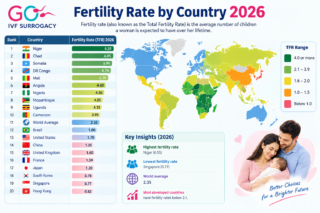
Fertility rate by country 2026
Fertility rate by country 2026
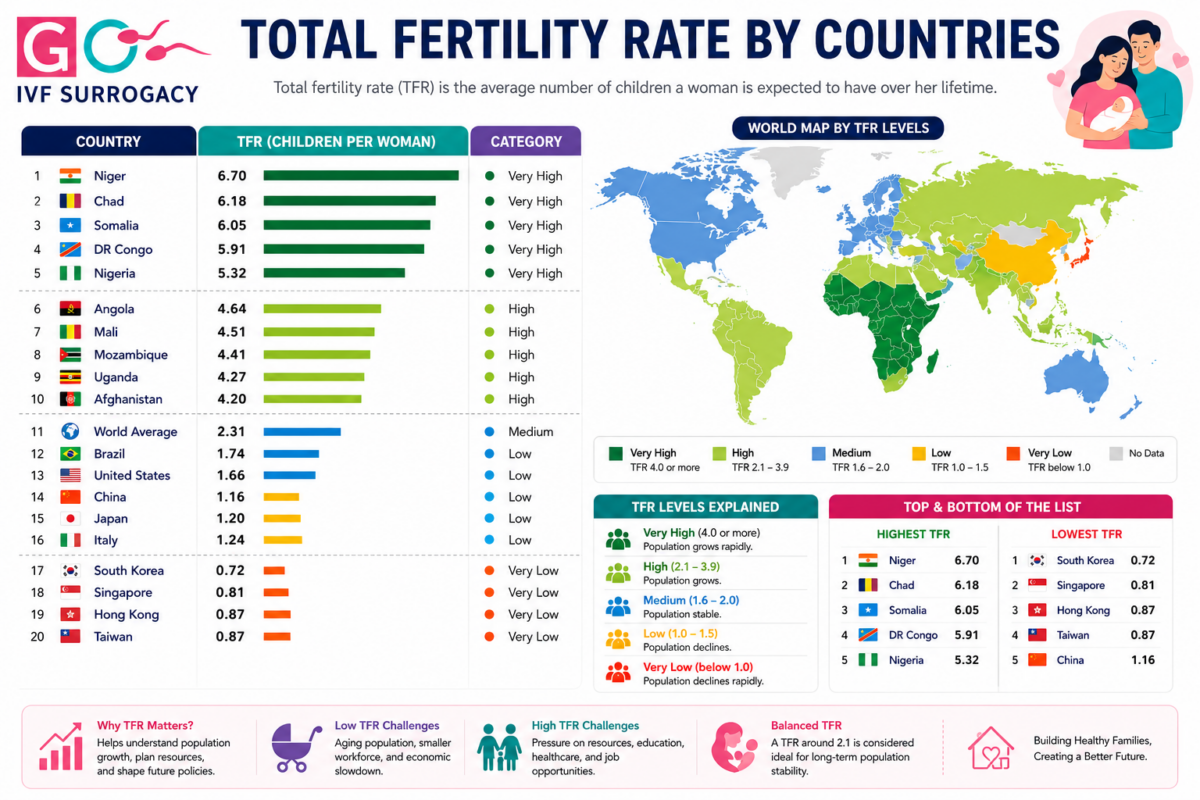
So there are about 195 countries in the world right now. When observing the total fertility rate by countries, this number does not mean that all 195 nations share the same demographic growth.
Each country’s fertility rate depends on various factors. Factors such as women’s education, economic cost and urbanization are the common things while contraception access still follows as the fourth number.
There are many other factors also which are the reasons and which actually actually affect the total fertility rate by countries across different regions.
First let’s understand which countries are the best, meaning at the very top of the fertility rate.
Top ten highest fertility rates country in 2026
So the top countries which have the top 10 highest fertility rate by the 2026 ranking are the most of them belonging to Africa, like the continent Africa.
Chad
5.84
somalia
5.81
Democratic Republic of congo
5.80
Central african republican
5.69
Niger
5.64
Mali
5.3
Angola
4.89
Burundi
4.57
Afghanistan
4.56
Mozambiue
4.54
First is Chad. Which has a fertility rate of 5.84 children per woman.
Then Somalia 5.81 children per woman next follows the democratic republic of Congo where the fertility rate is 5.80 followed by the central Africa republic by the rate of 5.69 per woman. On the fifth number we have Niger, by its 5.64 total fertility rate. On the 6th we have Mali 5.33 children per woman. By the rate of 4.89 children per woman we have been Angola on the 7th position. Followed by the 4.57 children for women is Burundi.
On the 9th we have Afghanistan which is the only non-African country in the top 10 which has 4.56 children per woman. In the last 10 we have Mozambique by the rate of 4.54 children for women.
How is the total fertility rate affected?
Male loneliness epidemic: Men are not able to get a wife.
Women’s Higher Education and Empowerment: Giving education to women meaning they are empowered and they start to believe that just because they have a uterus they do not have to have a child.
Housing and Childcare Costs: Rising housing and child care expenses has made the population re-thinking the decision to have a child.
Urbanisation: City living reduces the economical value of agriculture family labour. Most of the couples who are living in the urbanised areas they have openly shared how much coming to city has a reused their desire to have a child of their own
Female Control of Contraceptives : It is the most important one. In Africa contraceptives are not very accessible. That’s why when studying the total fertility rate by countries, there is a huge number of fertility rates from the countries of Africa. The countries where there is very good awareness about the sex education there is a chance that there is a low fertility rate.
Career Stagnation and the Long-Term Motherhood Penalty :Another one factor is always female employment. If you are employing females, then they would understand that they are independent and they do not need to have children to sustain their insecurity.
Improved Healthcare Facilities and Reduced Infant Mortality: with the improved healthcare facilities has reduced the rates of actually infants dying.
Hiring Bias Stemming from Mandatory Parental Leave:Another factor is government parental leave and child subsidies actually influence the family size. In India maternity leave after having a child is mandatory however many employers do not want to follow that rule and some even go up to part to not even employ a female which also affects the women’s career and restarting the career after having a child is another kind of social pressure.
The Ideological Gender Divide and Changing Cultural Roles:it is like the woman doesn’t want to be just defined by ability to have children and men are not even considering getting out of their house and taking a step out of their conservative thinking and traditional values. Women are forwarding into empowerment whereas the males are just stuck in that Medieval thinking .
Highest fertility rate in the World and why is it important to have the highest fertility rates?
Economists track the Total fertility rate by countries because it is essential. In what manner? because we have to grow and we are not immortal. We are all going to die one day so it is important that there is another generation waiting to understand the concept of sustainable development.
Like using the resources in a way so that the next generation have the same resources so if like let’s say there is no second generation. What is going to happen.
The country is going to die and it will become exthasinct. And even though humans are the most overpopulated species on the planet, it is still very important that we reproduce and continue to grow our numbers.
On top of that there are very significant reasons biologically and ecologically that even though humans are not apex predators directly in the ecosystem they still somehow directly impact the environment.
Why Fertility Rates Are Calculated in the First Place
Economic Planning and Workforce Size
Have you ever heard the term ‘capitalism’, So yeah it is one of the reasons that the human population must continue. Capitalism is sustained through the economic value of the country.
Measuring the birth rate allows governments and businesses to project future labor supply, identifying potential shortages or surpluses 18 to 20 years in advance.
Resource Allocation and Infrastructure
Of course not only capitalism is the reason for the tracking of Total fertility rate by countries across the globe. Many governments which come into power let’s say your country is Democratic, even if it is not in democracy. The ruler of the country and the political leader of the country must know how many people are actually born so they could provide the infrastructure for the people. and the infrastructure is education and health, two important factors..
All the cities which are redeveloped or being developed for the very first time need planning about how many people are going to live in that city.
Managing Pension and Social Security Systems
Another thing is the dependency ratio. It is like taking care of your old parents just like they took care of you when you were a child. But in this case they are not your parents but they are just some Old millennials or retired colleagues from your corporate system.
if the fertility rate drops too low meaning there is a whole lot of older people then the younger generation. Just like the case of Japan where the old population is more than younger generations.
Why High vs. Low fertiltiy Rates Matter
Why Low Fertility is the issue
Increase of Aging Population: If the younger generation is not producing children it would mean there is a very high number of old age people who cannot work therefore they cannot sustain the economy of the country. That is bad.
Economic Stagnation: Again there is a population for the big companies to have their consumers or have their customers the demands will reduce. It will lead to lower innovation meaning lower innovation in the technological way and lower income.
Why Fertility Above 4.0 is not good
Look at rapid population growth of India, but problems like unemployment homelessness and rising poverty and it would be very difficult for the people to actually come out of poverty.A massive influx of young people entering the job market without enough employment opportunities can lead to economic instability or social unrest.
The Replacement Level (2.1): It is considered the miracle of the For the economists why? Because due to some kind of mathematical calculation they have done, any country with the Total fertility rate by countries baseline 2.1 will continue to grow without any stagnation and without any overpopulation.
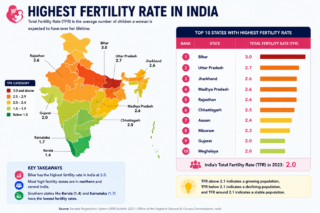
Highest fertility rate in India
Highest fertility rate in India
India is considered the most populated country in the world and it is not just the consideration it is true but despite the fact of being over populated, Evaluating the total fertility rate by countries shows that the rate of India is declining at a very rapid speed.
India’s national average total fertility rate has dropped to 2.0 which is below the global replacement level 2.1
Now let’s go through the buy one by one which has the biggest number of fertility rates in India.
One of them is at the top which Bihar comes into the top by having 2.8 to 3.0 birth rates per woman.
Next is Uttarpradesh 2.6 to 2.7 births per woman.
Third, Madhya Pradesh by 2.4 to 2.6 births per woman.
Next we have Rajasthan shockingly 2.3 to 2.4 births per woman.
we have Jharkhand by 2.1 to 2.3 for women and
On sixth it is Chhattisgarh with 2.2 births per woman.
State with highest fertility rate in India
Highest Fertility rates
Bihar
3.0
Uttar Pradesh
2.7
Madhya pradesh
2.6
rajasthan
2.4
Jharkhand
2.3
chhattisgarh
2.2
Lowest fertility rates in India
Delhi: 1.2
Sikkim: 1.1
Andaman and Nicobar Islands (UT): 0.9
Tamil Nadu, Kerala, and West Bengal: 1.3 per woman
Punjab and Maharashtra: 1.4 per woman
Andhra Pradesh and Jammu & Kashmir: 1.4 per woman
Himachal Pradesh, Karnataka, and Telangana: 1.5 per woman
Top 10 countries with lowest birth rate
Both of the terms, The birth and the total fertility rate are the both different and distinctive demographic measurements.
Meaning they both look at the same subject however through the very different statistical views.
Birth rate, also known as crude birth rate is the measure about how many total children regardless of their genders are per 1000 people in the entire population in a given year of the entire country. Whereas total fertility rates by counties is the measurement of the average number of children a single woman could have throughout her whole lifetime..
Birth rate is an exact Measurement It is like a statistical fact whereas total fertility rates by countries is totally based on the current birth patterns.
It can change based on the patterns of the people people are having during that year.
Countries with lowest birth rates
Country / Region
Total Fertility Rate
What This Means (Per 100 Women)
Macau
0.70
100 women will have 70 children total
South Korea
0.76
100 women will have 76 children total
Hong Kong
0.84
100 women will have 84 children total
Taiwan
1.00
100 women will have 100 children total
Singapore
1.10
100 women will have 110 children total
Malta
1.10
100 women will have 110 children total
Spain
1.16
100 women will have 116 children total
Italy
1.21
100 women will have 121 children total
Ukraine
1.22
100 women will have 122 children total
Moldova
1.26
100 women will have 126 children total
Fertility rate Europe by country
Fertility rate Europe by country
Fertility Rate
Montenegro
1.75
Bulgaria
1.72
France
1.61
United Kingdom
1.56
Iceland
1.56
Slovenia
1.52
Denmark
1.47
Ireland
1.47
Slovakia
1.46
Norway
1.45
Belgium
1.44
Sweden
1.43
Hungary
1.41
Germany
1.36
Austria
1.31
Finland
1.25
Greece
1.24
Italy
1.18
Poland
1.14
Spain
1.10
Malta
1.01
Ukraine
0.99
Which country has the Highest fertility rate in Europe?
Monaco is the country in Europe which has the highest fertility rate of 2.10. If we compare the total fertility rate by countries across Europe, Monaco actually stands out as an exception..
Frequently asked questions
Is India the most fertile country?
Nope, even though the country is the most overpopulated in the world, it is not the most fertile country in the world Sean in the Total Fertility rate by countries list.
What is the fertility rate of India in 2026?
India’s total fertility rate in 2026 is 1.93 to 1.96 births for women per woman. Yes yes it is below the replacement fertility rate.
Is India’s fertility rate high?
No, India’s fertility is not high. While in the past it was considered that it was high in the 1950s and 1960s where the total fertility rate was at its historical peak around 5.9 to 6.1 children per woman.
What is the ideal fertility rate for a country?
The replacement fertility rate is 2.1. It is not too high, not too low so it is baseline. it is like you can have this kind of fertility rate for a country and your country would not have an overpopulation and it was it also would not have any kind of economic stagnation as well.
IVF is the gift from modern science to needy couples who are infertile. India is the capital of In vitro fertilization treatments. Yet for some, it is difficult to even consider the treatment because it is financially straining them.
IVF is like the medical joy to the desperate couples, but many cannot afford it so questions like free IVF treatment in which state is asked the most.
However, there is good news: there are many ways one can actually access IVF treatment in India for free. Free IVF treatment in which state] options exist depending on regional policies. There are many schemes people can use to seek the treatment, like ESIC (Employee State Insurance Corporation) and CGHS (Central Government Health Scheme).
Standard cost of IVF treatment in India: 1.50 lakhs – 4.5 lakhs
A standard realistic IVF cost in India is between 1.50 lakhs to minimum of 4.5 lakhs which is offered in the biggest and private clinics. However baseline packages are often said to be based on various factors..
free IVF treatment near me
If Someone who wants to be a father or who wants to be a mother or someone who wants to be a parent wants to access a free IVF treatment in India There is a single way that someone could actually access IVF treatment for Free in India.
Private hospital program
Several government initiatives
Different state government schemes
Private hospitals programs
There are several ways such as different hospitals, especially private hospitals offering different kinds of special programs for the parents and for the patients who come from very underprivileged and vulnerable backgrounds to help them achieve their dream of becoming a parent..
Several governments Initiatives
Second is there are certain government initiatives and central government schemes like we have told such as Employee State Insurance Corporation also known as Esic.
Different state government schemes
There is not one big central initiative or government scheme which is available throughout India. People often ask about Free IVF treatment in which state to understand local coverage.Different states offer different opportunities and subsidized IVF treatments as well.
Which states are the best in giving free or Subsidized IVF treatment in India?
When researching Free IVF treatment in which state, several regional centers stand out.
Goa
When looking for the answer to the question Free IVF treatmentin which state, Goa is one of the only states in India which actually offers whole IVF free treatment. There is a program in Goa Medical College which is in Bambolim, so it is a government hospital and this program offers a full 100 percent free IVF treatment.
In this treatment, you can expect the consultation, diagnostic testing, medications and for any kind of free treatment up to two cycles for eligible residents.
Tamilnadu
Tamil Nadu is also a very good choice if you are opting for free IVF treatment. If you wonder about Free IVF treatment in which state has active centers, Tamil Nadu offers public ART services.
Through various public art services. These are directly provided through the various major state medical colleges. The biggest examples are the Institute of Obstetrics and Gynecology which is situated in Chennai. Another one is the government hospital known as Rajaji Hospital in Madurai.
Delhi
Delhi is the capital of India and also known as the medical hub of India, But contrary to these beliefs there are not any kind of free treatment options you can opt for. Why? Because only the (AIIMS) All India Institute of Medical Sciences, Safdarjung Hospital and Ram Manohar Lohia Hospital offer subsidized treatments for IVF.
Rajasthan
In Rajasthan the government of Rajasthan actually has started various kinds of initiatives. When asking Free IVF treatment in which state Rajasthan provides subsidized options.
These initiatives are started to give economically disadvantaged couples so they can access free or heavily discounted IVF treatments.
free IVF treatment in delhi
free IVF treatment in delhi
Delhi does not have any kind of central scheme provided by the government for economically disadvantaged couples or anything. It does not even have any kind of national scheme.
You can access the or subsidized IVF treatment in Delhi through a couple of options such as All India Institute of Medical Science.
AIIMS
Safdarjung hospital
Ram manohar lohia
AIIMS
Cost of single IVF package: 60,000 to 65,000
They offer a very flat or subsidized package which is approximately between 60,000 to 65,000 rupees for a single IVF treatment cycle. If we consider the other expensive options it is a very pretty low price.
This whole treatment covers the cost for Embryology lab usage, egg retrieval, and embryo transfer.
Safdarjung Hospital
The procedure and lab charges: Under 5000 for mandatory consumables
Medications: 30,000 to 50,000 per cycle. These are the ovarian stimulation medications that are very costly because sometimes they are imported from abroad.
Total cost: 35,000 to 55,000 per cycle attempt
The procedure charges in Safdarjung Hospital is under the rupees 5000 mandatory. Where you can expect rupees 30,000 to 50,000 per cycle for the just ovarian stimulation phase.
Ram Manohar Lohia Hospital
Patients can pay directly for hormonal stimulation medications which can cost between 30,000 to 50,000 per cycle.
So you can expect the cost to be between 35,000 to 55,000 per cycle at ram manohar lohia hospital for IVF treatment.
Free IVF treatment in india
Other options to actually consider for free IVF treatment in India are the different kinds of government schemes, state funded initiatives and targeted welfare programs which provide direct financial assistance for the vulnerable sectors of the society.
Specialized state and central schemes
Sikkim Vatsalya yojana: This is a state specific scheme which was launched by the Sikkim government. For couples checking Free IVF treatment in which state offers full financial aid, Sikkim stands out. It was specifically designed to assist couples who were facing infertility or any kind of difficulty in conceiving a baby.
It provides financial assistance for up to 3 lakh for all the eligible residents, specifically women who are going for IVF treatment.
Eligibility: Government employees state domicile holders, economical weaker sections also known as EWF residents of Sikkim
Jiyo Parsi Scheme (Central Ministry Scheme)
It is a central government initiated scheme by the Ministry of Minority Affairs.
Its aim is Prevent decline in the population of the Parsi community
Benefits: It provides 100 percent reimbursement and direct financial support for the art and IVF Treatments
Eligibility: Married Parsi couples in India including their income tabs, though low/middle-income couples get up to 100% assistance).
ESIC (Employee State Insurance Corporation)
It is specifically for formal sector workers in India It is launched by the Central government.
It covers full IVF treatment cycles who are associated with this scheme Most commonly private art clinics and super speciality hospitals.
Eligibility: Insured employees (or their spouses) with a monthly salary up to ₹21,000 who have contributed to ESIC for at least two consecutive years.
Chief Minister’s Comprehensive Health Insurance Scheme (Tamil Nadu – CMCHIS)
State health insurance policy which covers the tertiary procedures for the low income families in the Tamilnadu
This scheme covers both discounted treatments and the diagnostic procedures at the government Medical College hospitals such as Institute of Obstetrics and Gynaecology, Egmore.
Free IVF treatment in goa
The free IVF treatment in Goa is available at the Goa Medical College and Hospital also known as GMC. It is situated in Bambolim. Those searching for answer to Free IVF treatment in which state question can benefit from this program.
Now let’s understand what is actually included in that free facility?
basic IVF procedures
Intra-uterine insemination (IUI)
Diagnostic blood tests
Ultrasounds
Embryology lab
Key eligibility requirements
Residency: You must be a resident of Goa. Legal valid identity such as Aadhar card, Voter ID or deem Dyal swasthya Seva Yojana are must have.
Income: It is limited to low-to-middle Income families. So, requiring income proof or state health scheme cards.
Age limit: married couple, meaning women must be under 40 years of age.
How to register for free IVF in Goa
Go to the official OPD block At the Goa Medical Hospital and college, early in the morning. Even though it is open for the full day, early morning is a very good time.
Through that you can register at the general gynecology.
During the initial consultations the gynecologist will review your past records and will order the baseline diagnostic tests known as hormonal levels pelvic ultrasounds and semen analysis.
Once these tests are done, refer you to these senior consultants and then it will be sent to a super speciality block IVF unit.
There you have to submit the required documents to confirm your eligibility criteria.
After that you will be placed on the IVF schedule list. Due to the very big patient demand there is a typical period of waiting of about a few weeks. Before your stimulation cycle begins
Free IVF centre
Goa Medical College and hospital (GMC)
Cost: 100 percent free IVF treatment
Goa is the first Indian state to offer completely free IVF, IUI, and diagnostic fertility care at GMC for state domicile holders.
Cama & Albless Hospital, Mumbai (Maharashtra)
Cost: 100% Free under state scheme.
This was the first government hospital in Maharashtra to launch free Assisted Reproductive Technology (ART) services, including IVF treatment.
Moreover it also offers fertility preservation, meaning gametes freezing services for eligible state residents such as those who are MPJAY cardholders.
Institute of Obstetrics and Gynaecology (IOG), Egmore, Chennai, Tamil Nadu
Cost: Free for all of the Chief Minister’s Comprehensive Health Insurance Scheme (CMCHIS) cardholders.
Tamilnadu State-run facility offering free procedures for eligible lower-income families.
Major Central Government Hospitals in Delhi
AIIMS delhi
Safdarjung Hospital
Lok Nayak Jai Prakash Hospital
RML Hospital
Cost: Subsidised. Additionally, Procedures, consultations, and lab work are free or nominal, though patients might be paying for hormone injections that cost around ₹30,000 to ₹60,000.
PGIMER , Chandigarh
Cost: Subsidised.
It Offers heavily discounted lab and procedure costs for Indian patients, though it has most crowds from north India charging mainly for medicines and disposable consumables.
IPGMER / SSKM Hospital, Kolkata, West Bengal
IPGMER: Institute of Post Graduate Medical Educattion and Research
SSKM: Seth Sukhlal Karnani Memorial Hospital
Cost: Subsidised / Free for state-scheme beneficiaries.
IPGMER Runs a dedicated public ART unit serving West Bengal residents.
Robust place for free IVF treatment
There is no completely free universal IVF treatment in India or in Del or in any kind of state. However you have to manage and access highly subsidized options which exist at a very major big public institutions such as GOA Medical College.
Free IVF treatment in bangalore government hospital
For the Bangalore residents, Free or any kind of 100 percent IVF free treatment is possible through Ayushman Bharat Arogya Karnataka (AB-ArK) / Suvarna Arogya Suraksha Trust (SAST). The Karnataka government approved these initiatives for the all assisted reproductive technology procedures and IVF is in that list.
Public government medical colleges
Vani Vilas Hospital
Private IVF Clinics offering cashless treatment
The major government hospitals in Bengaluru are still expanding right now. Meaning they do not have the Embryology labs inside the big hospitals themselves.
So the government of Karnataka has cooperated with these private IVF clinics.
Milann Fertility and birthing hospital is associated with this scheme offering 100% cashless IBF services.
Eligibility criteria
The residents should have a Karnataka BPL or priority house ration card and AB-ArK ID.
They should be the permanent residents of Karnataka. They must be married with no living biological children
The age of the both partners should be between 21 and 5 years
Coverage limit is up to three cycles per eligible couple.
Frequently asked questions
Which states in India have free IVF treatment?
Goa leads the way here. It was the first state to offer completely free IVF, IUI, and general fertility care at Goa Medical College (GMC) in Bambolim for local residents.
A few other states have solid options too:
Maharashtra: Cama and Albless Hospital in Mumbai provides free IVF services for eligible Maharashtrian residents.
Tamil Nadu: The Institute of Obstetrics and Gynaecology (IOG) in Egmore, Chennai, provides free IVF for CMCHIS insurance cardholders. Though only to its residents.
Karnataka: BPL cardholders can get cashless IVF at associated private IVF centres under their state health scheme.
Sikkim: Gives direct financial assistance up to ₹3,00,000 for treatment under the Sikkim Vatsalya Yojana.
Is IVF covered in Ayushman Card?
No, you cannot access Free IVF treatment under the central Ayushman Bharat (AB-PMJAY) card. WHY? Because The standard national scheme sticks to critical illnesses, surgeries, and emergency hospital stays. And according to the Indian government, not having your own child does not come into the Critical Illnesses checklist. However, a couple of states (like Karnataka) have added IVF packages to their local state versions of the card for BPL families.
Which government hospital is best for IVF?
There are many options for IVF. However if you want to choose the best options the AIIMS, Delhi, j Is considered the best branch for IVF treatment. Why? Because it is considered very highly, meaning it is regarded very highly in the terms of its Embryology lab and its success rates as well.
How do you get IVF for free?
Well there is no single path you can choose to have a free IVF treatment. If you are a resident of Goa you can choose to go to the Goa’ Hospital.
Whereas for the cases of the residents of Maharashtra they can choose to have the free treatment provided by the government as we have discussed earlier.
How much is 3 cycles of IVF?
The typical cost of the IVF per cycle is somewhere between 1.5 lakh to 4.5 lakh. Please note that it is important to know that these are the costs of the private hospitals and clinics the rates for the government and the public hospitals could vary and they are usually very low.
So you can calculate the amount of three cycles on your own.
Male Infertility Treatment: Causes, Diagnosis and Treatment Options
Male infertility is a common reproductive health concern that can make it difficult for a couple to achieve pregnancy. Fertility is influenced by several factors, including sperm production, sperm count, sperm movement, sperm shape, hormone levels and the health of the reproductive system. In some cases, male infertility can be related to lifestyle factors, medical conditions, infections, hormonal problems, genetic factors or problems affecting sperm production or delivery.
Infertility should not automatically be considered a female health problem. Both partners may contribute to infertility, and evaluating the male partner is an important part of a couple’s fertility assessment. Early diagnosis can help identify the underlying cause and determine an appropriate treatment plan.
GO IVF SURROGACY provides fertility-related guidance and treatment coordination for individuals and couples seeking solutions for infertility. The appropriate treatment depends on the medical evaluation of both partners and should be recommended by a qualified fertility specialist.
What Is Male Infertility?
Male infertilityrefers to difficulty achieving a pregnancy because of factors affecting the male reproductive system. One of the most important factors is sperm health.
A man’s fertility may be affected when:
The sperm count is low.
Sperm have reduced motility.
Sperm morphology is abnormal.
Sperm production is significantly reduced or absent.
There is a blockage in the reproductive tract.
Hormonal or genetic conditions affect sperm production.
Sexual or ejaculation problems interfere with sperm delivery.
Male infertility does not always produce obvious symptoms. Many men discover a fertility problem only after a couple has been trying to conceive without success. For this reason, a fertility evaluation can be useful when pregnancy is not occurring as expected.
What Are the Causes of Male Infertility?
There are many possible causes of male infertility. A proper diagnosis is important because treatment depends on the underlying problem.
Low Sperm Count
Low sperm count, also called oligospermia, means that the concentration of sperm in semen is lower than the reference range used by the laboratory. A lower sperm count can reduce the probability of natural conception, although pregnancy may still be possible depending on other fertility factors.
Poor Sperm Motility
Sperm motility refers to the ability of sperm to move effectively. If a significant proportion of sperm have poor movement, reaching and fertilizing the egg may become more difficult.
Abnormal Sperm Morphology
Morphology describes the size and shape of sperm. Abnormally shaped sperm may have reduced ability to move properly or fertilize an egg.
Azoospermia
Azoospermia means that no sperm are detected in the ejaculate. It can occur because the body is not producing sperm adequately or because sperm are unable to reach the semen due to a blockage. Treatment depends on identifying the type and cause of azoospermia.
Hormonal Problems
Hormones play an important role in sperm production. Problems involving testosterone or other reproductive hormones can sometimes affect fertility.
Varicocele
A varicocele is an enlargement of veins in the scrotum. In some men, it may be associated with impaired sperm production or semen quality.
Lifestyle and Environmental Factors
Lifestyle may also influence reproductive health. Smoking, excessive alcohol consumption, obesity, poor nutrition, inadequate sleep, certain drugs, chronic stress and exposure to some environmental or occupational substances may negatively affect fertility.
How to Find Out If a Male Is Infertile?
There is no single symptom that confirms male infertility. A fertility specialist normally evaluates the individual’s medical history, reproductive history and physical health before recommending appropriate tests.
Semen Analysis
Semen analysis is one of the most important initial investigations for male infertility. The laboratory evaluates characteristics such as:
Sperm concentration
Total sperm number
Sperm motility
Sperm morphology
Semen volume
Other semen characteristics
If an abnormal result is found, the doctor may recommend repeat testing or additional investigations because semen parameters can vary between samples.
Hormone Testing
Blood tests may be recommended to evaluate reproductive hormones and identify possible hormonal causes of impaired sperm production.
Physical Examination
A physical examination can help a doctor identify conditions such as varicocele or other abnormalities affecting the reproductive system.
Ultrasound and Other Tests
Depending on the individual’s history and test results, the specialist may recommend ultrasound, genetic testing, infection testing or other investigations. Some men with severe sperm abnormalities may require more specialized evaluation.
Factors That Can Affect Male Fertility
Factors That Can Affect Male Fertility
Modern lifestyle can influence overall reproductive health. Some factors that may be associated with reduced fertility include:
Smoking
Excessive alcohol consumption
Recreational drug use
Obesity
Poor diet
Lack of physical activity
Chronic stress
Inadequate sleep
Exposure to certain chemicals
Excessive heat exposure
Some medications or medical treatments
These factors do not explain every case of infertility. A man should not assume that lifestyle is the only cause of a fertility problem. Medical assessment remains important.
Smoking and Male Fertility
Smoking can negatively affect sperm production and semen quality. Tobacco exposure has been associated with changes in sperm count, motility and morphology.
Men who are trying to conceive may benefit from stopping smoking and discussing their overall reproductive health with a healthcare professional.
Diet and Nutrition
A balanced diet provides nutrients needed for general health and normal reproductive function. Fruits, vegetables, whole grains, healthy sources of protein and other nutrient-rich foods can form part of a healthy lifestyle.
However, diet alone cannot correct every cause of male infertility. Men with abnormal semen results should undergo appropriate medical evaluation.
Male Infertility Treatment Options
The best male infertility treatment depends on the underlying cause, severity of the problem, age and fertility status of both partners.
Treatment may include lifestyle changes, medication, surgery or assisted reproductive techniques.
Male Infertility Treatment Medicine
Medication may be recommended when a specific medical or hormonal condition is identified. Hormonal treatment, for example, may be appropriate for selected men with certain endocrine disorders.
Men should not take fertility medicines or supplements without medical advice. Treatment should be based on the underlying diagnosis.
Surgical Treatment
Some structural problems may be treated surgically. For example, surgery may sometimes be considered for selected men with varicocele or reproductive tract obstruction.
Surgical sperm retrieval may also be considered in specific cases where sperm are not present in the ejaculate but may be available within the testicular or epididymal tissue.
IUI for Male Infertility
Intrauterine insemination, or IUI, may be considered for selected couples when the male partner has certain semen abnormalities and the overall fertility situation is suitable.
During IUI, prepared sperm are placed directly into the uterus around the time of ovulation.
IVF Treatment for Male Infertility
IVF, or in vitro fertilization, may be recommended when male-factor infertility is more significant or when other fertility factors are also present.
In IVF, eggs are collected and fertilized with sperm in a laboratory. The resulting embryo may then be transferred to the uterus.
Couples considering IVF treatment in India should discuss the expected treatment plan, investigations, medications, laboratory procedures and overall treatment cost with a qualified fertility specialist.
ICSI for Male Infertility
Intracytoplasmic sperm injection, commonly called ICSI, is a specialized form of IVF in which a single sperm is injected directly into an egg.
ICSI may be considered in certain cases of severe male-factor infertility, including very low sperm numbers, poor sperm motility, previous fertilization failure or situations where surgically retrieved sperm are used.
Male Infertility Treatment for Low Sperm Count
Male infertility treatment for low sperm count depends on why sperm production is reduced.
The doctor may investigate:
Hormonal problems
Varicocele
Infections
Genetic factors
Medications
Lifestyle factors
Testicular conditions
Previous surgery or medical treatment
Depending on the diagnosis, treatment may include lifestyle modification, medical treatment, surgery, IUI, IVF or IVF with ICSI.
A low sperm count does not automatically mean that natural pregnancy is impossible. The severity of the problem and the fertility status of the female partner also need to be considered.
When Should You See a Male Infertility Treatment Doctor?
A couple should consider a fertility evaluation when pregnancy has not occurred despite regular unprotected intercourse or when there is a known reproductive problem.
A male infertility treatment doctoror fertility specialist can assess the male partner alongside the female partner rather than assuming that infertility is caused by only one person.
Men may also benefit from an earlier evaluation if they have a history of testicular problems, reproductive surgery, chemotherapy, certain hormonal conditions, erectile or ejaculation difficulties, or previously abnormal semen results.
How to Choose a Male Infertility Specialist?
When choosing a specialist, consider the doctor’s qualifications, experience with male-factor infertility, diagnostic facilities, treatment options and the ability to coordinate care with a fertility clinic.
For complex cases, patients may need access to semen analysis, hormonal testing, reproductive urology, IVF, ICSI and sperm retrieval services.
Patients searching online for a male infertility doctor near me should also verify the clinic’s qualifications and treatment facilities rather than relying only on rankings or advertisements.
Male Infertility Treatment Cost
The male infertility treatment cost varies significantly depending on the cause of infertility and the treatment required.
A basic evaluation may involve consultation and semen analysis, while more complex cases may require hormone tests, imaging, surgery, sperm retrieval, IVF or ICSI.
The final cost may therefore depend on:
Diagnostic tests
Consultation
Medicines
Surgical procedures
IVF treatment
ICSI
Sperm retrieval
Laboratory procedures
Number of treatment cycles
Patients should request a detailed treatment estimate from their fertility clinic before starting treatment.
IVF Treatment in India
IVF Treatment in India
India is considered by many international patients for fertility treatment because of the availability of fertility clinics, assisted reproductive technologies and specialists in major cities.
Patients researching IVF treatment in India may compare clinics based on:
Fertility specialist qualifications
Embryology laboratory facilities
Available treatment options
Experience with international patients
Diagnostic services
Treatment transparency
Overall treatment cost
People searching for the best IVF clinic in India should focus on medical suitability and transparent information rather than relying only on the word “best.”
IVF treatment options in India can include conventional IVF, ICSI, donor-related treatments and other assisted reproductive procedures when medically appropriate.
Frequently Asked Questions About Male Infertility
What are the four common causes of male infertility?
Common causes include problems with sperm production, impaired sperm movement or quality, reproductive tract obstruction and hormonal or medical conditions. Lifestyle and environmental factors can also contribute.
Can male infertility be treated?
Yes. Treatment depends on the underlying cause and may include lifestyle changes, medicines, surgery, IUI, IVF or ICSI.
What is the treatment for low sperm count?
Treatment depends on the cause and severity. A doctor may recommend lifestyle changes, medical treatment, surgery or assisted reproductive techniques such as IUI, IVF or ICSI.
Can a man with azoospermia have a biological child?
In some cases, biological fatherhood may be possible. Depending on the cause, sperm may sometimes be retrieved directly from the reproductive tissues and used for IVF with ICSI.
Is male infertility treatment possible without IVF?
Yes. Not every male infertility case requires IVF. Depending on the cause, treatment may involve lifestyle changes, medicines, surgery or other fertility treatments.
Is male infertility treatment available in India?
Yes. Fertility centres in India offer diagnostic services and several treatment options for male-factor infertility, including IVF and ICSI where medically appropriate.
What is the first test for male infertility?
Semen analysis is commonly used as an initial investigation. Additional tests may be recommended depending on the semen results, medical history and physical examination.
Does age affect male fertility?
Male fertility can change with age. Sperm parameters and reproductive health may be affected by advancing age, although the degree varies between individuals.
Conclusion
Male infertility is a medical condition that can have several causes, and it should not be considered only a problem related to sperm count. Sperm quality, motility, morphology, hormone levels, reproductive anatomy, lifestyle and other medical factors can all influence male fertility.
The first step toward effective male infertility treatment is an appropriate diagnosis. Semen analysis and other investigations can help identify potential problems and guide treatment.
Depending on the cause, treatment may involve lifestyle changes, medicines, surgery, IUI, IVF or ICSI. Men with very low or absent sperm may also be evaluated for specialized sperm-retrieval procedures.
If you are experiencing difficulty conceiving, consult a qualified fertility specialist for an individualized evaluation rather than self-treating based on online information. GO IVF SURROGACY can provide information about available fertility treatment options and help patients understand the next steps in their fertility journey.
Since Infertility is growing ahead in a rapid way affecting numerous couples resulting, they are unable to achieve the tag of Parents. Whether its male infertility or its female, both the individual faces the same struggling days, many of the couples become depressed and think they might not get pregnant by the natural process.
Azoospermia is one of the male infertility disorder, in which a male unable to become a father or he becomes impotent to impregnate his partner. Imagine a few decades ago, people were unaware about male infertility or we can say male were hardly found as infertile, on the other hand at the present time, the ratio of male infertility is approx the half of female infertility. Male infertility factor contributes approx 30% of all the infertility case. Days passed and so the changes have occurred drastically but thanks to the modern equipment that have made possible to resolve any of the issues whether the issue is related to male or female fertility.
Azoospermia – a male infertility issue that affects 10-15% of all male infertility; Azoospermia refers to that syndrome whereby ejaculation, no sperm is found or we can say – the absence of sperm in the ejaculation. Azoospermia male infertility occurs due to sperm production defect that triggers by various genetic or hormonal inadequacies, this infertility can also occur due to the obstruction of male’s sperm transport through the blockage in any part of a route of transport from the testicle to the outside.
During this page, we are going to discuss Male infertility treatment that is – Azoospermia treatment. Since you have gathered the basic information of azoospermia, let’s read the inside of the story of this disorder and its treatment. If we will talk the cost of Azoospermia treatment, then no need to worry as its cost is very reasonable and specially designed in the marked down package so that any of the male patients can go for the solution to untangle his infertility cause.
What causes Azoospermia –?
Childhood infection
Genetic factor
Physical abnormalities or may be the male is facing with hormonal disorder
Male, who does regular consumption of alcohol and smoking, sperm counts reduces by 15-20% if compared to the normal count
Swelling of the blood vessel ( near the male testes)
Stress and unhealthy diet or improper lifestyle
What happens in Azoospermia treatment?
Production of sperm occurs in male scrotum’s testes or testicles, it goes along with the reproductive tract to mix with the fluid of seminal ducts, and this is why the semen forms a white thick fluid released during ejaculation from the penis.
What happens when during the ejaculation, sperm is absent in the semen, No fertilization obviously, Right? If no fertilization will be supposed to take place then how one can achieve pregnancy. Fertilization means- a healthy penetration with sperms into the eggs and for this sperms and eggs- both must be of fine quality.
Azoospermia is known as no sperm, this case of male infertility is found in 10-15% of all the males, who are infertile. Azoospermia is of two types –
OA – Obstructive Azoospermia
NOA – Non-obstructive Azoospermia
Let’s read about these two terms in brief, in obstructive azoospermia, sperms are being produced but then get blocked in the male reproductive tract.
Those males who face with NOA i.e. Nonobstructive azoospermia found to be no sperm in his semen because of abnormal sperm production.
To eradicate this issue whether it is OA or NOA, fertility experts need to do surgical aspiration. To get to the bottom of this issue, TESA treatment is preferred by the fertility experts. Go IVF Surrogacy is one of the biggest health service provider globally, it brings forth the best treatment in an affordable cost to the patient providing all the advanced facilities to them.
TESA treatment is globally accepted to resolve the matter of male infertility disorder – Azoospermia. TESA is generally carried with ICSI technique; without ICSI, TESA procedure could not be fulfilled. The procedure of TESA involves a minor surgical method; it is totally a trouble-free surgery, where a male feels almost no pain. TESA with ICSI has given a far reasonable result to get to the bottom of azoospermia disorder. TESA won’t make the male permanently to achieve fatherhood but it allows one time when performing TESA procedure.
TESA offers 40-50% live birth rate from the matter of Azoospermia disorder. TESA comes in SSR (Sperm Surgical Retrieval), during this procedure sperms are extracted from the tests done by a surgical method. TESA process maximum takes 35-40 minutes of the patient or we can say it is an outpatient surgery, where a male can go home once he feels better.
TESA is often called as Testicular Fine Needle Aspiration (TFNA), TESA used to collect the sperms from male testicles. This is best done in a fertility clinic where veterans’ fertility surgeons are there. During this procedure, a thin needle is inserted in the male testes and surgeon aspirates the fluid and the tissue with the negative pressure. The fertility experts extract sperm cells from this aspirated tissue and then using the ICSI technique the fertilization is done.
Want to know some best options to enjoy your Parenthood –
Other than TESA treatment, donor sperms or Micro-TESE could also be the best option if the male is facing severe azoospermia disorder that means no sperms at all.
If TESA or other techniques fail to work, then settling on donor sperm or Micro- TESE is the best option to welcome the days of parenthood. During donor sperms, your fertility clinic will provide the best donor for the fertilization procedure. That donor will donate his sperms and these sperms then mixed with female’s eggs in the petri dish (if the couple is undergoing IVF fertilization). These sperms can also be placed into the uterus of the female at the time of her ovulation (the process referred to as IUI treatment). If you are stuck in this situation and tried several methods but nothing good is happening then don’t think twice while selecting this (donor sperm) option; do away with your ego and false ideas and enjoy the days of your parenthood.
Embryo transfer is the last step of the in vitro fertilization process. In vitro fertilization is a process with several stages, and embryo transfer is the final stage. In this stage, the embryo is formed after the Successful interaction of retrieved eggs with sperm in a laboratory. The newly formed embryo takes about three to five days until it reaches a viable stage, meaning strong enough to be transferred to the actual uterus. When you prepare for this stage, following an after embryo transfer diet chart plan can help support your body.
When the actual Embryo Forms, it is not created in the uterus, but in the laboratory, and then it is taken and placed in the incubator, which is the machine which acts which acts as an artificial womb.
Let’s understand how the embryo transfer process in IVF is actually done. A doctor uses a very thin, flexible tube called a catheter, which passes through the cervix. Then the chosen embryo- by chosen embryo, we mean the strongest of the embryos- is gently deposited directly into the lining of the uterus.
This lining of the uterus is called the uterine lining. This uterine Lining has all the blood vessels that connect it to the future baby, so the have all the essential nutrients through the mother’s blood. It is a very quick and usually painless procedure, so it is usually performed without any anesthesia.
First, understand why a diet plan after embryo transfer is important?
Before actually understanding, let’s understand the fact that a diet plan alone cannot guarantee the successful implantation of the embryo. An after embryo transfer diet chart plan creates a targeted environment, meaning it creates a positive environment for the embryo to attach itself to the uterine lining, but it is not guaranteed.
Supports uterine lining health
You see, nutrients that are rich in iron, folate, and antioxidants promote healthy blood flow to the uterus, which keeps the uterine lining receptive towards the embryo. This increases the chance of Successful implantation. Let’s get into detail about how an after embryo transfer diet chart plan helps.
Iron supports the production of hemoglobin, which carries oxygenated blood directly to the pelvic organs. Rich sources of iron are spinach, lentils, pumpkin seeds, or any cooked beetroot.
On the other hand, we have vitamin B9, also known as folate. It is crucial for rapid cellular division and DNA synthesis during early stages of implantation. Additionally, it also provides prevention of the neuantal tube defects. To increase folate consumption in your after embryo transfer diet chart plan, you should eat dark leafy greens, chickpeas, and asparagus.
Next are the very important antioxidants. They are most found in vitamin C and vitamin E; they help protect the sensitive uterine cells from oxidative stress, and they also prevent cell damage. Foods like pomegranate, berries, citrus fruits, and almonds supply these protective compounds.
Reduces systemic inflammation
Inflammation is our body’s natural defense response to any kind of injury, any kind of infection, or any kind of harmful irritants. Let’s take an example: when any kind of tissue is harmed, the immune system releases white blood cells and fluids to the affected area to fight off the danger and to begin healing the infected area on its own.
This is a very good response of our body; however, it depends on which type of inflammation you have. For example, there are two types of inflammation. Acute inflammation is a short-term response to sudden body damage, whereas chronic inflammation lasts for months or years on end. Unlike acute inflammation, chronic inflammation is related to stress, poor diet, and certain kinds of diseases.
Chronic or sudden spikes in systemic inflammation can actually cause the immune system to go on high alert. It can interfere with how the uterus lining accepts the embryo. So, during embryo implantation, keeping inflammation low by following a targeted after embryo transfer diet chart plan creates a supportive environment inside the tissue itself.
Now, what foods can cause inflammation? Consuming highly refined sugars, trans fats, deep-fried snacks, and ultra-processed foods can trigger inflammatory cytokines and disrupt your hormonal pathways.
Omega-3 fatty acids are the biggest anti-inflammatory sources. They help produce anti-inflammatory signaling molecules called Prostaglandins. For omega-3 fatty acids, an after embryo transfer diet chart plan can include walnuts, chia seeds, flaxseeds, extra virgin olive oil, and pure ghee in moderation.
Prevents Constipation and strain
Progesterone is a primary medication that is prescribed after an embryo transfer to maintain the uterine lining. However, high levels of Progesterone relax smooth muscle tissues throughout the body, not just the uterus, including the gastrointestinal tract. This can significantly slow down digestion, leading to bloating, gas, and severe Constipation.
Whilst a bowel cannot directly dislodge an embryo, it increases intra-abdominal pressure, which causes unnecessary discomfort, cramping, and anxiety during an already delicate window. Another reason why this is a problem is that soluble and insoluble fiber act like a sponge, meaning sweeping/gliding through the digestive tract to keep stools soft and regular. So you should focus on cooked vegetables, legumes, whole oats, chia seeds, and fruits like apples and pears.
This whole thing is managed by the level of hydration in your body. Fiber requires water to move smoothly, so drinking 2.5 to 3 liters of liquid or fluid through warm soups, herbal teas, or coconut water can prevent stool from hardening.
Diet plan after embryo transfer maintains stable blood sugar
Blood sugar, or the term blood glucose, refers to the sugar found in your blood. This sugar comes into our bloodstream through the food we consume, but mostly it is from carbohydrates. Sugar in the blood is important because it is our primary source of energy to fuel the cells, muscles, and our brain.
As much as the sugar in our blood is important, the levels of it are the factor we have to keep in mind. Fluctuations in blood sugar can trigger rapid spikes and drops in insulin. High levels of circulating insulin can actually interact with ovarian hormones. Insulin is a hormone that is made in our pancreas, and it acts like a switch-on-and-off button to help move sugar from our blood to our cells.
Moreover, the instability in blood sugar can also alter our pro progesterone receptor sensitivity and trigger systemic stress responses. Simple sugars like white bread, pastries, and sugary drinks digest very rapidly, causing sharp insulin spikes. Complex carbohydrates like sweet potatoes, whole grains, and lentils break down slowly, releasing a steady stream of energy into the bloodstream.
To maintain stable blood sugar, always combine a complex carbohydrate with a source of protein or a healthy fat such as apple slices with peanut butter or brown rice with lentils. Protein slows down glucose absorption, ensuring hormone levels remain stable throughout the day.
Boosts immune function and recovery
During implantation, the body performs a delicate immunological balance. It must allow the embryo to attach without viewing it as a foreign threat while still protecting you from actual infections. And roughly around 70% of the immune system resides in the gut, so consuming natural probiotics like fresh homemade good, Plain or buttermilk supports a healthy gut microbiome, which in turn regulates immune responses.
Additionally, high-quality protein provides the necessary amino acids for tissue repair and growth, including gentle easy digestible protein sources like Moong Dal, paneer, tofu, boiled eggs, or chicken supports tissue maintenance without overworking the digestive system.
Let’s understand the after embryo transfer diet plan chart?
An embryo transfer diet plan is a structured daily meal framework designed to support your body during the crucial two weeks following an IVF embryo transfer. It provides a daily outline of what to eat throughout the day, ensuring your body receives the necessary nutrients to support successful implantation.
This is not a restrictive or harsh weight-loss regimen. Instead, it is a gentle, nutrient-dense nutrition blueprint focused on creating the best possible internal environment for an embryo.
Think of it like building a home. Before construction begins, you lay out a floor plan and design the layout. Similarly, this diet plan creates a supportive blueprint for the embryo, offering an optimal environment to encourage successful implantation.
What an After Embryo Transfer Diet Plan Chart Includes?
Balanced Daily Meal Timings
A diet chart breaks down your nutrition into manageable portions throughout the day: early morning, breakfast, mid-morning, lunch, evening snack, dinner, and bedtime. By dividing your day into these specific intervals and eating small, frequent meals, you help keep your blood sugar steady and prevent your digestion from slowing down.
Targeted Food Recommendations
It guides you to eat specific foods rich in key nutrients needed during this crucial window, such as folate, iron, protein, omega-3 fatty acids, and fibre.
Strategic Hydration
Hydration is a primary goal. The plan incorporates fluids throughout the day, such as warm water, coconut water, soups, and buttermilk, to keep you well-hydrated and prevent constipation. Proper hydration is essential because constipation, often exacerbated by elevated progesterone levels, can cause unnecessary discomfort and negatively impact the uterine environment.
Safe Cooking Practices
The plan emphasizes warm, freshly cooked, and easily digestible foods while steering clear of raw, uncooked, or potentially hazardous items that could cause food poisoning or digestive distress.
Key Goals of the after embryo transfer diet chart plan
Supporting the Uterine Lining
Relieving Digestive Straining
Calming Systemic Inflammation
Stabilising Hormones and Blood Sugar
Goal
How the Diet Chart Helps
Supports the Uterine Lining
Supplies blood-building nutrients like iron and folate to encourage healthy circulation to the uterus.
Relieves Digestive Straining
Incorporates adequate fibre and fluids to prevent constipation caused by hormonal supplements.
Calms Systemic Inflammation
Focuses on anti-inflammatory whole grains, seeds, and healthy fats while cutting out refined sugars and processed foods.
Stabilises Hormones & Blood Sugar
Combines complex carbohydrates with lean protein to prevent insulin spikes that can interfere with hormone levels.
After embryo transfer diet chart plan
embryo transfer diet chart plan
Warm foods facilitate implantation, encourage healthy fetal development, and provide essential nourishment to the body. Consuming specific nutrients listed in an after embryo transfer diet chart plan can support the likelihood of a successful pregnancy following an embryo transfer.
Nutrients to aim for after embryo transfer
Folic Acid (Folate): Even before conception, folic acid, also known as folate, is one of the most crucial nutrients throughout pregnancy. It aids in preventing neural tube defects in the growing embryo. You should aim for at least 400-800 mcg of folic acid per day. Excellent sources of folate-rich foods include:
Leaf greens such as broccoli, kale, and spinach
Beans and lentils
Fortified cereals
Citrus fruits
Leafy Greens: Leafy greens support embryo implantation by delivering essential nutrients, including folate, iron, and antioxidants. These components work together to enhance uterine health, support cellular development, and promote overall fertility.
High Folate Content: Supports healthy cell growth and embryonic development.
Antioxidant Protection: Reduces systemic inflammation to create a receptive environment.
Hormonal and Nutritional Balance: Provides key vitamins and minerals that boost overall reproductive health.
Protein: Protein is essential for cell repair, tissue growth, and the healthy development of the embryo. Additionally, adequate protein intake aids in the synthesis of key hormones that regulate pregnancy while strengthening the immune system.
Eggs and Greek Yogurt: Convenient, nutrient-dense options ideal for breakfast or snacks.
Fatty Fish: Salmon and similar fish provide high-quality protein alongside essential omega-3 fatty acids.
Poultry: Lean meats such as chicken and turkey.
Plant-Based Proteins: Tofu, tempeh, beans, and lentils.
Omega-3 Fatty Acids: Omega-3 fatty acids support the early development of the embryo’s brain and eyes, help lower systemic inflammation, and promote cardiovascular health.
Fatty Fish: Salmon, sardines, and mackerel.
Seeds and Nuts: Chia seeds, flaxseeds, and walnuts.
Iron: Iron is vital during early pregnancy and IVF procedures to prevent anaemia and support increased blood volume. Since iron deficiency is particularly common, ensuring adequate intake is essential.
Lean Meats and Poultry: Red meat and chicken.
Plant-Based Sources: Leafy greens, lentils, beans, and fortified cereals.
Vitamin C for Enhanced Absorption
Vitamin C: Vitamin C supports a robust immune system and aids in the creation of collagen, which is critical for tissue and blood vessel development. Crucially, vitamin C and iron work together in an after embryo transfer diet chart plan. Vitamin C acts as a catalyst, enhancing the body’s ability to absorb plant-based iron efficiently so it is not wasted.
Citrus Fruits: Oranges and grapefruits.
Berries and Vegetables: Strawberries, bell peppers, and broccoli.
Magnesium: Helps lower stress levels and relax muscles. It also plays a key role in cellular division and overall fetal development. Early embryonic growth relies heavily on rapid cell division, where a single cell repeatedly divides to build the foundational tissues of the embryo.
Nuts: Almonds and cashews.
Seeds: Pumpkin seeds and sunflower seeds.
Whole Foods: Whole grains and leafy green vegetables.
Calcium and Vitamin D: Calcium is essential for building the baby’s bones and teeth. Vitamin D works alongside calcium, acting as a key partner to ensure proper absorption and maintain bone strength.
Dairy Products: Milk, buttermilk, and yogurt.
Fortified Alternatives: Soy milk, almond milk, and other fortified plant-based beverages.
Plant-Based Calcium Sources: Leafy greens, almonds, and tofu.
Vitamin D Sources: Eggs, fortified foods, and safe sun exposure.
7-Day after Embryo Transfer Weekly Diet Chart Example
Also, the post embryo transfer a diet chart planner is recommended based on the time frame. It is recommended that you consume food throughout the day, so consume the food throughout the day during the 5 common time frames such as breakfast, mid-morning, lunch, then evening snack, and then dinner. Below is an example of the whole week’s after embryo transfer diet chart plan.
Of course, you can add to it and modify it according to your needs, talking with your nutritionist and with your embryologist; this is just a basic kind of thing. You can choose Go IVF Surrogacy Clinic. They are situated in Delhi, India, but you can reach them by online consultations. On their website. They have a team of nutritionists to help you achieve your dream of becoming parents.
Day
Breakfast
Mid-Morning Snack
Lunch
Evening Snack
Dinner
Monday
Warm oatmeal topped with chia seeds, sliced apple, and a drizzle of honey
Fresh coconut water + 1 small bowl of pomegranate seeds
Whole-grain wrap with grilled chicken (or tofu), spinach, and avocado + 1 cup Greek yogurt
Roasted pumpkin seeds + 1 cup warm chamomile tea
Baked salmon (or lentil loaf) with steamed quinoa and roasted asparagus
Tuesday
Scrambled or poached eggs on 2 slices of whole-grain sourdough toast
1 sliced pear + 4-5 soaked, peeled almonds
Quinoa bowl with roasted sweet potato, steamed broccoli, and baked tofu
1 cup warm, low-sodium vegetable broth
Baked chicken breast (or white bean mash) with brown rice and steamed green beans
Wednesday
Warm quinoa porridge cooked in almond milk with crushed walnuts and blueberries
1 glass of fresh buttermilk or plain kefir
Turkey and avocado sandwich on whole-wheat bread + side green salad
Rice cakes topped with almond butter
Warm lentil soup with a slice of toasted sourdough bread
Thursday
Whole-wheat pancakes topped with fresh berries and a handful of pumpkin seeds
1 sliced apple + 2 whole walnuts
Grilled salmon salad with mixed greens, cucumbers, olive oil, and lemon dressing
1 cup warm tomato soup
Baked turkey (or chickpea) meatballs with whole-wheat pasta and mild marinara sauce
Friday
Avocado toast on whole-grain sourdough topped with 2 poached eggs
Fresh coconut water + 1 tablespoon sunflower seeds
Warm grain bowl with wild rice, steamed spinach, roasted carrots, and grilled chicken
A small bowl of oven-roasted chickpeas
Cod or tilapia fillet baked with olive oil, served alongside sweet potato mash
Saturday
Spinach and mushroom egg white omelette with whole-wheat toast
1 bowl of fresh berries + 4-5 soaked almonds
Whole-wheat pita stuffed with hummus, grilled vegetables, and grilled chicken
1 cup warm lentil soup
Roast chicken breast with sweet potato wedges and steamed zucchini
Sundy
Smooth breakfast bowl made with blended banana, Greek yogurt, and flaxseeds
1 glass of fresh coconut water or plain kefir
Baked white fish (or tofu) with a quinoa salad and roasted beets
Steamed sweet potato cubes sprinkled with cinnamon
Gentle chicken and rice soup (or vegetable barley soup) cooked in olive oil
Daily Hydration & Early Morning Routine after embryo transfer diet chart plan
Early Morning (Every Day): Start the day with 1 glass of warm water alongside 4-5 soaked, peeled almonds and 2 soaked walnuts.
Bedtime Routine (Every Day): End the day with 1 cup of warm milk infused with a pinch of turmeric for recovery and restful sleep.
Fluid Target: Drink 2.5 to 3 litres of fluids (warm water, coconut water, buttermilk, clear soups) spread evenly throughout the day.
What about Indians? Diet after embryo transfer
Note: Now, let us understand that this is not the core. These are just common, basic things everyone should keep in mind. Because sometimes nutrients and nutritional diet charts are based on individual needs, as every woman has different nutrient requirements. Your nutritionist will tell you what you should eat. So, these are just common tips and adjustments we are discussing, not a whole dietary plan chart that you should take entirely to heart.
Go IVF surrogacy is the best source you can use as the after embryo transfer diet chart plan. They have a very robust team of doctors, nutritionists, and embryologists who will help you throughout your IVF journey.
As we have just learned, the core nutritional subjects matter in the need for embryo transfer. But now, let us understand what the core nutritional adjustments are that you have to make for Indian meals.
Key tips in indian diet chart after embryo transfer
One of them is actively boosting the protein ratio. Traditional Indian meals tend to be carbohydrate-heavy, meaning large portions of rice or rotis with small portions of dal, which offer a very small portion of protein. Because of this, protein intake is very low in the Indian diet. Yet, protein serves vital functions like cell recovery and progesterone support, so you should actively double protein intake. You can actively double your dal intake, paneer, or egg portions while keeping your grain portion to one or two rotis or a small bowl of rice.
Another thing you have to make sure of is switching to easily digestible whole grains. Replace refined wheat flour such as maida and white rice with traditional gluten-light or ancient Indian grains. Soft rotis made from ragi, also known as finger millet, or jowar, also known as sorghum, or oats provide very high fibre, iron, and calcium while preventing insulin spikes.
Now, another thing you have to keep in mind for dairy staples in India. In India, dairy is a staple food in every household, and almost everybody consumes it. But full-fat milk can sometimes cause bloating or congestion. So, you should opt for warm boiled milk with a pinch of turmeric, or switch to fermented options like fresh homemade curd and plain buttermilk, or chhaas. Fermented dairy provides essential probiotics that keep gut bacteria balanced.
Managing Traditional Spices and Cooking Methods
Tone down heating spices such as garam masala. Traditional Indian cooking relies heavily on heating spices like red chilli powder, black pepper, cloves, cinnamon, and heavy garam masala mixes. After an embryo transfer, these high-heat spices can trigger acid reflux, stomach irritation, and internal heat. So, keep the spices mild, cooling, and gentle.
Second, you should also keep in mind that you should incorporate digestive-friendly Indian herbs and seeds in cooking, such as jeera, dhaniya, hing, and ajwain. Jeera aids digestion and prevents gas, whereas dhaniya has natural cooling properties for the stomach. A small pinch of hing added to lentils can actually help break down complex starches and prevent flatulence. Ajwain, also known as carom seeds, is excellent when boiled in water for mild abdominal bloating.
Third, prioritize fresh ghee over refined oils. Fresh ghee is a game-changer, I am telling you. Avoid cooking in seed or vegetable oils that are high in omega-6 fats, which promote inflammation. Instead, use a teaspoon of pure ghee per meal. Ghee contains butyric acid, which supports intestinal lining health and aids in the absorption of fat-soluble vitamins such as A, D, E, and K.
Focus Area
Standard Practice
Recommended Adjustment
Meal Structure
Rice/Roti heavy
Protein/Dal heavy with moderate grains
Lentils (Dals)
Heavy dals (Rajma, Chole, Urad)
Light dals (Moong, Toor, Masoor) cooked with hing
Spices
Red chilli & Garam masala
Cumin, coriander, turmeric, and ginger
Vegetables
Raw salads or heavy gravy items
Fresh, home-cooked seasonal sabzis
Snacks
Fried snacks (Samosa, Namkeen)
Roasted makhana, boiled sweet potato, or fruits
Traditional Indian Ingredients and Habits to Reconsider
Be cautious with raw vegetables and chutneys. While salads are generally considered healthy, unwashed greens or any roadside street food chutneys can carry a high risk of bacterial contamination like E. coli and Listeria. So, you should stick to fully cooked, steamed, or sautéed vegetables like sabzis.
The second thing is restrictive fasting. Cultural fasting practices involving long periods without food or water can drop blood sugar levels sharply. It can elevate stress hormones, also known as cortisol, and disrupt your progesterone activity. So, eat small, warm meals every 2.5 to 3 hours.
Skip commercial pickles, such as achars, and papads.
Commercial pickles contain excessive sodium and preservatives, which lead to water retention, high blood pressure, and bloating. High-salt papads can also irritate the stomach lining.
Last but not least, steer clear of specific warm, high-heat foods. In traditional Indian dietary wisdom, also known as Ayurveda, certain ingredients are classified as generating excess internal body heat, or garam taseer. During the implantation window, limit or avoid unripe raw papaya, pineapple, any kind of sesame seeds (til), and flaxseeds in large, raw quantities, as well as excessive dry fruits like unsoaked cashews or raisins. Always consume almonds and walnuts only after soaking and peeling them overnight.
Day
Breakfast
Mid-Morning Snack
Lunch
Evening Snack
Dinner
Monday
Warm oats porridge with chia seeds and apple slices
1 glass fresh coconut water + 1 small bowl pomegranate seeds
2 Whole-wheat rotis + 1 bowl Moong dal + Cooked palak (spinach) sabzi + 1 cup fresh curd
1 bowl makhana (foxnuts) roasted in a little ghee
Moong dal khichdi cooked with mixed vegetables, topped with 1 tsp ghee
Tuesday
Vegetable moong dal chilla with homemade mint-coriander chutney
Vegetable poha garnished with fresh coriander and lemon juice
1 glass fresh buttermilk or coconut water
2 Whole-wheat rotis + 1 bowl Chicken curry or Paneer gravy + Cooked spinach sabzi + 1 cup curd
1 bowl steamed sweet potato cubes with black pepper
Light yellow moong dal khichdi with 1 tsp ghee
After embryo transfer diet chart plan in Hindi
Garm khana implantation mein madad karta hai, baby ki achhi growth ko badhava deta hai aur body ko zaruri poshan deta hai. Embryo transfer ke baad sahi nutrients lene se successful pregnancy ke chances badh jaate hain.
Folic Acid (Folate): Pregnancy se pehle se hi folic acid sabse zaruri nutrients mein se ek hai. Ye baby mein hone wali kisi bhi tarah ke birth defects ko rokne mein madad karta hai. Aapko roz kam se kam 400 se 800 mcg folic acid lena chahiye. Iske achhe sources hain:
Hari sabziyan jaise broccoli, kale, aur palak
Beans aur daalein
Fortified cereals
Khatte fal (citrus fruits)
Hari Sabziyan: Hari sabziyan folate, iron aur antioxidants se bharpoor hoti hain jo implantation mein madad karti hain. Ye womb (uterus) ki health ko improve karti hain aur fertility ko badhati hain.
High Folate Content: Baby ke cells ki growth mein madad karta hai.
Uterine Lining Support: Uterus mein blood flow ko badhakar use healthy rakhta hai.
Antioxidant Protection: Body ki swelling aur inflammation ko kam karta hai.
Hormonal Balance: Zaruri vitamins aur minerals dekar reproductive health ko boost karta hai.
Protein-Rich Foods: Protein cells ki repair, tissue ki growth aur baby ke vikas ke liye bohot zaruri hai. Iske ilawa, ye pregnancy hormones ko balance karne aur immune system ko majboot banane mein madad karta hai.
Anda aur Greek Yogurt: Breakfast ya snacks ke liye sabse best aur nutrient-rich option.
Fatty Fish: Salmon jaisi machhliyan protein ke saath-saath omega-3 fatty acids bhi deti hain.
Iron: IVF ke dauran aur early pregnancy mein anaemia se bachne aur blood level ko maintain karne ke liye iron bohot zaruri hai.
Lean Meats: Red meat aur chicken.
Plant-Based Sources: Hari sabziyan, daalein, beans aur fortified cereals.
Vitamin C (Iron absorption ke liye): Vitamin C immune system ko majboot karta hai aur tissues wa blood vessels ko banane mein madad karta hai. Vitamin C aur iron ek saath milkar kaam karte hain; vitamin C body ko iron absorb karne mein madad karta hai taaki iron waste na ho.
Magnesium: Ye stress kam karta hai aur muscles ko relax rakhta hai. Ye baby ke cell division aur overall vikas mein bhi madad karta hai.
Nuts: Badam aur kaju.
Seeds: Kaddu ke beej (pumpkin seeds) aur surajmukhi ke beej (sunflower seeds).
Whole Foods: Sabut anaj aur hari sabziyan.
Calcium aur Vitamin D: Calcium baby ki haddiyon aur daanton ke liye zaruri hai. Vitamin D calcium ke saath milkar kaam karta hai taaki body calcium ko achhe se absorb kar sake.
What are the first signs of successful implantation?
Early signs include light pink or brown spotting, mild lower abdominal cramps, sore breasts, and fatigue. Some women also notice mild bloating and increased vaginal discharge. However, many successful transfers show no symptoms at all, which is also completely normal.
How to increase success after embryo transfer?
Take your progesterone and estrogen medications on time. Eat a warm, nutrient-rich diet and stay well-hydrated. Get 7 to 10 hours of sleep daily. Stick to gentle walking and avoid hot bathtubs, saunas, or heavy exercise.
Which drink is best for implantation?
Fresh coconut water is ideal because it provides natural electrolytes and reduces bloating. Plain warm water, fresh buttermilk (chaas), and warm turmeric milk before bed are also great choices for hydration and digestion.
What is the best food to eat after embryo transfer?
Warm, easily digestible foods like moong dal khichdi, cooked spinach, avocados, and soaked almonds and walnuts are the best. They provide quality protein, iron, folate, and healthy fats that support pelvic circulation.
Which fruit to avoid after embryo transfer?
Avoid unripe or semi-ripe papaya because it contains latex and enzymes that can trigger uterine tightness. It is also best to limit or avoid large quantities of raw pineapple during the two-week wait.
Navi Mumbai, literally translated to New Mumbai, is a new planned township locality development situated in western coast of Maharashtra, connected to Mumbai through various transportation lines such as railway, airlines, bridges, highways, and expressways. Navi Mumbai has emerged as an excellent choice for medical treatments in India, attracting patients from across the country and abroad as well.
Of course, IVF is the top reason for patients as well. On top of that, choosing the best IVF doctors in Navi Mumbai is the next headache patients or interested individuals have to encounter. So we have come up with the best guide on how to choose the best ivf doctors in Navi Mumbai. This guide will not only provide you with answers about who the best ivf doctors in Navi Mumbai are but also on how to choose the best ivf doctors in Navi Mumbai.
First, let’s understand the IVF basic procedure in Navi Mumbai at the top IVF centres.
Consultation: The first step in the IVF process is the initial consultation, where doctors will perform various blood tests to determine what is actually causing the infertility in the first place. Because sometimes if women have low egg reserves, the doctor will adjust the dose of medication based on that. If low semen count is the issue, doctors might want to add ICSI to the treatment package itself.
Gamete preparation: This Next phase is also known as ovarian stimulation. In this phase, doctors actually prescribe the various doses, known as hormone injections, to stimulate the ovaries of the woman to produce more than one egg. Naturally, only one egg is produced per month by the ovaries; however, to actually fertilise the egg with sperm in the lab, doctors want as many eggs as possible. This phase could go up to 12 days. In the best IVF centres, it is most likely that they will use synthetic hormones, such as the follicle-stimulating hormone (FSH), that are given.
Egg retrieval: Next step, the doctor performs a small surgery to remove the mature eggs from the ovaries. It is an outpatient surgery, meaning you can go home the same day. Small. A thin, small needle-like pipe is inserted into the vagina, passing through the ovaries to gently suck the eggs. Additionally, doctors can also urge the retrieval of sperm from the husband or a donor.
The next step is the fertilisation of the gametes: in this stage, the egg and sperm are fertilised together in a laboratory petri glass dish. In fact, the name ‘in vitro fertilisation’ comes from the same usage of a glass dish. Vitro means glass in Latin. There are two methods to do this: conventional and ICSI.
In the conventional method, Best IVF Doctors in Navi Mumbai place thousands of sperm with one single sperm in a petri dish. In another method, ICSI, only a single healthy sperm is injected with the help of a catheter into the egg.
When the embryo is formed successfully, doctors will let it grow till its strong enough to be transferred. Then, doctors transfer the egg inside the uterus, through the same outpatient surgery.
This is the basic IVF procedure in Navi Mumbai. However, extra steps can be taken, such as
Best cities for IVF in India
Delhi
Delhi, the capital of India, always remains in the limelight for many reasons. Delhi is a medical tourism hub and a famous destination for several international patients. Many people select their processes in Delhi for affordable and successful treatment. It is the best destination for many couples to choose for their infertility treatments.
Partners facing sterility conditions choose centres in Delhi for successful and the best approaches. It provides them with the best opportunity to conceive their happiness through pregnancy, resulting in different problems. You can select the best process from various assisted reproductive techniques.
IVF (In Vitro Fertilisation) is the most successful and the best treatment of ART compared to others that help in many infertility conditions and provide the best pregnancy results. IVF treatment cost in Delhi is far lower than in wealthy nations, saving patients money.
Mumbai
Mumbai is the biggest choice for fertility care in India. As Mumbai is a developing city and the biggest name in every sector in the country, it varies from Rs 1.5 lakhs to rupees 2.5 lakhs, excluding any genetic testing. Clinic fame plays a big role in the IVF cost in Mumbai.
Top centres in South Mumbai charge more than those in suburbs like Andheri or Borivali. Location matters because city-centre spots have higher rents, so fees climb.
Packages vary too: some bundle everything, others charge per item. A full package might hit 2 lakhs, while pick-and-choose adds up quickly.
Reputation: Well-known doctors jack up prices by 20-30%.
Location: Suburban clinics cut costs by 10-15% versus central ones.
Inclusions: Check if meds or follow-ups come free.
Navi Mumbai
Exceptional Connectivity & Location Access
Even though Navi Mumbai is situated about 23 km away from southern and Central Mumbai, it is very connected to Mumbai. There is Navi Mumbai International Airport (NMIA) and Atul Setu Highway. It also has a very big railway network and highways; from this, travelling to appointments and from appointments is smooth for local, outstation, or international patients alike.
Affordable Integrated Accommodation for Outstation Patients
Many patients travel from Mumbai and across India to Navi Mumbai for the treatments. For those outstation patients, Navi Mumbai has exceptionally structured accommodation services. Near the multi-facility IVF centres, there are whole centres of hotel, casual stay motels. Because the whole IVF cycle treatment spans from two or three weeks, outstation patients have to stay long term, and that long-term stay cost actually matters. Navi Mumbai offers a very vast range of budget-friendly service apartments, hotels, or rentals. These are significantly lower in cost than central Mumbai.
Holistic & Patient Support
Many modern clinics in Navi Mumbai actually have integrated fertility-focused nutritional, counselling sessions and psychological support for the patients and stress reduction therapy into their treatment protocol packages. Infertility can affect many people emotionally, and it causes many emotional well-being issues; many centres actually emphasize holistic patient-centric care.
A Stress-Free, Low-Congestion Environment
Navi Mumbai is a planned city; it has planned nodes such as Vashi, Belapur, Kharghar, and Nerul, so you can actually expect a low congested environment here. Because IVF cycles require multiple clinic visits over the span of weeks, you can expect wide roads, a manageable commute system, and green surroundings, which can help reduce the psychological and physical stress essential for successful implantation.
More Cost-Effective Than Central Mumbai
One of the best features of choosing Navi Mumbai instead of Central Mumbai is that the cost of IVF is 30% less than in Central Mumbai. It does not reduce the quality of the treatment or the results of the treatment, but the cost of the treatment is significantly lower than what is offered in Central Mumbai.
World-Class Specialists with Global Exposure
Navi Mumbai has many world-class specialists who have global exposure. The city attracts the best IVF doctors, reproductive and gynaecologists, and embryologists who are trained at leading international institutes. Such as Shrutika Thakkar, who is adored and respected by the patients. Patients can benefit from highly customised stimulation protocols which are tailored to specific patient needs rather than one-size-fits-all treatment. The best IVF doctors in Navi Mumbai are taught at the best international curriculum. Examples are like Dr. Diksha Tyagi.
State-of-the-Art Embryology Infrastructure
For the IVF procedure, not only do you have to choose the best IVF doctors in Navi Mumbai, but you also have to choose the best fertility centre. In Navi Mumbai, top embryology infrastructure is cutting-edge, meaning modern embryology labs, which are compulsory and mandatory for the whole treatment.
You have to make sure that it has an air filtration system, it has the best incubator, and has a very good laser-assisted hatching system, and advanced genetic testing capabilities. These clinical standards directly correlate with higher embryo viability and improved success rates. Navi Mumbai has many best fertility centres which have state of the art embryology infrastructure. Examples include GO IVF Surrogacy, World Fertility Services, and We Care Health Service.
Best IVF Doctors in Navi Mumbai
Dr. Shrutika Thakkar
She has more than 15 years of experience. Dr Shrutika Thakkar has done her MBBS from the very best Seth GSMC & KEMH, Mumbai. She obtained her master’s training in Obstetrics and Gynaecology at JJ Hospital, Mumbai.
She has a keen interest in infertility and has trained exclusively in the field at national and international centres. She is one of the Top IVF doctors in Navi Mumbai and obtained her Master’s in reproductive training at Homerton Hospital, U.K. Apart from this, she is currently a member of the Indian Society of Assisted Reproduction.
Specialities: Vaginoplasty, Vaginal hysterectomy, PCOS pregnancy, Female infertility treatment, Illness during pregnancy, Cosmetic labioplasty, Fertility treatment, Normal vaginal delivery (NVD), C-Section delivery, Abdominal and vaginal Hysterectomy, Intra-uterine insemination (IUI), In vitro fertilisation (IVF), and Obstetrics.
Dr Snehal Dhobale Kohale
The next person in the list of Top 5 IVF doctors in Navi Mumbai is Dr Snehal Dhobale Kohale, who has been practising in the field of OBGYN and Reproductive Medicine (Infertility) for the last 10 yrs. She has Clinical and Academic excellence with many feathers in her cap, like Membership of the prestigious Royal College of Obstetricians and Gynaecologists, London, UK (MRCOG).
Dr Neelam Bhise is one of the leading fertility doctors who can unlock any issue related to infertility. One of the veteran doctors in the field of infertility with experience of more than twenty years, she has solved many infertility issues and has helped thousands of infertile couples to undergo this treatment to fulfil their dream of becoming parents. Dr Neelam Bhise has been considered the top doctor in Navi Mumbai.
Her journey started when she first completed her Master’s (MS) from the Tertiary Hospital, Navi Mumbai, which is undoubtedly the best IVF centre in Navi Mumbai. She has received many good claims from her patients.
Specialities: IVF (In Vitro Fertilisation) Specialist, Infertility
Contact: 91+ 988-399-9000
Dr. Yashodhara
Dr Yashodhara is the Medical Director and Chief Fertility Specialist. As someone who has overcome fertility issues herself, she understands the emotions and pain of individuals striving to become parents. Humble, soft-spoken, sensitive, and aptly a Fertility Physician, is how few of her patients define her.
Her warm, welcoming nature, personal attention to each patient, and her dedication and passion for her work in helping patients make her the Best IVF Doctor in Navi Mumbai.
Having been in the field of Assisted Reproduction for the past 21 years, she has several pregnancies to her credit. She is known for her expertise in this field as well as for her art in performing excellent and smooth embryo transfers and treating ‘high-risk cases’.
Dr Yashodhara has provided treatment and assistance to infertile parents worldwide through the best IVF centre in Navi Mumbai, Go IVF surrogacy. She has thus assimilated comprehensive knowledge of procedures and can meet expectations and provide results that are at par with international standards as local and best IVF Doctor near me.
Career statement of Dr. Yashodhara
18 years and still counting experience in the fertility field.
Specialises in PCOS, high age, multiple miscarriages, and fertility preservation.
Co-founder of Zoi Fertility, Surrogacy India, Egg Freezing India, and Egg Donor India concepts in India.
Performed more than 2000+ IUI, 4000+ IVF/ICSI cycles, 2000+ surrogacy cycles
Fellowship and hands-on training in Reproductive Medicine and Andrology. Commissioning of the Infertility Department at Dr L H Hiranandani Hospital (Best IVF hospital in Navi Mumbai)
Dr Indira Hinduja is celebrated as one of the pioneers of in vitro fertilisation. With experience of more than 47 years, throughout which she has been honoured with numerous awards such as the Bharat Nirman Award, the Mayor’s Award of Greater Bombay, and more, Hinduja comes as the best choice for IVF treatment.
Qualification: M.D. Obstetrics/Gynaecology, PhD in the subject of Human IVF and embryo transfer from Navi Mumbai University, D.G.O., D.F.P.
Apart from her excellent track record for awards, she is famous for delivering India’s first test tube baby in 1986 and the first GIFT baby (Gamete Intra Fallopian Transfer) in 1988. Her specialty lies in Infertility, Assisted Reproductive Technologies, Embryology and Stem Cells.
Best IVF Doctors in Navi Mumbai
Specialization & Experience
Dr. Diksha Tyagi
Highly skilled in IVF, personalized care, modern lab techniques – notable reputation locally.
Dr. Neha Gupta
Senior IVF specialist with over 12 years of experience, expertise in poor responders, laparoscopic fertility surgeries.
Dr. Bhavana Singla
18+ years of experience in IVF, advanced laparoscopic and ART procedures, patient-focused approach
Dr. J. Kavya
Proficient in IVF and reproductive endocrinology, renowned for compassionate, individualized plans.
Dr. Akash Surana
Trusted IVF practitioner in Navi Mumbai with strong technical skills and high success rates.
Dr. Ankita
Known for empathetic care and up-to-date ART protocols; excellent patient feedback.
Dr. Priya
Experienced in IVF and ICSI with a personalized treatment philosophy that resonates with many couples.
Dr. Prakash Patil
Senior fertility specialist with vast clinical experience and expertise in complex IVF cases.
Dr. Krutika
Specializes in reproductive medicine with supportive care and attention to detail during the fertility journey.
Best IVF Centre in Navi Mumbai
Go IVF Surrogacy Clinic is the Best surrogacy clinic in Mumbai for any couple seeking IVF IVF treatment. It is the best IVF clinic in Mumbai. It has been a spectacular player in the Field of assisted reproductive technology for more than a decade. More than 8,000 successful pregnancy cases.
The IVF charges in India include one IVF cycle with the partner’s eggs and sperm. It provides pregnancy results if the couple’s gametes and reproductive health are average. They have fewer chances of poor health and fertility status. Their IVF treatment can face multiple failures that affect the IVF charges in India. Your expert can suggest advanced IVF treatment or various approaches in the process for successful outcomes.
Many procedures are available to assist with different infertility conditions in IVF to help couples become parents. Our highly experienced and certified experts will suggest the best process according to your requirements and a budget-friendly approach.
For IVF, Go IVF surrogacy is the best choice in the whole of India. They provide the best consultation and counselling sessions for all of their patients. In IVF, medical counselling plays a vital role. Additionally, it has offered elevated assistance and procedures. Among other clinics in Delhi. Go IVF Surrogacy has the highest success rates.
IVF can come out as a more expensive route than normal IVF. Go IVF Surrogacy actually offers many packages and other facilities for affordable IVF cost in Delhi.
Other best IVF centres in Navi Mumbai
Apollo Fertility Navi
Indira IVF Vashi:
Bloom IVF Navi Navi Mumbai
6 Critical Factors When Selecting the Best IVF Doctors in Navi Mumbai
Having to choose the best IVF Doctors in navi mumbai is a headache you must go through the couple of lists of considerations to make sure that you can actually, consider to make sure that you choose the best doctor accordion to your needs
Verify Legal Compliance & Accreditation
Before actually choosing a clinic or any kind of doctor for your IVF treatment make sure that they are a legal complaint. Meaning that they are legally registered with a national ART registry. Under the assisted reproductive technology regulation act 2021, every IVF clinic in India must be registered with the National ART registry. For that you can actually go to the National art registry website and search for the registered clinics or you can also demand the registration number of the clinics from the clinics themselves..
Second thing you have to verify legally is that the clinic is PC-PNDT registered. Meaning that under the law of the Government of India it is prohibited to actually determine the sex of the baby. IVF clinics use ultrasound machines to actually monitor the egg growth and for any preimplantation genetic testing for genetic disorders. So under the Indian law all the ultrasound machines or genetic labs must be registered under the PC-PNDT act to ensure that the clinic operates legally and does not perform any illegal sex determination tests.
The third thing you have to make sure of is the national accreditation board for hospitals and healthcare providers. It is an independent government backed body that actually regularly sets high benchmarks for hospital safety, clean room standard, patient privacy,and clinical protocols in India. If higher if the clinic has the NABH certification it means a clinic laboratory is very hygienic.
Check the Doctor’s Qualifications & Specialization
The next thing you have to make sure of is to find out the doctor’s qualifications and specialisation. Why? because medical degrees like MD and MS in obstetrics and gynaecology are registered with the National medical commission or Maharashtra medical council. The thing is that not every doctor is best for every case of patients. So make sure to choose the doctor who actually has the specialisation and experience with your specific case.
Assess the Embryology Lab Standards
Next point, you have to make sure before actually choosing the best IVF centre in Navi Mumbai is that if the clinic has an in-house embryology lab or rather than using a remote mobile setups.embryology lab provides services like fertilization of the gametes, preserving of the fertilized embryo and whole development phase of the embryo and Frozen embryo storage facilities, so ask the IVF clinics, who are clinical embryologist? and what their qualifications are? and whether labs utilise modern equipment such as air filtration, incubator, vitrification facilities and laser assisted hatching.
Evaluate Success Rates Realistically
The best adviceIs given to choose best IVF doctors in Navi Mumbai or any other part of the world is actually see the success rates. However there is a difference between the success rate and the pregnancy rates. There is a difference between life birth rates and pregnancy rates. Before choosing the clinic ask for their life birth rates and then separately ask for pregnancy rates. There are hundreds of things which can go wrong between the successful conception of the baby and delivery of the baby.
Demand Complete Cost Transparency
The next factor you have to take into account in Navi Mumbai is to make sure you have a clear transparent cost structure. Most of the time the clinics offer the IVF treatment in standard packages. You request a clear written background showing what is actually included in the base standard package such as consultation, any monitoring scans,process fertilization or transfer. Then demand the extra additional cost be up front about the regarding inquiry about potential extra cost such as ICSI treatment, embryo freezing storage fees, medications or any genetic testing.
Make sure you choose doctor who is available for all meetings and visits
Node-by-Node Guide: Where to Find Top Fertility Care in Navi Mumbai
Navi Mumbai’s unique structure of planned nodes makes choosing a location straight forward for patients. From well-established commercial centers like Vashi to advanced hospital hubs like Belapur and Nerul, each region offers distinct advantages in terms of accessibility, lab infrastructure, and patient convenience.
Vashi (The Premier Healthcare & IVF Hub)
Vashi is the commercial heart and is a gateway of Navi Mumbai. Vashi actually hosts a high density of best IVF doctors in Navi Mumbai with major fertility chains. It also has stand-alone speciality clinics and multispeciality centres such as Indira IVF, Nova IVF and art fertility clinics.
Top IVF centre in Vashi, Navi mumbai
Indira IVF (Sector 17)
Nova IVF Fertility (Sector 17)
Go IVF surrogacy
Yashoda IVF Fertility Centre (Sector 11)
Premier Clinic (Sector 1)
CBD Belapur (Center for Advanced Super-Specialty Care)
Next is Belapur, it is a major administrative and corporate herb that has top tear specialised fertility units like Apollo fertility. Compared to Vashi, Belapur is relatively quiet and has a very serene environment, especially around Pacific hill and world class hospital structures. It is ideal for patients who actually require a very high privacy and reproductive endocrinology treatment in detail.
Top IVF centre in CBD Belapur, Navi mumbai
Apollo Fertility (Sector 23 / Parsik Hill)
Birla Fertility & IVF (Sector 15)
Cloudnine Hospital & Fertility Center (Sector 15)
Go IVF surrogacy
MGM Hospital Fertility Center (CBD Belapur)
Nerul (Medical Education & Research Excellence)
Nerul is an academic and clinical powerhouse in Navi Mumbai. It actually hosts many medical educational centres in Navi Mumbai. This region is renowned for hosting Pioneer IVF specialists infrastructure and comprehensive maternity to neo-natal care facilities. This is best for the patients who have complex or recurring IVF failure cases
Top IVF centre in Nerul, Navi mumbai
Go IVF surrogacy (Sector 5)
Dr. Ankita’s Fertility Centre (Sector 21)
Manak Health Care Hospital (Sector 21)
Shree Women’s & Fertility Clinic (Sector 18)
Dr. Rajpal’s Maternity & Infertility Hospital (Sector 15)
Kharghar (Modern Infrastructure & Holistic Care)
Next is Kharghar, it is compared to all these three it is a relatively modern infrastructure. It is the newest of Navi Mumbai structures and it has very clean and well planned residential nodes. It is home to major centres like IVF Surrogacy and We Care Health Services. Kharghar offers a very peaceful lowest stress environment. It has a very special layout and proximity to the Green zone.
Top IVF centre in Kharghar, Navi mumbai
Motherhood Fertility & IVF (Sector 7)
Go IVF surrogacy(Sector 10)
We care health services(Sector 22)
Select IVF
World fertility services(Sector 35)
Panvel & New Panvel (Emerging South Navi Mumbai Hub)
Closest to the upcoming Navi Mumbai international airport Panvel or New Panvel has
grown into a vital regional health Care node.
Top IVF centre in Panvel & New Panvel, Navi mumbai
Progenesis IVF Fertility Center (Gandhi Hospital Lane, Panvel)
Yashoda Fertility & IVF Center (Kamothe / Panvel node)
Go IVF surrogacy(Old Panvel)
Dr. Patil’s Fertility & Maternity Hospital (New Panvel)
Shree Hospital & Test Tube Baby Centre (Panvel)
IVF cost in Navi Mumbai
The standard total cost for a basic IVF cycle in Navi Mumbai typically ranges from 1,20,000 to 2,50,000, excluding optional advanced lab procedures or donor services.
Stage
Process Description
IVF cost in Navi Mumbai
Tests & Consultation
Doctor consultations, blood work, hormone profiling (AMH, FSH, LH), pelvic ultrasound, and semen analysis.
5,000 to 15,000
Ovarian Stimulation
Daily hormonal injections (FSH/HMG) over 10to12 days and regular follicular monitoring scans.
30,000 to 60,000
Egg Retrieval & Sperm Collection
Minor surgical procedure (OPU) under short general anesthesia to collect mature eggs, along with partner sperm collection.
25,000 to 40,000
Lab Fertilization & Embryo Culture
Mixing egg and sperm in the embryology lab and monitoring embryo development up to Day 3 or Day 5.
20,000 to 35,000
Embryo Transfer
Transferring the best quality fresh embryo(s) into the patient’s uterus using ultrasound guidance.
20,000 to 35,000
Post-Transfer Care & Pregnancy Testing
Luteal phase support (progesterone medications/injections) for 14 days followed by a Beta-hCG blood test.
5,000 to 10,000
Advanced (optional) Add-On Procedures
Depending on the couple’s medical diagnosis, doctors may recommend additional advanced procedures:
Add-On Procedure
When It’s Needed
IVF cost in Navi Mumbai
ICSI (Intracytoplasmic Sperm Injection)
For Severe male factor infertility or low sperm motility/count.
20,000 to 40,000
Blastocyst Culture (Day 5 Growth)
Growing embryos to Day 5 for higher implantation success.
10,000 to 20,000
Embryo Freezing (Cryopreservation)
Freezing extra embryos for future cycles (includes 1-year storage).
30,000 to 50,000
Frozen Embryo Transfer (FET)
Transferring a thawed frozen embryo in a subsequent cycle.
40,000 to 65,000
Laser-Assisted Hatching (LAH)
For women aged 35+, thick embryo shell, or past failed cycles.
15,000 to 25,000
PGT / Preimplantation Genetic Testing
Screening embryos for chromosomal or genetic disorders.
40,000 to 1,20,000
Sperm Retrieval (TESA / PESA)
Surgical sperm retrieval for zero sperm count (azoospermia).
25,000 to 40,00
Frequently asked questions?
What question should I ask during my consultation?
Based on our medical history, what specific tests do we need before starting a cycle?
Are there any specific lifestyle changes or supplements you recommend for us right now to improve egg or sperm quality?
Do you recommend ICSI or standard IVF for our specific diagnosis, and why?
Is your embryology laboratory located in-house, and do you have full-time embryologists?
What technology does your lab use (e.g., HEPA air filtration, time-lapse incubators, laser hatching)?
Will you personally be conducting my ultrasound monitoring, egg retrieval, and embryo transfer, or will junior doctors handle those steps?
What is your success rate (live birth rate) for patients in my specific age group and medical condition?
If our first cycle is unsuccessful or yields a poor response, what is your protocol for adjusting the next step?
What exact procedures and medications are included in the base IVF package?
What potential additional costs might arise during the cycle (e.g., ICSI, embryo freezing, storage fees, advanced genetic testing)?
Who can I reach out to if I experience side effects or emergency symptoms after injections or egg retrieval?
Do you offer counseling or psychological support resources to help manage stress during the cycle?
Is ivf 100 effective?
Whether IVF 100 is effective is actually based on many factors, such as individual needs and how much treatment is needed. But in general terms, the overall effectiveness of the IVF ranges from 50% to 65% per cycle. Let’s go through these in two different categories: The effectiveness of the IVF could be measured by the age group, and it could also be measured by the kind of treatment you are receiving.
Age Group
effectiveness of the IVF
Under 35
50% to 60%
35 to 37
45% to 50%
38 to 40
25% to 35%
Over 40
10% to 15%
If you’re under 35, your chances of having a successful outcome are 50 to 60%. After the age of 35, it starts to deteriorate by 50% to 45%. By the time you reach 38 and 40 years of age, your chances of success have already dropped by 25 to 35%. The rates for the decline over the age of 40 are 10% to 15% when using your own eggs.
Treatment Type
effectiveness of the IVF
IVF with Donor Eggs
70% to 85%
IVF with ICSI
55% to 65%
Frozen Embryo Transfer (FET)
50%
Now, let’s go to the treatment types. There are very different types of treatment in IVF. If you are doing IVF with donor eggs, the effectiveness of the IVF is 70% to 85% because the donor eggs are usually donated or retrieved from a very young candidate.
So the effectiveness of the IVF, if you actually have a child, increases by that.
The second type is IVF with the ICSI method. IVF is done through this method when just one healthy sperm is injected into a healthy egg. The chances of IVF success in Nepal have increased from 55% to 65%, and this is also more successful than regular IVF.
The Frozen embryo transfer, also known as FET, has a 50 to 55% success rate.
Know the Factors that affect the effectiveness of IVF
There are factors that we have to consider before actually thinking about the successful treatment. Even though the success rates we have discussed with you are mentioned, there are many factors at play. One of them is what causes infertility. There are thousands or millions of things that can go wrong in your body. And they could challenge your goal to have a child.
So doctors, when they actually do the initial consultation, they make sure to know what kind of fertility issue you’re having. If you have a blocked fallopian tube, it would depend on what kind of treatment you get and what kind of chances you will have.
For example, let’s say that you have PMOS. In PMOS, the cost of the treatment increases, and the chances are low because the body of the woman during PMOS is already in a high alert mode. And during the ovarian stimulation phase, doctors might not want to actually stimulate your ovaries for longer
In pregnancy history, there are studies that have shown that women who have had a successful previous pregnancy are more likely to have a successful IVF treatment.
There is a clear difference between the pregnancy and live birth rates. The success rates that we have discussed now are the successful fertilisation and transfer of the embryo, which was created in the lab. It does not mean that you would have a successful pregnancy; these are two different terms. A thousand things could go wrong after the successful embryo transfer. Maybe after 2 or 3 weeks, your body can kill the implanted embryo. So ask for live birth rates, not just success rates.
Is the husband’s sperm used in IVF?
In IVF, the use of the husband’s sperm in IVF is based on the health demographics of both partners. For example, in some cases, if there is a problem where the male fertility means there is a problem with a man’s fertility, such as low sperm count, low movement in his sperm, or there is a problem with the shape of his sperm, then in these cases, most of the doctors actually recommend a sperm donor.
But of course, there are a lot of ways we could actually work around it. For instance, when there is a low sperm count, doctors actually perform surgical operations to retrieve the sperm from the testicles or testes, and then choose the best and healthiest sperm. In these cases, the method of ICSI is used.
Under the pre-Conception and Prenatal Diagnostic Techniques (PCPNDT) Act, 1994, prenatal sex determination is banned in India. No test or treatment for sex selection, sex determination, gender selection, gender determination is done in India.
Ask to Expert
Ms. Priyanka (Coordinator)
India - New Delhi, Mumbai, Chennai, Kolkata, Bangalore, Hyderabad
Nepal, Georgia, Kazakhstan, Ghana, Kenya, Thailand
Call: +91 9899293903
Mail Us: possible@ivfsurrogacy.in
About Go IVF Surrogacy
With over 19 years experience and over 10,000+ successful live births through IVF, we are dedicated to hand out best fertility treatment and personalized nursing to accomplish couple's parenthood soon.
Our Rating
Our Patients Rated us on Google 4.7 out of 5 Based on 395 Votes